close
BERJAYA


When Roald Dahl Wrote a Story Predicting the Rise of ChatGPT and Other AI Large Language Models (1954)

Most of us who know the work of Roald Dahl grew up with it, even­tu­al­ly com­ing to con­sid­er the man a mas­ter of imag­i­na­tive, often grotesque tales for chil­dren. A bit lat­er on, when we heard that he’d also writ­ten books for adults, with titles like Kiss Kiss and Switch Bitch, some of us sought them out as a kind of for­bid­den lit­er­ary fruit. What tends to escape notice is that he also wrote for teenagers — or, in any case, that cer­tain of his sto­ries were pack­aged for teenagers into the posthu­mous vol­ume The Great Auto­mat­ic Gramma­ti­za­tor, whose title sto­ry has gained a new rel­e­vance in our age of Chat­G­PT, as explained in the new Tibees video above.

First pub­lished in 1954, “The Great Auto­mat­ic Gramma­ti­za­tor” con­cerns an enor­mous­ly com­plex, whol­ly ana­log machine that can gen­er­ate page after page of text at a then-unimag­in­able clip. Its inven­tor, a beat­en-down young cor­po­rate employ­ee called Adolph Knipe, designs it based on the same prin­ci­ples he’d used to cre­ate an elec­tric cal­cu­la­tor that pleased his boss, Mr. Bohlen. A frus­trat­ed writer of fic­tion by night, Knipe con­ceives of the Gramma­ti­za­tor as a tool of revenge against the mag­a­zine indus­try that spurned him. With the com­pa­ny’s back­ing to build the thing, he tells Bohlen, they could dom­i­nate the mar­ket for short sto­ries almost with­out effort — and make their own pres­ti­gious names as authors to boot.

“It stands to rea­son that an engine built along the lines of the elec­tric com­put­er could be adjust­ed to arrange words (instead of num­bers) in their right order accord­ing to the rules of gram­mar,” Dahl writes. “Give it the verbs, the nouns, the adjec­tives, the pro­nouns, store them in the mem­o­ry sec­tion as a vocab­u­lary, and arrange for them to be extract­ed as required. Then feed it with plots and leave it to write the sen­tences.” Though Bohlen accepts the tech­ni­cal propo­si­tion, he at first doubts the com­mer­cial one, at least until his employ­ee informs him that mag­a­zines like the Sat­ur­day Evening Post, Collier’s, and Ladies’ Home Jour­nal will pay for a sto­ry “any­thing up to twen­ty-five hun­dred dol­lars”: near­ly $40,000 today.

Of course, 1954 was a dif­fer­ent time. Today, the Sat­ur­day Evening Post, Collier’s, and Ladies’ Home Jour­nal have all gone, as has the prospect of earn­ing even a mea­ger liv­ing through short sto­ries. And a com­put­er of this kind, as Dahl describes it, would have been an enor­mous, noisy device laden with but­tons, dials, ped­als, and stops, each of which the “writer” would use to con­trol such vari­ables as theme, style, ten­sion, humor, and pas­sion. “The qual­i­ty may be infe­ri­or,” an increas­ing­ly pow­er-mad Knipe admits of the machine’s out­put, “but that doesn’t mat­ter. It’s the cost of pro­duc­tion that counts.” All of us now pos­sess Gramma­ti­za­tors of our own, far faster, cheap­er, more ver­sa­tile, and eas­i­er to use than any­thing Roald Dahl could have imag­ined. Yet how many of us can hope to be read more than 70 years in the future?

via Metafil­ter

Relat­ed con­tent:

How George Orwell Pre­dict­ed the Rise of “AI Slop” in Nine­teen Eighty-Four (1949)

Sci-Fi Writer Arthur C. Clarke Pre­dict­ed the Rise of Arti­fi­cial Intel­li­gence & the Exis­ten­tial Ques­tions We Would Need to Answer (1978)

Roald Dahl Gives a Tour of the Small Back­yard Hut Where He Wrote All of His Beloved Children’s Books

Read a Nev­er Pub­lished, “Sub­ver­sive” Chap­ter from Roald Dahl’s Char­lie and the Choco­late Fac­to­ry

Roald Dahl, Who Lost His Daugh­ter to Measles, Writes a Heart­break­ing Let­ter about Vac­ci­na­tions: “It Is Almost a Crime to Allow Your Child to Go Unim­mu­nised”

Based in Seoul, Col­in Marshall writes and broad­casts on cities, lan­guage, and cul­ture. He’s the author of the newslet­ter Books on Cities as well as the books 한국 요약 금지 (No Sum­ma­riz­ing Korea) and Kore­an Newtro. Fol­low him on the social net­work for­mer­ly known as Twit­ter at @colinmarshall.

The Strange History of Lorem Ipsum: How Cicero’s Words Became the World’s Favorite Placeholder Text

Though sel­dom heard these days, the term “desk­top pub­lish­ing” once opened a great many eyes to the promise of the per­son­al com­put­er. It meant that one could cre­ate a pub­li­ca­tion with­out own­ing a press or con­tract­ing with an out­fit that did. Indeed, the whole process of writ­ing, design, and print­ing could take place on one’s desk, pro­vid­ed one had fur­nished it with the right com­put­er and acces­sories. From the mid-eight­ies through the ear­ly nineties, that meant an Apple Mac­in­tosh equipped with a Laser­Writer print­er and a copy of Aldus Page­Mak­er. For the first time, ordi­nary com­put­er users could cre­ate newslet­ters, brochures, and oth­er doc­u­ments assured that “what you see” onscreen is “what you get,” a fea­ture abbre­vi­at­ed as WYSIWYG.

That’s not the only strange-look­ing piece of text encoun­tered by ear­ly desk­top pub­lish­ers. Since Page­Mak­er enabled users to cre­ate a lay­out before even hav­ing the words to fill it, it need­ed dum­my text to occu­py the emp­ty spaces in order to pro­vide a rea­son­able approx­i­ma­tion of how the print­ed result would look. “Lorem ipsum dolor sit amet, con­secte­tur adip­isc­ing elit, sed do eius­mod tem­por inci­didunt ut labore et dolore magna ali­qua,” that dum­my text begins, and it con­tin­ues as long as its defined field allows, repeat­ing itself as nec­es­sary. It may resem­ble Latin, but any­one with a decent under­stand­ing of that lan­guage won’t have to read much before notic­ing how odd­ly man­gled it is. So where did this mys­te­ri­ous text, still famil­iar to all lay­out edi­tors and graph­ic design­ers, actu­al­ly come from?

Pur­su­ing an answer to that ques­tion in her new video above, Rab­bit Hole cre­ator Emi­ly Zhang talks to indi­vid­u­als with rel­e­vant expe­ri­ence includ­ing Lau­ra Per­ry, the for­mer cre­ative direc­tor at Aldus (a com­pa­ny named, inci­den­tal­ly, for the fif­teenth-cen­tu­ry Venet­ian print­er Aldus Manu­tius). It was she who first made Lorem ipsum dig­i­tal, hav­ing pre­vi­ous­ly used it as a whol­ly ana­log graph­ic design­er in the form of rub-off Letraset sheets. She man­u­al­ly entered it straight into Page­Mak­er off one such sheet, mak­ing occa­sion­al typos along the way. That was just anoth­er phase of trans­for­ma­tion Lorem ipsum had been under­go­ing since Cicero’s words were first bor­rowed — and chopped up, and mixed with frag­ments of oth­er lan­guages — to cre­ate what became the indus­try-stan­dard dum­my text.

In the process of fill­ing the gaps in this sto­ry, Zhang also talks to Richard McClin­tock, a pro­fes­sor of Latin long acknowl­edged as the pre­mier expert on Lorem ipsum. Ulti­mate­ly, she unearths a few truths that are new even to him, includ­ing an impor­tant one about the 1966 meet­ing at Letraset in which the idea was first float­ed of a sin­gle piece of dum­my text that could sub­sti­tute for most West­ern lan­guages. It was James Mosley, the high­ly knowl­edge­able head librar­i­an at the St. Bride Print­ing Library, who deliv­ered Letraset the Cicero quo­ta­tion orig­i­nal­ly known as Forum ipsum, “which had become gar­bled by more than one type­set­ter sit­ting at his bench since the mid-fif­teen-hun­dreds.” Like­ly to remain in use as long as human­i­ty puts words on pages — paper, dig­i­tal, or what­ev­er comes next — Lorem ipsum sure­ly has a few more forms to take.

Relat­ed Con­tent:

The Sto­ry of Lorem Ipsum: How Scram­bled Text by Cicero Became Used by Type­set­ters Every­where

Explore a New Dig­i­tal Edi­tion of Print­ing Types, the Author­i­ta­tive His­to­ry of Print­ing & Typog­ra­phy from 1922

How Mag­a­zine Pages Were Cre­at­ed Before Com­put­ers: A Vet­er­an of the Lon­don Review of Books Demon­strates the Metic­u­lous, Man­u­al Process

The End of an Era: A Short Film About The Last Day of Hot Met­al Type­set­ting at The New York Times (1978)

Why Learn Latin?: 5 Videos Make a Com­pelling Case That the “Dead Lan­guage” Is an “Eter­nal Lan­guage”

Based in Seoul, Col­in Marshall writes and broad­casts on cities, lan­guage, and cul­ture. He’s the author of the newslet­ter Books on Cities as well as the books 한국 요약 금지 (No Sum­ma­riz­ing Korea) and Kore­an Newtro. Fol­low him on the social net­work for­mer­ly known as Twit­ter at @colinmarshall.

The Lost Scenes of Orson Welles’ The Magnificent Ambersons Are Being Controversially Restored with AI

When tele­vi­sion mogul Ted Turn­er died ear­li­er this month, it gave cinephiles occa­sion to remem­ber his brief but high-pro­file for­ay into col­oriza­tion. In the mid-nine­teen-eight­ies, he com­mis­sioned for broad­cast col­orized ver­sions of more than 100 clas­sic movies, from The Trea­sure of the Sier­ra Madre to It’s a Won­der­ful Life to Casablan­ca. It was only thanks to a clause spec­i­fy­ing a black-and-white pic­ture in Orson Welles’ con­tract with RKO that Cit­i­zen Kane nev­er got the full Turn­er treat­ment. That bless­ed­ly failed project is now being invoked again in com­par­i­son with the start­up Fable Stu­dio’s enter­prise, under­way even now, of using arti­fi­cial intel­li­gence to restore Welles’ sopho­more fea­ture The Mag­nif­i­cent Amber­sons, which was noto­ri­ous­ly muti­lat­ed by the stu­dio before its release in 1942.

The recut hap­pened in Welles’ absence. After the attack on Pearl Har­bor, he received what sounds like some­thing more than a request from Nel­son Rock­e­feller, then the government’s Coor­di­na­tor of Inter-Amer­i­can Affairs, to go to Brazil and shoot a doc­u­men­tary about Car­ni­val in the inter­est of “Pan-Amer­i­can uni­ty.” Due to a dis­as­trous test screen­ing, as Welles explains in the clip from a 1982 Are­na broad­cast above, “it was thought by every­one in Hol­ly­wood, while I was in South Amer­i­ca, that it was too ‘down­beat,’ a famous Hol­ly­wood word at the time.” Yet the entire film, to his mind, was about the down­fall of the tit­u­lar fam­i­ly, who lose their wealth and pres­tige as the soci­ety they knew slips out from under­neath them dur­ing the trans­for­ma­tions of the ear­ly auto­mo­bile age: not a wide­ly res­o­nant theme, it seems, in mid-twen­ti­eth-cen­tu­ry Amer­i­ca.

“They destroyed Amber­sons,” Welles says of the RKO’s recut, “and the pic­ture itself destroyed me.” Yet even the Bowd­ler­ized ver­sion has more than a few admir­ers. Among them is Edward Saatchi, the movie-lov­ing adver­tis­ing-com­pa­ny scion behind this AI restora­tion and/or recon­struc­tion project. “His Ama­zon-backed generative‑A.I. plat­form, Showrun­ner, would feed off the data from the extant ver­sion of the film to prompt entire new scenes, based on volu­mi­nous pro­duc­tion mate­ri­als that sur­vived, includ­ing scripts, pho­tographs, and detailed notes,” writes the New York­er’s Michael Schul­man. “For emo­tion­al authen­tic­i­ty, Fable would first shoot live actors, then over­lay the footage with the dig­i­tized voic­es and like­ness­es of the long-dead cast mem­bers.” The result has the poten­tial to be unset­tling on sev­er­al lev­els at once.

As Schul­man empha­sizes, the film’s con­cern with the human cost of a tech­no­log­i­cal rev­o­lu­tion is hard­ly lost on Saatchi. “With all their speed for­ward, they may be a step back­ward in civ­i­liza­tion,” says Joseph Cot­ten’s char­ac­ter, an ear­ly auto­mo­bile investor, in a scene from the stu­dio cut. “It may be that they won’t add to the beau­ty of the world or the life of men’s souls — I’m not sure. But auto­mo­biles have come, and almost all out­ward things are going to be dif­fer­ent because of what they bring.” Even the human mind, he spec­u­lates, will be “changed in sub­tle ways,” a process clear­ly in effect by the for­ties. As far as the con­se­quences of AI, we can already see how it’s begun chang­ing the think­ing of its ear­ly adopters. Saatchi him­self dis­plays an ambiva­lence about the tech­nol­o­gy, describ­ing it as “poten­tial­ly the end of human cre­ativ­i­ty” but also going full-speed-ahead with his unau­tho­rized work on The Mag­nif­i­cent Amber­sons — which, at the very least, he’s keep­ing in black-and-white.

Relat­ed con­tent:

Watch the New Trail­er for Orson Welles’ Lost Film The Oth­er Side of the Wind: A Glimpse of Footage from the Final­ly Com­plet­ed Film

AI “Com­pletes” Kei­th Haring’s Unfin­ished Paint­ing and Con­tro­ver­sy Erupts

Arti­fi­cial Intel­li­gence Brings to Life Fig­ures from 7 Famous Paint­ings: The Mona Lisa, Birth of Venus & More

Dis­cov­er the Lost Films of Orson Welles

Isaac Asi­mov Describes How Arti­fi­cial Intel­li­gence Will Lib­er­ate Humans & Their Cre­ativ­i­ty: Watch His Last Major Inter­view (1992)

When Ted Turn­er Tried to Col­orize Cit­i­zen Kane: See the Only Sur­viv­ing Scene from the Great Act of Cin­e­mat­ic Sac­ri­lege

Based in Seoul, Col­in Marshall writes and broad­casts on cities, lan­guage, and cul­ture. He’s the author of the newslet­ter Books on Cities as well as the books 한국 요약 금지 (No Sum­ma­riz­ing Korea) and Kore­an Newtro. Fol­low him on the social net­work for­mer­ly known as Twit­ter at @colinmarshall.

The $666 Board That Built Apple: How the Apple I Changed Computing 50 Years Ago

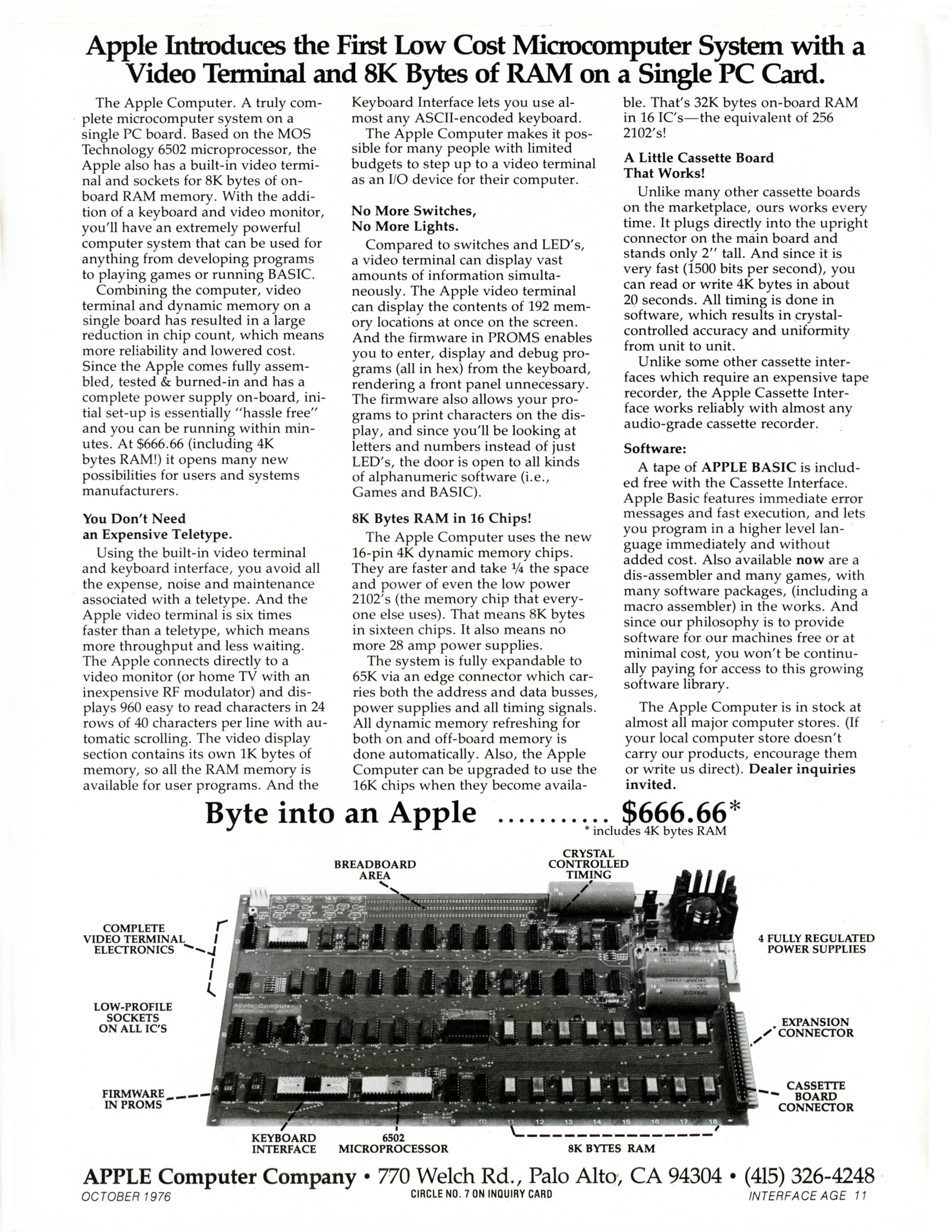
Amer­i­cans of a cer­tain age may well remem­ber grow­ing up with an Apple II in the class­room, and the per­pet­u­al temp­ta­tion it held out to play The Ore­gon TrailNum­ber Munch­ers, or per­haps Lode Run­ner. More than a few recess gamers went on to com­put­er-ori­ent­ed careers, but only the most curi­ous sought an answer to the ques­tion implied in the machine’s name: was there an Apple I? Half a cen­tu­ry after the foun­da­tion of Apple, Inc., then known as Apple Com­put­er, the prod­uct that launched what’s now one of the world’s most valu­able com­pa­nies remains very much an obscu­ri­ty. Unless you fre­quent com­put­er muse­ums, you’re unlike­ly ever to have laid eyes on an Apple I, let alone used one. Even if one of the exist­ing mod­els were to come on the mar­ket, you’d need about half a mil­lion dol­lars to buy it.

It’s actu­al­ly eas­i­er to buy the parts that went into an Apple I and build it your­self — which, as demon­strat­ed by the 8‑Bit Guy in the video above, still isn’t easy at all. Yet it does con­vey some­thing of what Apple’s very first cus­tomers would have expe­ri­enced in 1976, when do-it-your­self was the order of the day in com­put­ing.

When I bought the Mac­Book on which I’m writ­ing this post, I sim­ply opened it up and, nat­u­ral­ly, found it ready to use. That would scarce­ly have been imag­in­able to com­put­er enthu­si­asts of the mid-sev­en­ties, accus­tomed as they were to sol­der­ing indi­vid­u­al­ly pur­chased chips onto elec­tron­ics boards by hand. The Apple I marked a great leap for­ward in con­ve­nience by com­ing already assem­bled, albeit with­out a mon­i­tor, a key­board, or even a case; the pur­chase price of USD $666.66 (clos­er to $4,000 today) just got you the board. But what a board.

BERJAYA

Though we remem­ber Steve Jobs as the mas­ter­mind, the Apple I is a tour de force of the engi­neer­ing genius of his busi­ness part­ner Steve Woz­ni­ak. When the Steves debuted it at the Home­brew Com­put­er Club in July of 1976, the rel­a­tive­ly small num­ber of chips and advanced func­tions (BASIC pro­gram­ming! Cas­sette-tape data stor­age! Actu­al video out­put, if only of tele­type-like scrolling text!) cre­at­ed a con­sid­er­able demand then and there. We often hear of Jobs and Woz­ni­ak start­ing Apple in a garage, and it was in that garage (as well as the house­’s liv­ing room) that the first Apple I boards were put togeth­er. Ulti­mate­ly, 200 were sold before the Apple II arrived the fol­low­ing year. Apple’s first com­put­er may look intim­i­dat­ing to most of today’s Mac users. But con­sid­er the com­pa­ny’s rep­u­ta­tion for min­i­mal­ism, acces­si­bil­i­ty, and a knack for cap­tur­ing the con­sumer’s imag­i­na­tion: all qual­i­ties present on that board 50 years ago.

Relat­ed con­tent:

Rid­ley Scott on the Mak­ing of Apple’s Icon­ic “1984” Com­mer­cial, Aired on Super Bowl Sun­day in 1984

Before The Simp­sons, Matt Groen­ing Illus­trat­ed a “Student’s Guide” for Apple Com­put­ers (1989)

Hunter S. Thompson’s Edgy 1990s Com­mer­cial for Apple’s Mac­in­tosh Com­put­er: A Med­i­ta­tion on Pow­er

Dis­cov­ered: The User Man­u­al for the Old­est Sur­viv­ing Com­put­er in the World

Based in Seoul, Col­in Marshall writes and broad­casts on cities, lan­guage, and cul­ture. He’s the author of the newslet­ter Books on Cities as well as the books 한국 요약 금지 (No Sum­ma­riz­ing Korea) and Kore­an Newtro. Fol­low him on the social net­work for­mer­ly known as Twit­ter at @colinmarshall.

How George Orwell Predicted the Rise of “AI Slop” in Nineteen Eighty-Four (1949)

BERJAYA

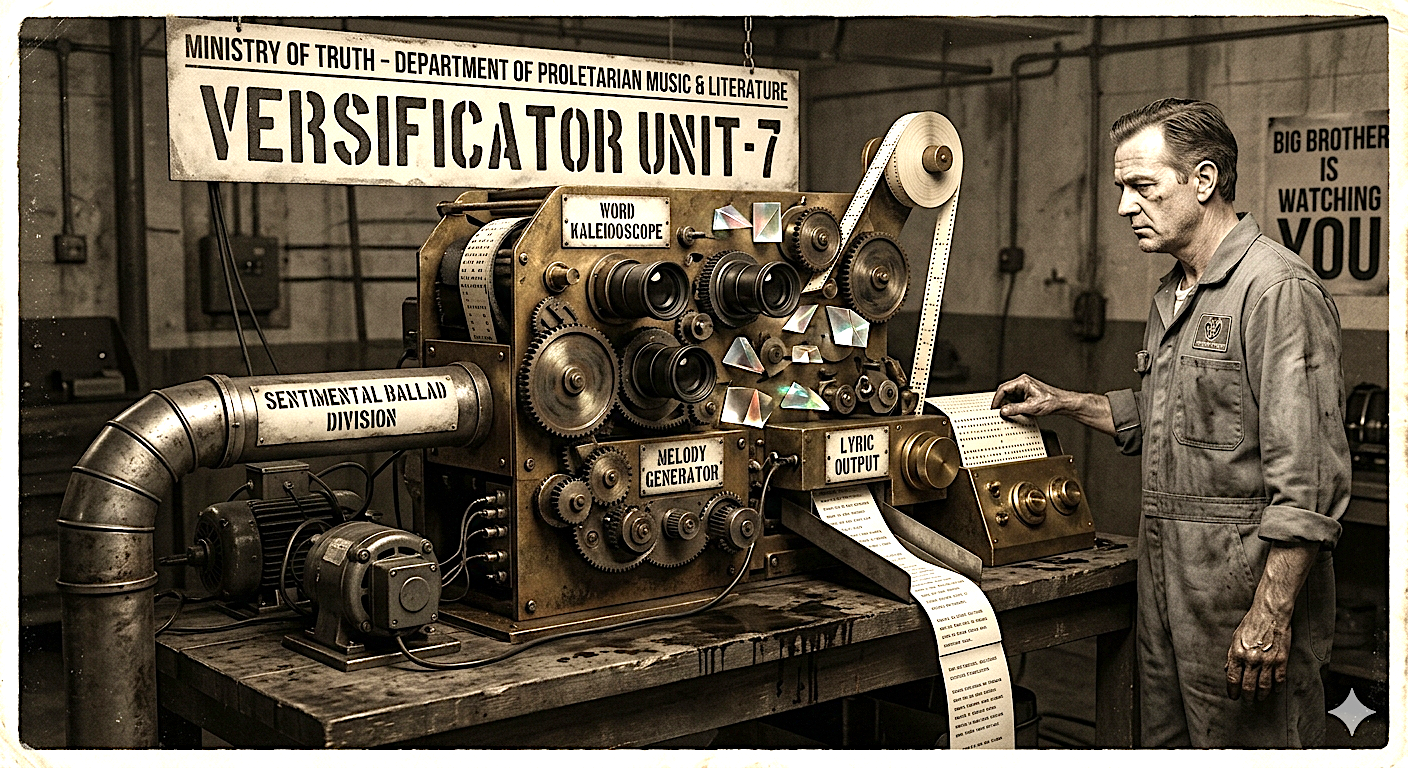
We’ve lived but a few years so far into the age when arti­fi­cial intel­li­gence can pro­duce con­vinc­ing sto­ries, songs, essays, poems, nov­els, and even films. For many of us, these recent­ly imple­ment­ed func­tions have already come to feel nec­es­sary in our dai­ly life, but it may sur­prise us to con­sid­er how many peo­ple had long assumed that com­put­ers could already per­form them. That belief sure­ly owes in part to the roles played by effec­tive­ly sen­tient machines in pop­u­lar fic­tions since at least the ear­ly decades of the twen­ti­eth cen­tu­ry. Revis­it­ing George Orwell’s Nine­teen Eighty-Four, we even find a device very much like today’s large lan­guage mod­els in use at the Min­istry of Truth, the employ­er of pro­tag­o­nist Win­ston Smith.

With­in the Min­istry is “a whole chain of sep­a­rate depart­ments deal­ing with pro­le­tar­i­an lit­er­a­ture, music, dra­ma, and enter­tain­ment gen­er­al­ly. Here were pro­duced rub­bishy news­pa­pers con­tain­ing almost noth­ing except sport, crime and astrol­o­gy, sen­sa­tion­al five-cent nov­el­ettes, films ooz­ing with sex, and sen­ti­men­tal songs which were com­posed entire­ly by mechan­i­cal means on a spe­cial kind of kalei­do­scope known as a ver­si­fi­ca­tor.” Much lat­er in the nov­el, Smith over­hears a hit song com­posed on that very kalei­do­scope, “with­out any human inter­ven­tion what­ev­er,” sung by a woman of this dystopi­an Eng­land’s low­est class, whose very base­ness lib­er­ates it from the watch­ful eye that Big Broth­er’s vast sur­veil­lance sys­tem keeps on his osten­si­bly priv­i­leged Par­ty mem­bers.

All the “pro­les” real­ly require, in the view of the state, is the free­dom to sat­is­fy their vices and a steady stream of paci­fy­ing media. The extru­sions of the ver­si­fi­ca­tor may now bring to mind the ever-increas­ing quan­ti­ties of “AI slop,” often cre­at­ed with van­ish­ing­ly small amounts of human inter­ven­tion, whose poten­tial to flood the inter­net has late­ly become a mat­ter of pub­lic con­cern. What’s more chill­ing to con­sid­er is that such low-effort, high-vol­ume con­tent would­n’t have attained such a pres­ence if it weren’t gen­uine­ly pop­u­lar. Much like the junk cul­ture pumped out by the Min­istry of Truth, AI slop reflects less the ill intent of (or at least neglect by) the pow­ers that be than the unde­mand­ing nature of the pub­lic.

Per­haps we can pro­vi­sion­al­ly chalk this one up in the “Orwell was right” col­umn. It’s pos­si­ble that, in light of real tech­no­log­i­cal devel­op­ments, even Isaac Asi­mov could be con­vinced to give it to him. Here on Open Cul­ture, we recent­ly fea­tured Asi­mov’s cri­tique of Nine­teen Eighty-Four as a poor prophe­cy of the future, not least from a tech­no­log­i­cal stand­point. That piece was writ­ten in 1980 at the very end of an “AI win­ter,” one of the fal­low peri­ods in arti­fi­cial intel­li­gence research. A boom was soon to come, but the tru­ly aston­ish­ing devel­op­ments would­n’t hap­pen until the twen­ty-twen­ties, about thir­ty years after Asi­mov’s death. When describ­ing the ver­si­fi­ca­tor, Orwell was pre­sum­ably extrap­o­lat­ing from the dis­tract­ing, dis­pos­able enter­tain­ments of nine­teen-for­ties Eng­land. Even if his read­ers could­n’t believe the idea of that sort of thing being cre­at­ed auto­mat­i­cal­ly, more than a few prob­a­bly agreed with his diag­no­sis of its qual­i­ty. Now, col­lec­tive human intel­li­gence may face its most for­mi­da­ble chal­lenger, but indi­vid­ual human dis­cern­ment has nev­er been more valu­able.

via Boing Boing

Relat­ed con­tent:

Isaac Asi­mov Reviews George Orwell’s Nine­teen Eighty-Four and Calls It “Not Sci­ence Fic­tion, But a Dis­tort­ed Nos­tal­gia for a Past that Nev­er Was”

George Orwell Pre­dict­ed Cam­eras Would Watch Us in Our Homes; He Nev­er Imag­ined We’d Glad­ly Buy and Install Them Our­selves

Aldous Hux­ley to George Orwell: My Hell­ish Vision of the Future is Bet­ter Than Yours (1949)

Sci-Fi Writer Arthur C. Clarke Pre­dicts the Future in 1964: Arti­fi­cial Intel­li­gence, Instan­ta­neous Glob­al Com­mu­ni­ca­tion, Remote Work, Sin­gu­lar­i­ty & More

Based in Seoul, Col­in Marshall writes and broad­casts on cities, lan­guage, and cul­ture. He’s the author of the newslet­ter Books on Cities as well as the books 한국 요약 금지 (No Sum­ma­riz­ing Korea) and Kore­an Newtro. Fol­low him on the social net­work for­mer­ly known as Twit­ter at @colinmarshall.

Watch 35 Short Films by Charles and Ray Eames: “Powers of Ten,” the History of the Computer & More

The Pacif­ic Pal­isades fire of Jan­u­ary 25 destroyed much of that coastal Los Ange­les neigh­bor­hood, but it some­how spared the Charles and Ray Eames house. Any­one who’s paid it a vis­it, or at least pored over the many pho­tos of it in exis­tence, knows that it’s more than a pre­served work of Cal­i­for­nia mod­ernism once inhab­it­ed by a famed pair of hus­band-and-wife design­ers. In truth, it’s more like a world, or at least a world­view, made domes­tic. From the out­side, one first notices the clean, vague­ly Japan­ese lines, the sharp angles, and the planes of Mon­dri­an col­or. Once inside, one hard­ly knows what to look at first: the Isamu Noguchi lamp? The Native Amer­i­can bas­kets? The kokeshi dolls? The Eames Lounge Chair?

?si=DQ-M1lsNTauOahsy

After a few months’ clo­sure to repair smoke dam­age, the Eames House re-opened to vis­i­tors last sum­mer. But wher­ev­er in the world you hap­pen to be, you can tour the place in its prime, and as its mak­ers would have want­ed you to see it, through the short film from 1955 at the top of the post.

Titled sim­ply “House: After Five Years of Liv­ing,” it briefly ani­mates the title build­ing’s con­struc­tion process, shows its con­text in nature and some of the tex­tures to be seen on and around its exte­ri­or walls, and soon makes ten­ta­tive moves— albeit almost entire­ly with still shots — toward the inte­ri­or. Shot and edit­ed by the Eames them­selves, the film show­cas­es their aes­thet­ic and com­mu­nica­tive sen­si­bil­i­ty as much as does the house itself, or indeed the pieces of fur­ni­ture inside that they them­selves designed.


So, each one in a dif­fer­ent way, do the 35 Eames shorts col­lect­ed on this Youtube playlist. It includes, of course, “Pow­ers of Ten,” an eight-minute-long zoom out from a pic­nic on Lake Michi­gan to 100 light years away in out­er space, then back again and down to the micro­scop­ic scale of “a pro­ton in the nucle­us of a car­bon atom beneath the skin on the hand of a sleep­ing man at the pic­nic.” In addi­tion to stew­ard­ing the house, the Charles & Ray Eames Foun­da­tion has plans to bring that acclaimed film back out for its 50th anniver­sary next year. Until then, this playlist will give you a chance to get acquaint­ed with a bit more of their large body of cin­e­mat­ic work, reflect­ing as it does the Eame­ses’ sig­na­ture instinct for mod­ernist cre­ativ­i­ty and light­heart­ed ped­a­gogy, but also their prox­im­i­ty to the world that the mid-twen­ti­eth cen­tu­ry was fast bring­ing into being.


Take the series of pro­duc­tions they did for IBM, like “A Com­put­er Per­spec­tive: Back­ground to the Com­put­er Age” just above, com­mis­sioned for an exhi­bi­tion of the same name. Begin­ning its sto­ry with human­i­ty’s ear­li­est cal­cu­lat­ing machines, it makes its jazzy visu­al-his­tor­i­cal way up to the post­war decades, dur­ing which, as the nar­ra­tor puts it, “the vari­ety of demands on the com­put­er began to mul­ti­ply. It was asked to be not only cal­cu­la­tor and ana­lyz­er, but infor­ma­tion stor­age and retrieval device, instru­ment of com­mu­ni­ca­tion, and inter­locu­tor.” If only the Eam­ses could have lived, we might think, to see how ful­ly the com­put­er would come to occu­py that last role. Nor, revis­it­ing “Pow­ers of Ten,” could any of us ignore how much the view­ing expe­ri­ence reminds us of our idle explo­rations on Google Earth, a tech­no­log­i­cal devel­op­ment they sure­ly would­n’t have found implau­si­ble — and sure­ly would have found cap­ti­vat­ing.

Relat­ed Con­tent:

Charles and Ray Eames’ “Pow­ers of Ten” Updat­ed to Reflect Our Mod­ern Under­stand­ing of the Uni­verse

Charles & Ray Eames’ Icon­ic Lounge Chair Debuts on Amer­i­can TV (1956)

Charles & Ray Eames’ “A Com­mu­ni­ca­tions Primer” Explains the Key to Clear Com­mu­ni­ca­tion in the Mod­ern Age (1953)

Charles & Ray Eames’ Short Film on the Mex­i­can Day of the Dead (1957)

“They Were There” — Errol Mor­ris Final­ly Directs a Film for IBM

Watch “Design for Dis­as­ter,” a 1962 Film That Shows Why Los Ange­les Is Always at Risk of Dev­as­tat­ing Fires

Based in Seoul, Col­in Marshall writes and broad­casts on cities, lan­guage, and cul­ture. He’s the author of the newslet­ter Books on Cities as well as the books 한국 요약 금지 (No Sum­ma­riz­ing Korea) and Kore­an Newtro. Fol­low him on the social net­work for­mer­ly known as Twit­ter at @colinmarshall.

Sci-Fi Writer Arthur C. Clarke Predicts the Future in 1964: Artificial Intelligence, Instantaneous Global Communication, Remote Work, Singularity & More

Are you feel­ing con­fi­dent about the future? No? We under­stand. Would you like to know what it was like to feel a deep cer­tain­ty that the decades to come were going to be filled with won­der and the fan­tas­tic? Well then, gaze upon this clip from the BBC Archive YouTube chan­nel of sci-fi author Arthur C. Clarke pre­dict­ing the future in 1964.

Although we best know him for writ­ing 2001: A Space Odyssey, the 1964 tele­vi­sion-view­ing pub­lic would have known him for his futur­ism and his tal­ent for calm­ly explain­ing all the great things to come. In the late 1940s, he had already pre­dict­ed telecom­mu­ni­ca­tion satel­lites. In 1962 he pub­lished his col­lect­ed essays, Pro­files of the Future, which con­tains many of the ideas in this clip.

Here he cor­rect­ly pre­dicts the ease with which we can be con­tact­ed wher­ev­er in the world we choose to, where we can con­tact our friends “any­where on earth even if we don’t know their loca­tion.” What Clarke doesn’t pre­dict here is how “loca­tion” isn’t a thing when we’re on the inter­net. He imag­ines peo­ple work­ing just as well from Tahi­ti or Bali as they do from Lon­don. Clarke sees this advance­ment as the down­fall of the mod­ern city, as we do not need to com­mute into the city to work. Now, as so many of us are doing our jobs from home post-COVID, we’ve also dis­cov­ered the dystopia in that fan­ta­sy. (It cer­tain­ly has­n’t dropped the cost of rent.)

Next, he pre­dicts advances in biotech­nol­o­gy that would allow us to, say, train mon­keys to work as ser­vants and work­ers. (Until, he jokes, they form a union and “we’d be back right where we start­ed.) Per­haps, he says, humans have stopped evolving—what comes next is arti­fi­cial intel­li­gence (although that phrase had yet to be used) and machine evo­lu­tion, where we’d be hon­ored to be the “step­ping stone” towards that des­tiny. Make of that what you will. I know you might think it would be cool to have a mon­key but­ler, but c’mon, think of the ethics, not to men­tion the cost of bananas.

Point­ing out where Clarke gets it wrong is too easy—nobody gets it right all of the time. How­ev­er, it is fas­ci­nat­ing that some things that have nev­er come to pass—being able to learn a lan­guage overnight, or eras­ing your memories—have man­aged to resur­face over the years as sci­ence fic­tion films, like Eter­nal Sun­shine of the Spot­less Mind. His ideas of cryo­genic sus­pen­sion are sta­ples of numer­ous hard sci-fi films.

And we are still wait­ing for the “Repli­ca­tor” machine, which would make exact dupli­cates of objects (and by so doing cause a col­lapse into “glut­to­nous bar­barism” because we’d want unlim­it­ed amounts of every­thing.) Some com­menters call this a pre­cur­sor to 3‑D print­ing. I’d say oth­er­wise, but some­thing very close to it might be around the cor­ner. Who knows? Clarke him­self agrees about all this conjecture—it’s doomed to fail.

“That is why the future is so end­less­ly fas­ci­nat­ing. Try as we can, we’ll nev­er out­guess it.”

Note: An ear­li­er ver­sion of this post appeared on our site in 2022.

Relat­ed Con­tent:

How French Artists in 1899 Envi­sioned What Life Would Look Like in the Year 2000 

Isaac Asi­mov Pre­dicts the Future on The David Let­ter­man Show (1980)

In 1926, Niko­la Tes­la Pre­dicts the World of 2026

In 1922, a Nov­el­ist Pre­dicts What the World Will Look Like in 2022: Wire­less Tele­phones, 8‑Hour Flights to Europe & More

In 1894, A French Writer Pre­dict­ed the End of Books & the Rise of Portable Audio­books and Pod­casts

Ted Mills is a free­lance writer on the arts.

The Self-Balancing Monorail: A 1910 Train That Could Balance Without Falling

If mono­rails have a bad name, The Simp­sons may be to blame. In an episode acclaimed for its hilar­i­ous­ness since it first aired 33 years ago, a huck­ster shows up in Spring­field and con­vinces the town to build just such a tran­sit sys­tem, which turns out to be not just sus­pi­cious­ly unnec­es­sary (at least in young Lisa’s judg­ment) but also dan­ger­ous­ly shod­dy. I watched it while grow­ing up in the sub­urbs of Seat­tle, a city that endured bit­ter­ly pro­tract­ed con­tention over whether or not to build out its own rudi­men­ta­ry mono­rail sys­tem — a World’s Fair arti­fact, like the Space Nee­dle — but final­ly opt­ed not to. Con­cerns were per­pet­u­al­ly raised, right­ly or wrong­ly, about the noise and dark­ness that could result from extend­ing the wide ele­vat­ed track on which it ran.

But what if there were anoth­er way to build a mono­rail? Indeed, what if it could run on the ground, like a tra­di­tion­al two-railed train? Such was the idea in the head of the inde­fati­ga­ble Irish-Aus­tralian engi­neer Louis Bren­nan, who’s remem­bered today for invent­ing a wire-guid­ed tor­pe­do back in 1877.

If things had gone dif­fer­ent­ly, maybe he’d be bet­ter remem­bered for invent­ing the gyro mono­rail, the sub­ject of the Pri­mal Space video above. In Bren­nan’s design, which he actu­al­ly got built and work­ing, the car bal­ances on a sin­gle rail with the aid of a pair of spin­ning pow­ered gyro­scopes that pre­vent it from falling over (and, in the case of pow­er loss, could keep spin­ning for half an hour to allow a safe evac­u­a­tion), allow­ing it to run faster and cor­ner more tight­ly than the trains the world knew.

Bren­nan’s gyro mono­rail made its pub­lic debut at the Japan-British Exhi­bi­tion in Lon­don in 1910, giv­ing 50 pas­sen­gers at a time the oppor­tu­ni­ty to ride around in a cir­cle at 20 miles per hour. Though the inter­est it drew inspired a minor boom of gyro-sta­bi­lized chil­dren’s toys, it nev­er actu­al­ly trans­lat­ed into a real tran­sit sys­tem. Around the same time, a group in Ger­many also unveiled their own ver­sion, and in the decades there­after, addi­tion­al abortive efforts were made in Rus­sia. The engi­neer­ing involved was impres­sive, as the video explains, but also a bit too com­pli­cat­ed and expen­sive for its time. The devel­op­ment of a new Ger­man app-ordered autonomous gyro mono­rail sys­tem was announced just a few years ago. Giv­en the pos­si­bil­i­ty of its enter­ing pro­duc­tion as soon as 2032, we could soon be hear­ing cho­rus­es of “Mono­rail, mono­rail, mono­rail” — or rather, “Mono­cab, Mono­cab, Mono­cab” — once again.

Relat­ed con­tent:

Trips on the World’s Old­est Elec­tric Sus­pen­sion Rail­way in 1902 & 2015 Show How a City Changes Over a Cen­tu­ry

Paris Had a Mov­ing Side­walk in 1900, and a Thomas Edi­son Film Cap­tured It in Action

A Sub­way Ride Through New York City: Watch Vin­tage Footage from 1905

Why Pub­lic Tran­sit Sucks in the Unit­ed States: Four Videos Tell the Sto­ry

A Har­row­ing Test Dri­ve of Buck­min­ster Fuller’s 1933 Dymax­ion Car: Art That Is Scary to Ride

Based in Seoul, Col­in Marshall writes and broad­casts on cities, lan­guage, and cul­ture. He’s the author of the newslet­ter Books on Cities as well as the books 한국 요약 금지 (No Sum­ma­riz­ing Korea) and Kore­an Newtro. Fol­low him on the social net­work for­mer­ly known as Twit­ter at @colinmarshall.

More in this category... »
Quantcast