close
BERJAYA


Medieval Mixed-Gender Fight Club: Behold Images from a 15th-Century Fighting Manual

BERJAYA

Wel­come to Medieval Mixed-Gen­der Fight Club.

The first rule of Medieval Mixed-Gen­der Fight Club is: you do not talk about Medieval Mixed-Gen­der Fight Club.

The sec­ond rule of Medieval Mixed-Gen­der Fight Club is: you DO NOT talk about Medieval Mixed-Gen­der Fight Club!

Why?

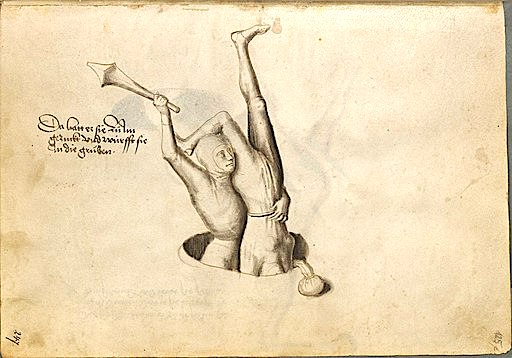
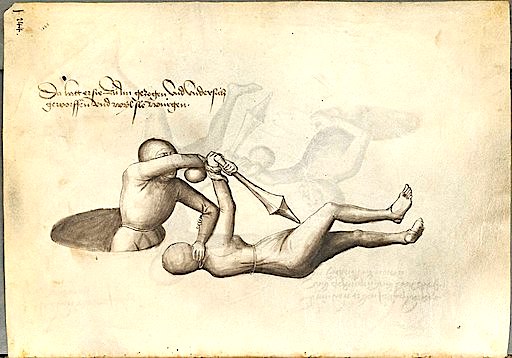
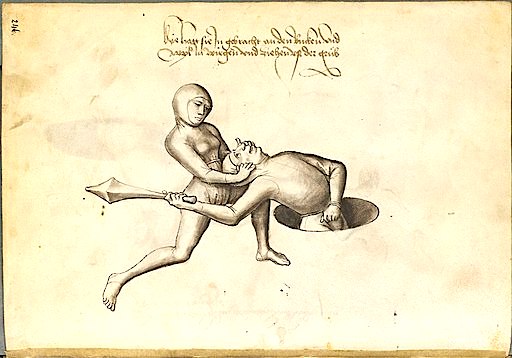
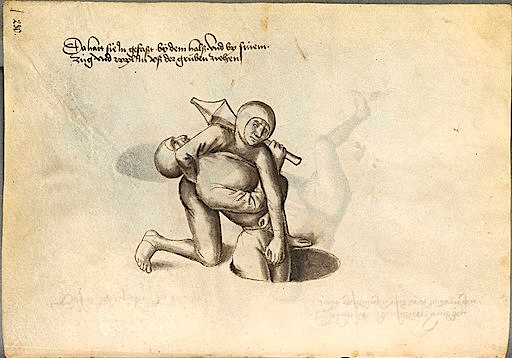
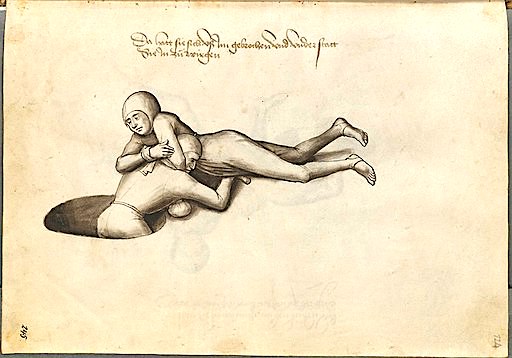
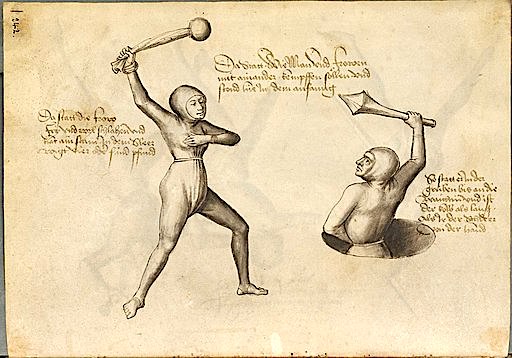
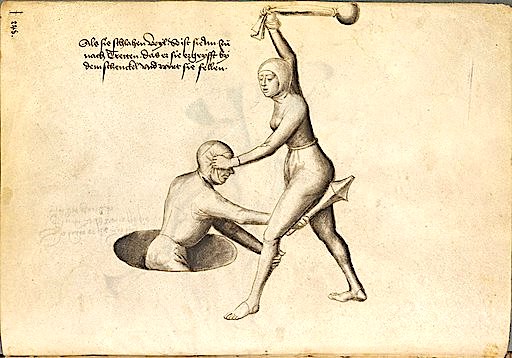
The Pub­lic Domain Review’s man­ag­ing edi­tor, Hunter Dukes, wise­ly argues that it’s because we have so lit­tle to go on, beyond these star­tling images of “judi­cial duels” between men and women in Ger­man fenc­ing mas­ter Hans Tal­hof­fer’s illus­trat­ed 15th-cen­tu­ry “fight books.”

The male com­bat­ant, armed with a wood­en mace, starts out in a waist-deep hole.

The female, armed with a rock wrapped in a length of cloth, stands above, feet plant­ed to the ground.

Their match­ing uni­sex gar­ments wouldn’t look out of place at the Met Gala, and pro­vide for max­i­mum move­ment as evi­denced by the acro­bat­ic, and seri­ous­ly painful-look­ing paces Tal­hof­fer puts them through.

BERJAYA

BERJAYA

BERJAYA

Dukes is not alone in won­der­ing what’s going on here, and he doesn’t mince words when call­ing bull­shit on those respon­si­ble for “hasti­ly researched arti­cles” eager­ly pro­nounc­ing them to be action shots of divorce-by-com­bat.

Such bru­tal meth­ods of for­mal uncou­pling had been ren­dered obso­lete cen­turies before Tal­hof­fer began work on his instruc­tion­al man­u­als. 

In a 1985 arti­cle in Source: Notes in the His­to­ry of Art, Alli­son Coud­ert,  a pro­fes­sor of Reli­gious Stud­ies at UC Davis, posits that Tal­hof­fer might have been draw­ing on the past in these pages:

I would sug­gest that no records of judi­cial duels between hus­bands and wives exists after 1200 because of both changes in the real­i­ty and the ide­al of what a woman could be and do. Before 1200, women may well have bat­tled their hus­bands. Women under­stood and defend­ed the impor­tance of their eco­nom­ic and admin­is­tra­tive roles in the house­hold. After the twelfth cen­tu­ry, how­ev­er, law, cus­tom and reli­gion made mar­i­tal duels all but unthink­able.

Why would Tal­hof­fer both­er includ­ing archa­ic mate­r­i­al if the focus of his Fecht­buchs was giv­ing less expe­ri­enced fight­ers con­crete infor­ma­tion for their bet­ter­ment?

We like the notion that he might have been seek­ing to inject his man­u­scripts with a bit of an erot­ic charge, but con­cede that schol­ars like Coud­ert, who have PhDs, research chops, and actu­al exper­tise in the sub­ject, are prob­a­bly warmer when reck­on­ing that he was just cov­er­ing his his­tor­i­cal bases.

For now, let us enjoy these images as art, and pos­si­ble sources of inspi­ra­tion for avant-garde cir­cus acts, Hal­loween cou­ples cos­tumes, and Valen­tines.

BERJAYA

BERJAYA

BERJAYA 

Explore more images from the 15th-cen­tu­ry Fecht­buchs of Hans Tal­hof­fer here and here.

via the Pub­lic Domain Review

Relat­ed Con­tent 

What It’s Like to Actu­al­ly Fight in Medieval Armor

How to Get Dressed & Fight in 14th Cen­tu­ry Armor: A Reen­act­ment

Watch Accu­rate Recre­ations of Medieval Ital­ian Longsword Fight­ing Tech­niques, All Based on a Man­u­script from 1404

The Medieval Mas­ter­piece, the Book of Kells, Is Now Dig­i­tized & Put Online

- Ayun Hal­l­i­day is the Chief Pri­ma­tol­o­gist of the East Vil­lage Inky zine and author, most recent­ly, of Cre­ative, Not Famous: The Small Pota­to Man­i­festo and Cre­ative, Not Famous Activ­i­ty Book. Fol­low her @AyunHalliday.

Pelé’s Great World Cup Goals (RIP)

Today, the soc­cer leg­end, Pelé, passed away at age 82. The most dom­i­nant play­er of his gen­er­a­tion, Pelé turned pro­fes­sion­al at age 15, won the World Cup at age 17 in 1958 (before win­ning two more World Cups in 1962 and 1970), and ulti­mate­ly scored 1,283 goals in 1,367 pro­fes­sion­al match­es, aver­ag­ing near­ly one goal per game. On the inter­na­tion­al stage, he scored 77 goals for Brazil, 12 of them in the World Cup.

The high­light reel above fea­tures the young Pelé’s goals in the 1958 World Cup. Sep­a­rate­ly, you can see his 5 great­est goals in the World Cup finals here. And, for good mea­sure, we’ve added more footage below that high­lights his mag­i­cal skills across his career.

If you would like to sup­port the mis­sion of Open Cul­ture, con­sid­er mak­ing a dona­tion to our site. It’s hard to rely 100% on ads, and your con­tri­bu­tions will help us con­tin­ue pro­vid­ing the best free cul­tur­al and edu­ca­tion­al mate­ri­als to learn­ers every­where. You can con­tribute through Pay­Pal, Patre­on, and Ven­mo (@openculture). Thanks!

Relat­ed Con­tent 

Video: Bob Mar­ley Plays a Soc­cer Match in Brazil, 1980

Albert Camus’ Lessons Learned from Play­ing Goalie: “What I Know Most Sure­ly about Moral­i­ty and Oblig­a­tions, I Owe to Foot­ball”

Why Jorge Luis Borges Hat­ed Soc­cer: “Soc­cer is Pop­u­lar Because Stu­pid­i­ty is Pop­u­lar”

How Qatar Built Stadiums with Forced Labor

I will let Vox pref­ace the video above:

Ever since Qatar won the rights to host the FIFA World Cup in 2010, its treat­ment of migrant work­ers has made inter­na­tion­al head­lines. News sto­ries and human rights orga­ni­za­tions revealed migrant work­ers who built the sta­di­ums, hotels, and all the new infra­struc­ture required for the World Cup were being forced to work, not get­ting paid, unable to leave, and in some cas­es, dying.

At the heart of the abuse faced by migrant work­ers is the kafala sys­tem. A sys­tem preva­lent in Gulf states that ties work­ers to their spon­sors, it often gives spon­sors almost total con­trol of migrant work­ers’ employ­ment and immi­gra­tion sta­tus.

Due to all the scruti­ny Qatar has been under, some reforms have been put in place, but the kafala sys­tem is more than a law — it’s a prac­tice. And while these reforms exist on paper, human rights orga­ni­za­tions say there’s still a long way to go.

To under­stand how hun­dreds of thou­sands of migrant work­ers were stuck in an exploita­tive sys­tem while build­ing the sta­di­ums for the World Cup, watch our 10-minute video above.

To delve deep­er, it’s also worth lis­ten­ing to the New York Times’ recent pod­cast, Qatar’s Big Bet on the World Cup and read The Guardian arti­cle, 6,500 migrant work­ers have died in Qatar since World Cup award­ed.

If you would like to sup­port the mis­sion of Open Cul­ture, con­sid­er mak­ing a dona­tion to our site. It’s hard to rely 100% on ads, and your con­tri­bu­tions will help us con­tin­ue pro­vid­ing the best free cul­tur­al and edu­ca­tion­al mate­ri­als to learn­ers every­where. You can con­tribute through Pay­Pal, Patre­on, and Ven­mo (@openculture). Thanks!

by | Permalink | Make a Comment ( 1 ) |

Albert Camus’ Lessons Learned from Playing Goalie: “What I Know Most Surely about Morality and Obligations, I Owe to Football”

BERJAYA

Here’s a vin­tage foot­ball [aka soc­cer] post in cel­e­bra­tion of the World Cup…

Albert Camus once said, “After many years in which the world has afford­ed me many expe­ri­ences, what I know most sure­ly in the long run about moral­i­ty and oblig­a­tions, I owe to foot­ball.”

He was refer­ring to his col­lege days when he played goalie for the Rac­ing Uni­ver­si­taire d’Al­ger (RUA) junior team. Camus was a decent play­er, though not the great play­er that leg­end lat­er made him out to be.

For Jim White, author of A Mat­ter of Life and Death: A His­to­ry of Foot­ball in 100 Quo­ta­tions, soc­cer per­haps taught Camus a few things about self­less­ness, coop­er­a­tion, brav­ery and resilience. That’s a sun­ny way of look­ing at things. But per­haps The Tele­graph gets at the deep­er, dark­er life lessons Camus took away from soc­cer:

[T]here is some­thing appro­pri­ate about a philoso­pher like Camus sta­tion­ing him­self between the sticks [that is, in goal]. It is a lone­ly call­ing, an indi­vid­ual iso­lat­ed with­in a team eth­ic, one who plays to dif­fer­ent con­straints. If his team scores, the keep­er knows it is noth­ing to do with him. If the oppo­si­tion score, how­ev­er, it is all his fault. Stand­ing sen­tinel in goal, Camus had plen­ty of time to reflect on the absur­dist nature of his posi­tion.

And per­haps the absur­dist nature of life itself…

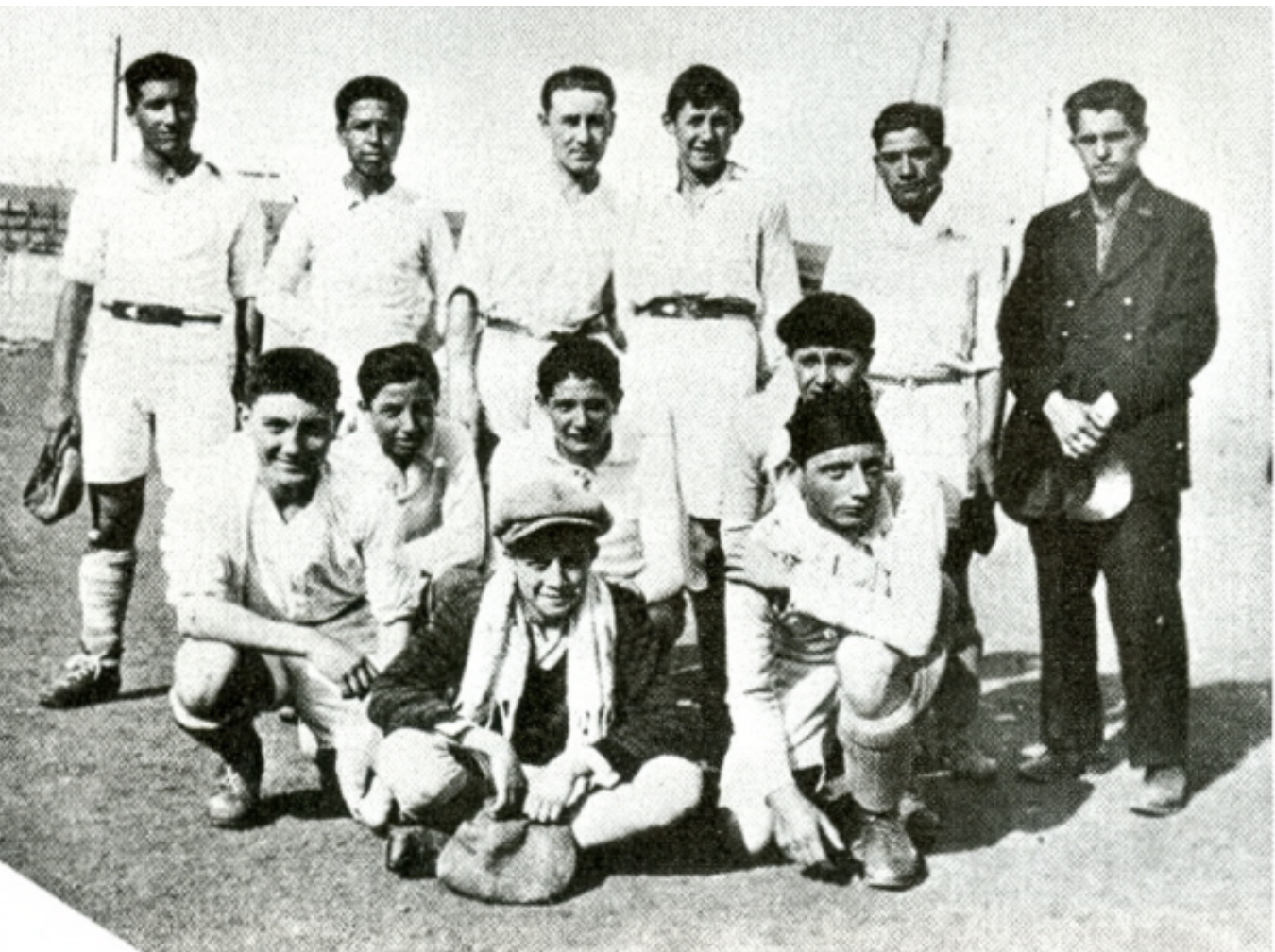
Camus — who appears in the pic­ture up top, wear­ing the dark col­or jer­sey in the front row — con­tract­ed tuber­cu­lo­sis when he was only 18 years old. His lungs too dam­aged to con­tin­ue play­ing sports, the young man turned to phi­los­o­phy. When Camus moved from Alge­ria to France, he learned that phi­los­o­phy was a rough and tum­ble game too — some­thing his soc­cer days pre­pared him for. He once quipped, “I learned … that a ball nev­er arrives from the direc­tion you expect­ed it. That helped me in lat­er life, espe­cial­ly in main­land France, where nobody plays straight.”

If you would like to sup­port the mis­sion of Open Cul­ture, con­sid­er mak­ing a dona­tion to our site. It’s hard to rely 100% on ads, and your con­tri­bu­tions will help us con­tin­ue pro­vid­ing the best free cul­tur­al and edu­ca­tion­al mate­ri­als to learn­ers every­where. You can con­tribute through Pay­Pal, Patre­on, and Ven­mo (@openculture). Thanks!

Relat­ed Con­tent:

Why Jorge Luis Borges Hat­ed Soc­cer: “Soc­cer is Pop­u­lar Because Stu­pid­i­ty is Pop­u­lar”

What is Albert Camus’ The Plague About? An Intro­duc­tion

Video: The Day Bob Mar­ley Played a Big Soc­cer Match in Brazil, 1980

Bene­dict Cum­ber­batch Reads Albert Camus’ Touch­ing Thank You Let­ter to His Ele­men­tary School Teacher

Why Jorge Luis Borges Hated Soccer: “Soccer is Popular Because Stupidity is Popular”

BERJAYA

Image by Grete Stern, via Wiki­me­dia Com­mons

I will admit it: I’m one of those oft-maligned non-sports peo­ple who becomes a foot­ball (okay, soc­cer) enthu­si­ast every four years, seduced by the col­or­ful pageantry, cos­mopoli­tan air, nos­tal­gia for a game I played as a kid, and an embar­rass­ing­ly sen­ti­men­tal pride in my home coun­try’s team. I don’t lose all my crit­i­cal fac­ul­ties, but I can’t help but love the World Cup even while rec­og­niz­ing the cor­rup­tion, deep­en­ing pover­ty and exploita­tion, and host of oth­er seri­ous sociopo­lit­i­cal issues sur­round­ing it. And as an Amer­i­can, it’s sim­ply much eas­i­er to put some dis­tance between the sport itself and the jin­go­is­tic big­otry and violence—“sentimental hooli­gan­ism,” to use Franklin Foer’s phrase—that very often attend the game in var­i­ous parts of the world.

In Argenti­na, as in many soc­cer-mad coun­tries with deep social divides, gang vio­lence is a rou­tine part of fut­bol, part of what Argen­tine writer Jorge Luis Borges termed a hor­ri­ble “idea of suprema­cy.” Borges found it impos­si­ble to sep­a­rate the fan cul­ture from the game itself, once declar­ing, “soc­cer is pop­u­lar because stu­pid­i­ty is pop­u­lar.” As Shaj Math­ew writes in The New Repub­lic, the author asso­ci­at­ed the mass mania of soc­cer fan­dom with the mass fer­vor of fas­cism or dog­mat­ic nation­al­ism. “Nation­al­ism,” he wrote, “only allows for affir­ma­tions, and every doc­trine that dis­cards doubt, nega­tion, is a form of fanati­cism and stu­pid­i­ty.” As Math­ews points out, nation­al soc­cer teams and stars do often become the tools of author­i­tar­i­an regimes that “take advan­tage of the bond that fans share with their nation­al teams to drum up pop­u­lar sup­port [….] This is what Borges feared—and resented—about the sport.”

There is cer­tain­ly a sense in which Borges’ hatred of soc­cer is also indica­tive of his well-known cul­tur­al elit­ism (despite his roman­ti­ciz­ing of low­er-class gau­cho life and the once-demi­monde tan­go). Out­side of the huge­ly expen­sive World Cup, the class dynam­ics of soc­cer fan­dom in most every coun­try but the U.S. are fair­ly uncom­pli­cat­ed. New Repub­lic edi­tor Foer summed it up suc­cinct­ly in How Soc­cer Explains the World: “In every oth­er part of the world, soccer’s soci­ol­o­gy varies lit­tle: it is the province of the work­ing class.” (The inver­sion of this soc­cer class divide in the U.S., Foer writes, explains Amer­i­cans’ dis­dain for the game in gen­er­al and for elit­ist soc­cer dilet­tantes in par­tic­u­lar, though those atti­tudes are rapid­ly chang­ing). If Borges had been a North, rather than South, Amer­i­can, I imag­ine he would have had sim­i­lar things to say about the NFL, NBA, NHL, or NASCAR.

Nonethe­less, being Jorge Luis Borges, the writer did not sim­ply lodge cranky com­plaints, how­ev­er polit­i­cal­ly astute, about the game. He wrote a spec­u­la­tive sto­ry about it with his close friend and some­time writ­ing part­ner Adol­fo Bioy Casares. In “Esse Est Per­cipi” (“to be is to be per­ceived”), we learn that soc­cer has “ceased to be a sport and entered the realm of spec­ta­cle,” writes Math­ews: “rep­re­sen­ta­tion of sport has replaced actu­al sport.” The phys­i­cal sta­di­ums crum­ble, while the games are per­formed by “a sin­gle man in a booth or by actors in jer­seys before the TV cam­eras.” An eas­i­ly duped pop­u­lace fol­lows “nonex­is­tent games on TV and the radio with­out ques­tion­ing a thing.”

The sto­ry effec­tive­ly illus­trates Borges’ cri­tique of soc­cer as an intrin­sic part of a mass cul­ture that, Math­ews says, “leaves itself open to dem­a­goguery and manip­u­la­tion.” Borges’ own snob­beries aside, his res­olute sus­pi­cion of mass media spec­ta­cle and the coopt­ing of pop­u­lar cul­ture by polit­i­cal forces seems to me still, as it was in his day, a healthy atti­tude. You can read the full sto­ry here, and an excel­lent crit­i­cal essay on Borges’ polit­i­cal phi­los­o­phy here.  For those inter­est­ed in explor­ing Franklin Foer’s book, see How Soc­cer Explains the World: An Unlike­ly The­o­ry of Glob­al­iza­tion.

Note: An ear­li­er ver­sion of this post appeared on our site in 2014.

via The New Repub­lic

Relat­ed Con­tent:

Video: Bob Mar­ley Plays a Soc­cer Match in Brazil, 1980

Jorge Luis Borges’ 1967–8 Nor­ton Lec­tures On Poet­ry (And Every­thing Else Lit­er­ary)

Jorge Luis Borges Draws a Self-Por­trait After Going Blind

Josh Jones is a writer and musi­cian based in Durham, NC. Fol­low him at @jdmagness

by | Permalink | Make a Comment ( 1 ) |

Watch Awesome Human Choreography That Reproduces the Murmurations of Starling Flocks

A num­ber of chore­o­g­ra­phers have tak­en inspi­ra­tion from the move­ment of birds.

Sadek Waff, cre­ator of thrilling­ly pre­cise “mur­mu­ra­tions” such as the one above, is also inspired by street dance — par­tic­u­lar­ly the pop­ping hip hop moves known as Tut­ting and Toy­Man.

The nature lover and founder of the dance troupe GĂ©omĂ©trie Vari­able uses both to excel­lent effect, chan­nel­ing a star­ling flock­’s hive mind with human dancers, whose low­er halves remain firm­ly root­ed. It’s all about the hands and arms, punc­tu­at­ed with the occa­sion­al neck flex.

As he observes on his Insta­gram pro­file:

There is mag­ic every­where, the key is know­ing how to look and lis­ten in silence. Like a cloud of birds form­ing waves in the sky, each indi­vid­ual has their own iden­ti­ty but also has an irre­place­able place in the whole.

To achieve these kalei­do­scop­ic mur­mu­ra­tions, Waff’s dancers drill for hours, count­ing aloud in uni­son, refin­ing their ges­tures to the point where the indi­vid­ual is sub­sumed by the group.

The use of mir­rors can height­en the illu­sion:

The reflec­tion brings a sym­met­ri­cal dimen­sion, like a calm body of water con­tem­plat­ing the spec­ta­cle from anoth­er point of view, adding an addi­tion­al dimen­sion, an exten­sion of the image.

The larg­er the group, the more daz­zling the effect, though a video fea­tur­ing a small­er than usu­al group of dancers — 20 in total — is help­ful for iso­lat­ing the com­po­nents Waff brings to bear in his avian-inspired work.

We’re par­tic­u­lar­ly enthralled by the mur­mu­ra­tion Waff cre­at­ed for the 2020 Par­a­lympic Games’ clos­ing cer­e­mo­ny in Tokyo, using both pro­fes­sion­als and ama­teurs in match­ing black COVID-pre­cau­tion masks to embody the event’s themes of “har­mo­nious cacoph­o­ny” and “mov­ing for­ward.” (Notice that the front row of dancers are wheel­chair users.)

See more of Sadek Waff’s mur­mu­ra­tions on his YouTube chan­nel and on Insta­gram.

Relat­ed Con­tent:

A Dancer Pays a Grav­i­ty-Defy­ing Trib­ute to Claude Debussy

The Evo­lu­tion of Dance from 1950 to 2019: A 7‑Decade Joy Ride in 6 Min­utes

The Icon­ic Dance Scene from Hel­lza­pop­pin’ Pre­sent­ed in Liv­ing Col­or with Arti­fi­cial Intel­li­gence (1941)

Ayun Hal­l­i­day is the Chief Pri­maol­o­gist of the East Vil­lage Inky zine and author, most recent­ly, of Cre­ative, Not Famous: The Small Pota­to Man­i­festo.  Fol­low her @AyunHalliday.

How Well Can You Move in Medieval Armor?: Medievalist Daniel Jaquet Gives It a Try in Real Life

If you’ve ever run a marathon in cos­tume, or for that mat­ter, board­ed pub­lic trans­porta­tion with a large musi­cal instru­ment or a bulky bag of ath­let­ic equip­ment, you know that gear can be a bur­den best shed.

But what if that gear is your first, nay, best line of defense against a fel­low knight fix­ing to smite you in the name of their liege?

Such gear is non-option­al.

Curi­ous about the degree to which 15th-cen­tu­ry knights were encum­bered by their pro­tec­tive plat­ing, medieval­ist Daniel Jaquet com­mis­sioned a top armor spe­cial­ist from the Czech Repub­lic to make a suit spe­cif­ic to his own per­son­al mea­sure­ments. The result is based on a 15th cen­tu­ry spec­i­men in Vien­na that has been stud­ied by the Wal­lace Col­lec­tion’s archaeomet­al­lur­gist Alan Williams. As Jaquet recalled in Sci­ences et Avenir:

We had to make com­pro­mis­es in the copy­ing process, of course, because what inter­est­ed me above all was to be able to do a behav­ioral study, to see how one moved with this equip­ment on the back rather than attach­ing myself to the num­ber of exact rivets…we knew the com­po­si­tion and the hard­ness of the parts that we could com­pare to our repli­ca.

The accom­plished mar­tial artist test­ed his mobil­i­ty in the suit with a vari­ety of high­ly pub­lic, mod­ern activ­i­ties: reach­ing for items on the high­est super­mar­ket shelves, jog­ging in the park, scal­ing a wall at a climb­ing gym, tak­ing the Metro …

It may look like show­boat­ing, but these move­ments helped him assess how he’d per­form in com­bat, as well as low­er stress activ­i­ties involv­ing sit­ting down or stand­ing up.

Out of his met­al suit, Jaquet has been known to amuse him­self by ana­lyz­ing the verisimil­i­tude of Game of Thrones’ com­bat scenes. (Con­clu­sion: some lib­er­ties were tak­en, armor-wise, in that grue­some face off between the Moun­tain and the Viper.)

An invi­ta­tion to trav­el to New York City to present at the Met­ro­pol­i­tan Muse­um of Art offered an unex­pect­ed test­ing oppor­tu­ni­ty, com­pli­ments of the airline’s bag­gage restric­tions:

For rea­sons of weight, space and cost, the solu­tion to wear the armor over me was con­sid­ered the best.

(The TSA offi­cers at Newark were not amused...)

BERJAYA

His armored expe­ri­ence sheds light on those of ear­ly 15th-cen­tu­ry knight Jean le Main­gre, aka Bouci­caut, whose impres­sive career was cut short in 1415, when he was cap­tured by the Eng­lish at the Bat­tle of Agin­court.

Bouci­caut kept him­self in tip top phys­i­cal con­di­tion with a reg­u­lar armored fit­ness reg­i­men. His chival­ric biog­ra­phy details gear­ing up for exer­cis­es that include run­ning, chop­ping wood, vault­ing onto a horse, and work­ing his way up a lad­der from the under­side, with­out using his feet.

Jaquet dupli­cates them all in the above video.

(Reminder to those who would try this at home, make sure you’re capa­ble of per­form­ing these exer­cis­es in light­weight shorts and t‑shirt before attempt­ing to do them in armor.)

Like Boucicault’s, Jaquet’s armor is bespoke. Those who’ve strug­gled to lift their arms in an off-the-rack jack­et will appre­ci­ate the trade off. It’s worth spend­ing more to ensure suf­fi­cient range of move­ment.

In Boucicault’s day, ready-made pieces of less­er qual­i­ty could be pro­cured at mar­kets, trad­ing fairs, and shops in pop­u­lous areas. You could also try your luck after bat­tle, by strip­ping the cap­tive and the dead of theirs. Size was always an issue. Too small and your move­ment would be restrict­ed. Too big, and you’d be haul­ing around unnec­es­sary weight.

Jaquet describes his load as being on par with the weight 21st-cen­tu­ry sol­diers are required to car­ry. Body armor is a life­saver, accord­ing to a 2018 study by the Cen­ter for a New Amer­i­can Secu­ri­ty, but it also reduces mobil­i­ty, increas­es fatigue, and reduces mis­sion per­for­mance.

Giz­mo­do’s Jen­nifer Ouel­lette finds that medieval knights faced sim­i­lar chal­lenges:

The legs alone were car­ry­ing an extra 15 to 18 pounds, so the mus­cles had to work that much hard­er to over­come iner­tia to set the legs in motion. There is also evi­dence that the thin slits in the face mask, and tight chest plate, restrict­ed oxy­gen flow even fur­ther.

Read a detailed, schol­ar­ly account of Jaquet’s armor exper­i­ment in His­tor­i­cal Meth­ods: A Jour­nal of Quan­ti­ta­tive and Inter­dis­ci­pli­nary His­to­ry.

For those look­ing for a lighter read, here is Jaque­t’s account of tak­ing a com­mer­cial flight in armor (and some best prac­tice tips for those attempt­ing the same.)

- Ayun Hal­l­i­day is the Chief Pri­ma­tol­o­gist of the East Vil­lage Inky zine and author, most recent­ly, of Cre­ative, Not Famous: The Small Pota­to Man­i­festo.  Fol­low her @AyunHalliday.

Relat­ed Con­tent 

What It’s Like to Actu­al­ly Fight in Medieval Armor

Watch Accu­rate Recre­ations of Medieval Ital­ian Longsword Fight­ing Tech­niques, All Based on a Man­u­script from 1404

How to Make and Wear Medieval Armor: An In-Depth Primer

Archaeologists Discover 1300-Year-Old Pair of Skis, the Best-Preserved Ancient Skis in Existence

Surf­ing is gen­er­al­ly believed to have orig­i­nat­ed in Hawaii and will be for­ev­er asso­ci­at­ed with the Poly­ne­sian islands. Yet anthro­pol­o­gists have found evi­dence of some­thing like surf­ing wher­ev­er humans have encoun­tered a beach — on the coasts of West Africa, in the Caribbean, India, Syr­ia, and Japan. Surf­ing his­to­ri­an Matt War­shaw sums up the prob­lem with locat­ing the ori­gins of this human activ­i­ty: “Rid­ing waves sim­ply for plea­sure most like­ly devel­oped in one form or anoth­er among any coastal peo­ple liv­ing near warm ocean water.” Could one make a sim­i­lar point about ski­ing?

It seems that wher­ev­er humans have set­tled in places cov­ered with snow for much of the year, they’ve impro­vised all kinds of ways to trav­el across it. Who did so with the first skis, and when? Ski-like objects dat­ing from 6300–5000 BC have been found in north­ern Rus­sia. A New York Times arti­cle recent­ly described evi­dence of Stone Age skiers in Chi­na. “If ski­ing, as it seems pos­si­ble,” Nils Larsen writes at the Inter­na­tion­al Ski­ing His­to­ry Asso­ci­a­tion, “dates back 10,000 years or more, iden­ti­fy­ing a point of ori­gin (or ori­gins) will be dif­fi­cult at best.” Such dis­cus­sions tend to get “bogged down in pol­i­tics and nation­al pride,” Larsen writes. For exam­ple, “since the emer­gence of ski­ing in greater Europe in the late 1800s” — as a sport and pure­ly recre­ation­al activ­i­ty — “Nor­way has often been con­sid­ered the birth­place of ski­ing. Nor­way has pro­mot­ed this view and it is a point of nation­al pride.”

Despite its ear­li­est records of ski­ing dat­ing mil­len­nia lat­er than oth­er regions, Nor­way has some claim. The word ski is, after all, Nor­we­gian, derived from Old Norse skíð, mean­ing “cleft wood” or “stick.” And the best-pre­served ancient skis ever found have been dis­cov­ered in a Nor­we­gian ice field. “Even the bind­ings are most­ly intact,” notes Kot­tke. The first ski, believed to be 1300 years old, turned up in 2014, found by the Glac­i­er Arche­ol­o­gy Pro­gram (GAP) in the moun­tains of Inn­lan­det Coun­ty, Nor­way. The archae­ol­o­gists decid­ed to wait, let the ice melt, and see if the oth­er ski would appear. It did, just recent­ly, and in the video above, you can watch the researchers pull it from the ice.

BERJAYA

Pho­to: Andreas Christof­fer Nils­son, secretsoftheice.com

“Mea­sur­ing about 74 inch­es long and 7 inch­es wide,” notes Livia Ger­shon at Smith­son­ian, “the sec­ond ski is slight­ly larg­er than its mate. Both fea­ture raised footholds. Leather straps and twist­ed birch bark bind­ings found with the skis would have been attached through holes in the footholds. The new ski shows signs of heavy wear and even­tu­al repairs.” The two skis are not iden­ti­cal, “but we should not expect them to be,” says archae­ol­o­gist Lars Pilø. “The skis are hand­made, not mass-pro­duced. They have a long and indi­vid­ual his­to­ry of wear and repair before an Iron Age ski­er used them togeth­er and they end­ed up in the ice.”

The new ski answered ques­tions the researchers had about the first dis­cov­ery, such as how the ancient skis might have main­tained for­ward motion uphill. “A fur­row on the under­side along the length of the ski, as you find on oth­er pre­his­toric skis (and on mod­ern cross-coun­try skis), would solve the ques­tion,” they write, and the sec­ond ski con­tained such a fur­row. While they may nev­er prove that Nor­way invent­ed ski­ing, as glac­i­er ice melts and new arti­facts appear each year, the team will learn much more about ancient Nor­we­gian skiers and their way of life. See their cur­rent dis­cov­er­ies and fol­low their future progress at the Secrets of the Ice web­site and on their YouTube chan­nel.

Relat­ed Con­tent: 

Archae­ol­o­gists Find the Ear­li­est Work of “Abstract Art,” Dat­ing Back 73,000 Years

Watch an Archae­ol­o­gist Play the “Litho­phone,” a Pre­his­toric Instru­ment That Let Ancient Musi­cians Play Real Clas­sic Rock

Medieval Ten­nis: A Short His­to­ry and Demon­stra­tion

Josh Jones is a writer and musi­cian based in Durham, NC. Fol­low him at @jdmagness

« Go BackMore in this category... »
Quantcast