

Azure DocumentDB Blog
News and technical insights from the Azure DocumentDB team
Latest posts

Go beyond exact matches with full-text search in Azure DocumentDB

A customer searches for "waterprof jacket." They expect your application to understand the typo, find relevant products, and show options they can buy. Someone searching a knowledge base for "connection timeout" needs a different kind of precision: those words should appear together, not somewhere in an unrelated article. Azure DocumentDB full-text search, currently in preview, helps you build both experiences without adding and syncing a separate search service, such as Elasticsearch or OpenSearch. Combine relevance-ranked keyword search, typo tolerance, phrase and proximity matching, custom analyzers, and st...

What’s new in Azure DocumentDB at Microsoft Ignite 2026

At Microsoft Ignite 2026, we're introducing new Azure DocumentDB capabilities that help developers accelerate application development, build intelligent search experiences, scale MongoDB-compatible workloads, and deploy DocumentDB across more environments. Azure DocumentDB is Microsoft's fully managed, MongoDB-compatible database service, built on the open-source DocumentDB project governed by the Linux Foundation. It brings together familiar MongoDB development tools, flexible document data models, and enterprise capabilities for modern applications. This year's announcements focus on four areas: developer...
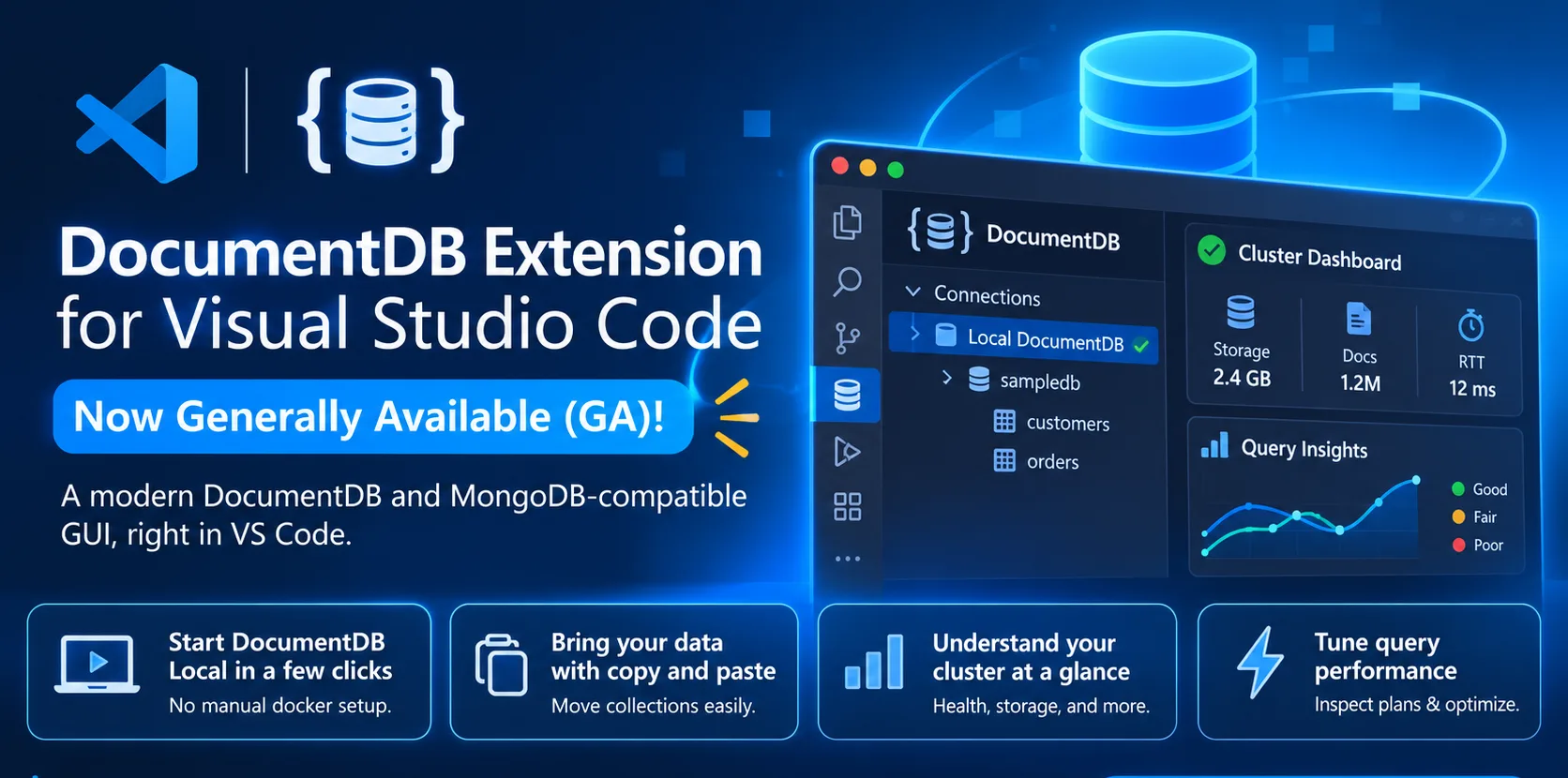
Announcing GA: DocumentDB extension for Visual Studio Code

Today, we are announcing the general availability (GA) of the DocumentDB extension for Visual Studio Code, a developer-first tool built for Azure DocumentDB. If you build on Azure DocumentDB, this extension gives you two ways to work in one place. Go visual when you want fast insight, and go hands-on when you want direct command control. And if your team also works with open-source DocumentDB or other MongoDB-compatible environments, the same extension supports those workflows too. Built for Azure DocumentDB. Open to any MongoDB-compatible database. One tool, two modes: visual plus shell The story is simp...

Join the Azure DocumentDB team at Microsoft Ignite 2026 in San Francisco!

Microsoft Ignite 2026 is just around the corner! From November 17–20, the Azure DocumentDB team will be in San Francisco, and we're excited to connect with developers, architects, and database professionals from around the world. We're especially looking forward to our breakout session, Migrate and modernize MongoDB applications with Azure DocumentDB (BRK375). In this session, we'll explore how to migrate existing MongoDB applications to Azure DocumentDB while minimizing migration risks and disruption. We'll walk through the migration journey - from assessing compatibility and moving data to validating appl...

Modernize MongoDB applications with Azure DocumentDB: From assessment to what’s next
Migrating an existing MongoDB application shouldn't mean starting over. The application code, data models, APIs, and integrations you've already built represent years of investment. The challenge is moving forward while preserving what works. For many organizations, modernization is about more than moving a database to the cloud. It's an opportunity to simplify operations, optimize costs, build on open-source technologies, and prepare applications for new requirements, including AI-powered experiences. Azure DocumentDB provides a path forward. Microsoft's fully managed, MongoDB-compatible database service i...
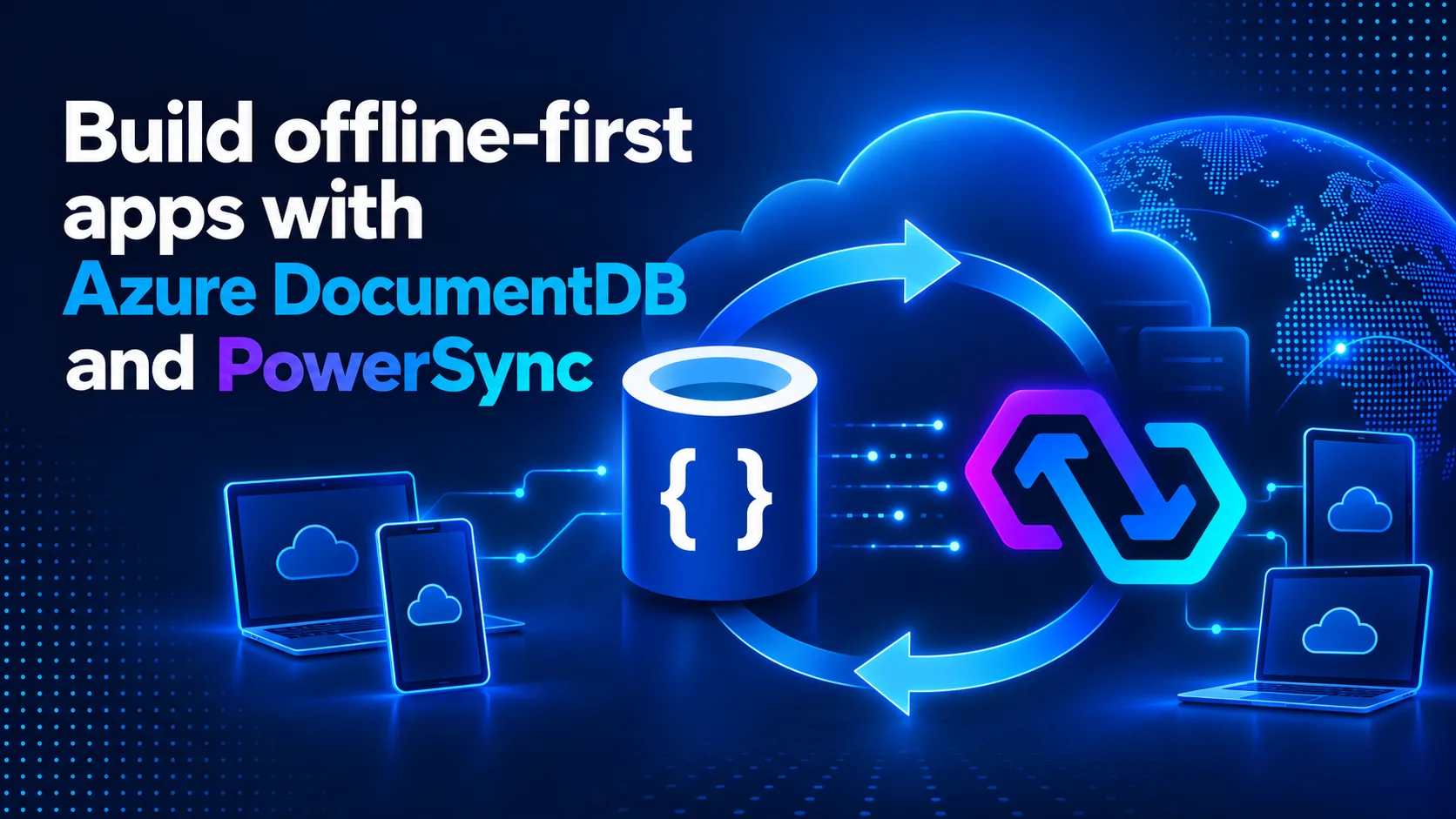
Build offline-first apps with Azure DocumentDB and PowerSync
Modern applications often need to work in places where network connectivity is slow, intermittent, or unavailable. Field service, retail, logistics, healthcare, and mobile SaaS applications are common examples. PowerSync recently introduced alpha support for Azure DocumentDB, giving developers a way to combine Azure DocumentDB as the cloud operational database with local SQLite databases on client devices. Applications can remain responsive and continue working offline while PowerSync synchronizes relevant data in the background. Note: PowerSync support for Azure DocumentDB is currently an alpha release. Be...
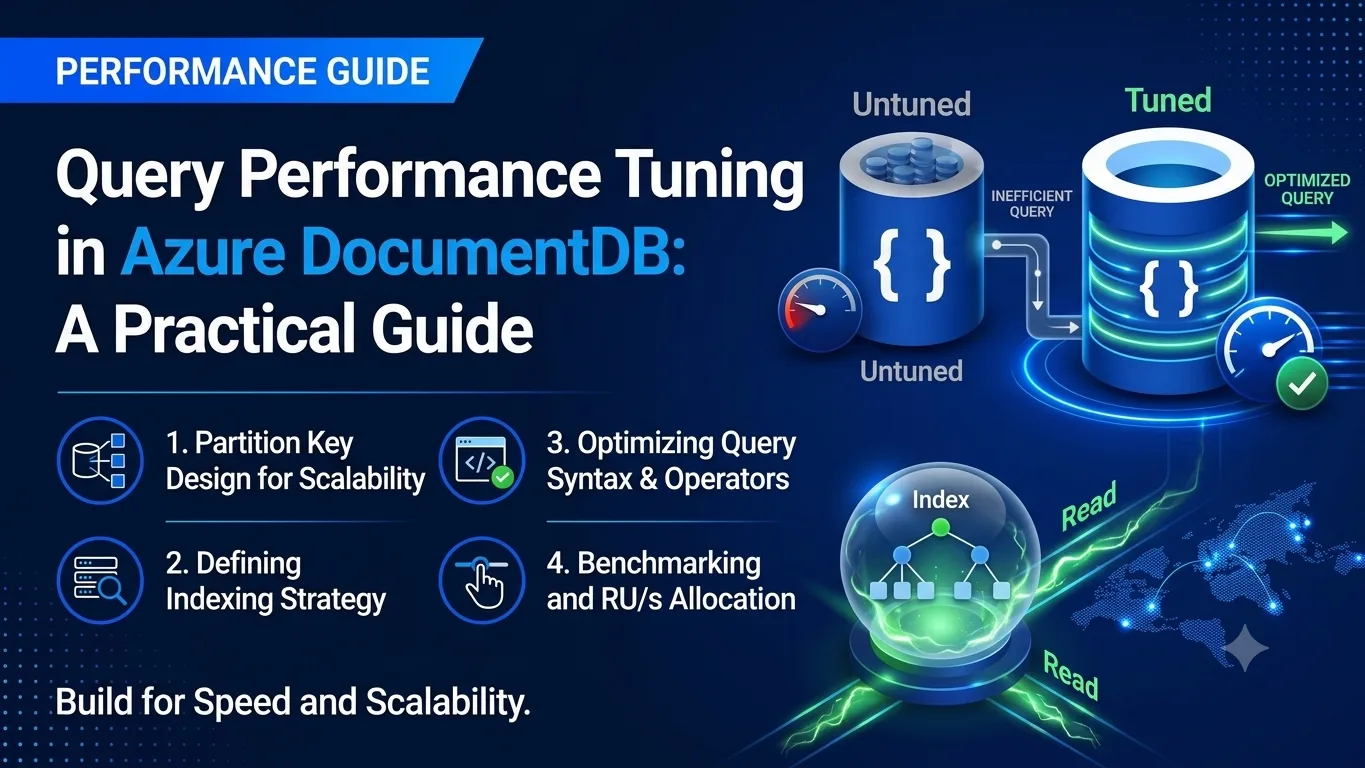
Query Performance Tuning in Azure DocumentDB: A Practical Guide


Writing a query that works is easy. Writing a query that scales is a different story. As collections grow to millions of documents, queries that returned results in milliseconds during development start taking seconds or timing out entirely. The root cause is almost always the same: the database is doing far more work than it needs to. In this post, we’ll take a single, realistic query and walk through the full optimization process: running explain() to understand what’s happening under the hood, building indexes step by step, and applying the ESR rule to design a compound index that eliminates wasted scans and...

How a Large Enterprise Migrated 47 TB and 7,000+ Collections to Azure DocumentDB in Under 48 Hours
Large database migrations are where good planning either pays off or falls apart. In a MongoDB-compatible estate with thousands of collections, the hard part is not only moving data. It is deciding what to move, what to defer, how to sequence the work, and how to keep the system stable while ingestion is running at full speed. That is exactly what we saw in a recent large enterprise migration to Azure DocumentDB: 47 TB of data, 7,000+ collections, a 27-node source footprint, and a production cutover window of less than 48 hours. The target was intentionally smaller and simpler: a 3-node, 16 TB Azure DocumentDB...

Azure DocumentDB – General Availability of Service-Managed Failovers
We are excited to announce the general availability of service-managed failovers in Azure DocumentDB, eliminating the need for human intervention to recover from a regional outage. Running a production database means planning for the unlikely. Regional outages are rare, but when they happen, every second lost can have significant business impact. Previously, protecting against a region-wide failure in Azure DocumentDB required user-initiated actions - starting with monitoring availability and then making a judgment call based on the criticality of the application. Eventually culminating in manually promoting a...
