

If you're in the market for the best small phone, you're not going to find a lot in terms of options. Majority of the devices available out there today are hulking slabs that are near impossible to use with one hand. Smartphones these days are not just used for handling calls and exchanging messages, they're also meant for entertainment and multimedia consumption, which is why they come with fairly big displays. That being said, there are still quite a few smartphones that'll be ideal for consumers who want a reasonably sized phone.
So what exactly can you expect from a small Android phone these days? For starters, most (if not all) of them will have a screen size of 6.3-inch or less. Yes, that's what's considered "compact" in the world of smartphones today. As an alternative, you can also take a look at flip-style foldables, which let you do most of the everyday tasks via smaller outer displays. However, do note that these cost a lot more too.
At a glance

Best overall
While the Samsung Galaxy S26 isn't as compact as the model it succeeds, this is still a relatively pocketable flagship smartphone. You get top-notch hardware, a whole boatload of AI-features, a bigger battery, solid cameras, and more.

Best value
Priced at just under $500, the Google Pixel 10a brings welcome improvements like faster charging speeds and a brighter display over its predecessor. It also has a fully flat back panel that's just better.

Best foldable
Thanks to thoughtful, foldable construction, the Galaxy Z Flip 6 lets you enjoy the benefits of a 6.7-inch display with the pocketable form factor of a small phone.

Best last-gen
The Galaxy S25 is a fairly compact phone that still can do it all, even though it's no longer the newest thing in town. In fact, it's even more compact than the Galaxy S26, which in itself is an advantage.

Best AI features
The Pixel 10 has the same size display as the Pixel 9a and its physical dimensions are roughly the same, making it an excellent premium alternative. It also comes with cutting-edge AI features that you won't find in other Pixels.

Best value foldable
Enjoy the best of both worlds for less than you'd pay for a traditional phone with this snazzy device that folds out to reveal a 6.9-inch screen. But when it's closed, you get a super-compact size and a useful 3.6-inch external screen for accessing basic tasks.
Best overall

With the Samsung Galaxy S26, you get a top-tier Android smartphone that ticks nearly all the right boxes, and then some. Even though it sports a slightly larger physical footprint in comparison to the previous-gen model, the Galaxy S26, for all intents and purposes, can be considered a (relatively) compact smartphone by modern-day standards.
The Galaxy S26 features a refreshed design, highlighted by its triple-lens primary camera system now sitting inside a vertical pill-shaped island. The overall build quality remains fantastic, with full IP68 certification and an Armor Aluminum 2 frame. Up front, you get a bigger 6.3-inch Dynamic AMOLED panel that can hit up to 2,600 nits of peak brightness and features an adaptive 120Hz refresh rate.
Driven by Qualcomm's latest and greatest Snapdragon 8 Elite Gen 5 (for Galaxy) SoC, the smartphone features 12GB of RAM and up to 512GB of internal storage. Unsurprisingly, day-to-day performance is incredible, with the phone being able to handle even the most demanding of tasks with little to no effort. Compact or otherwise, it's hands down one of the best Android phones currently available in the market.
Running One UI 8.5 overlaid on Android 16 out of the box, the Galaxy S26 comes with more AI-based goodies than you'll probably ever use. Of course, the phone will receive up to seven years of OS and security updates, so it'll serve you well for a very long time, in case you end up buying it.
The triple-lens primary camera system is a versatile setup that lets you capture amazing photos in all kinds of lighting. Unfortunately, this camera array has now remained unchanged for several generations, and that's quite disappointing.
What has also remained unchanged are the lackluster charging speeds, even if you do get a slightly bigger 4,300mAh battery. There are no built-in magnets for native Qi2 support, either. All said, the Galaxy S26 is a well-rounded flagship, even if it offers barely anything in terms of upgrades over the previous-gen model.
Attribute | Quick look | Score |
|---|---|---|
Display | Bigger AMOLED panel with adaptive 120Hz refresh rate | ★★★★☆ |
Design | Refreshed design, even if the physical footprint is more than the Galaxy S25 | ★★★★☆ |
Price | Can be had at the same price as last year's model | ★★★★☆ |
Camera | More than decent, but in desperate need of an upgrade | ★★★☆☆ |
Performance | Performs like the powerhouse it is | ★★★★★ |
Battery life | Lasts you all day long and then some | ★★★★☆ |
Updates | Seven years is too good of a promise | ★★★★★ |
Best value

Google's Pixel A-series has come to be renowned for offering tremendous value for money ever since it became a thing, and the newest entry in the line-up also continues that tradition. Yes, it's true that the Google Pixel 10a isn't a big upgrade compared to its predecessor, but there are still some worthwhile improvements.
While the design is almost exactly the same, the Pixel 10a features a fully flat rear, made possible due to the pill-shaped camera setup sitting completely flush with the back panel. The display is still a 6.3-inch pOLED panel having a refresh rate of 120Hz, but the peak brightness has received a nice boost, and the screen is now secured with Corning's Gorilla Glass 7i. The Tensor G4 chipset and 8GB of RAM let you do majority of the everyday smartphone things with effortless ease, and the software experience is exceptional, as you'd expect from a Pixel, even if on-device AI features are somewhat limited.
The Google Pixel 10a takes some of the best-looking photos among smartphones in its price segment, thanks to Google's amazing image processing chops. Overall battery endurance is also quite good for all-day use. The battery is still a 5,100mAh unit, but charging speeds (both wired and wireless) have been improved.
Attribute | Quick look | Score |
|---|---|---|
Display | Works quite well, with improved peak brightness | ★★★★☆ |
Design | Several color options and fully flat design for a superb in-hand feel | ★★★★★ |
Price | Impossibly good price point | ★★★★★ |
Camera | Signature best-in-class Pixel cameras | ★★★★☆ |
Performance | AI features are solid, but not exactly a gaming powerhouse | ★★★★☆ |
Battery life | Improved charging speeds are welcome | ★★★★☆ |
Updates | Industry-leading seven years of OS and security updates | ★★★★★ |
Best foldable

If there's any one specific reason to get a foldable phone, it's to fit a bigger display in an actual pocketable form factor. That's exactly why the Samsung Galaxy Z Flip 6 is the best foldable phone for fans of smaller phones. Sure, it might have a giant 6.7-inch display on the inside, which is anything but "small" or pocketable. But the Flip 6 folds in half when you're done with it, giving you the convenience of a small phone size and a big screen when you need it. I don't know about you, but I'm a '90s kid so the nostalgia factor of flip phones is a big draw for me.
With the Galaxy Z Flip 6, Samsung also boosted the size of the battery, so you can expect longer battery life per charge compared to the Galaxy Z Flip 5. The Z Flip 6 is a hair thinner when it's folded, but otherwise roughly the same as the previous model. The new Snapdragon 8 Gen 3 SoC makes everything about it better, and that includes the camera experience.
Samsung has finally given the Galaxy Z Flip 6 an official protection rating against solid particles, thanks to the IP48 rating. Once again, Samsung has continued to choose refinement over dramatic transformation; buy this phone and you'll be getting one of the most enjoyable and unique small phone experiences around.
Yes, the Samsung Galaxy Flip 7 is a newer option worth considering, but keep in mind that both the inner and outer screens are larger at 6.9--inch and 4.1-inch, respectively. Still, you get a compact form factor with an edge-to-edge display that fits more visual real estate in a (still) small package, an impossibly thinner design, improved battery life, and more. So that model is worth considering as well, if you're willing to go a bit bigger in dimensions and screen but also enjoy a thinner overall footprint.
Attribute | Quick look | Score |
|---|---|---|
Display | Internal display is nicer than the external one | ★★★★☆ |
Design | Classic foldable form factor modelled after flip phones | ★★★★★ |
Price | Pretty darn expensive as it's a foldable | ★★★☆☆ |
Camera | Solid cameras with improved primary sensor | ★★★★☆ |
Performance | Snapdragon 8 Gen 3 for Galaxy is an absolute beast | ★★★★★ |
Battery life | Good uptime but slow charging speeds | ★★★★☆ |
Updates | Samsung's top-notch seven-year promise | ★★★★★ |
Best last-gen
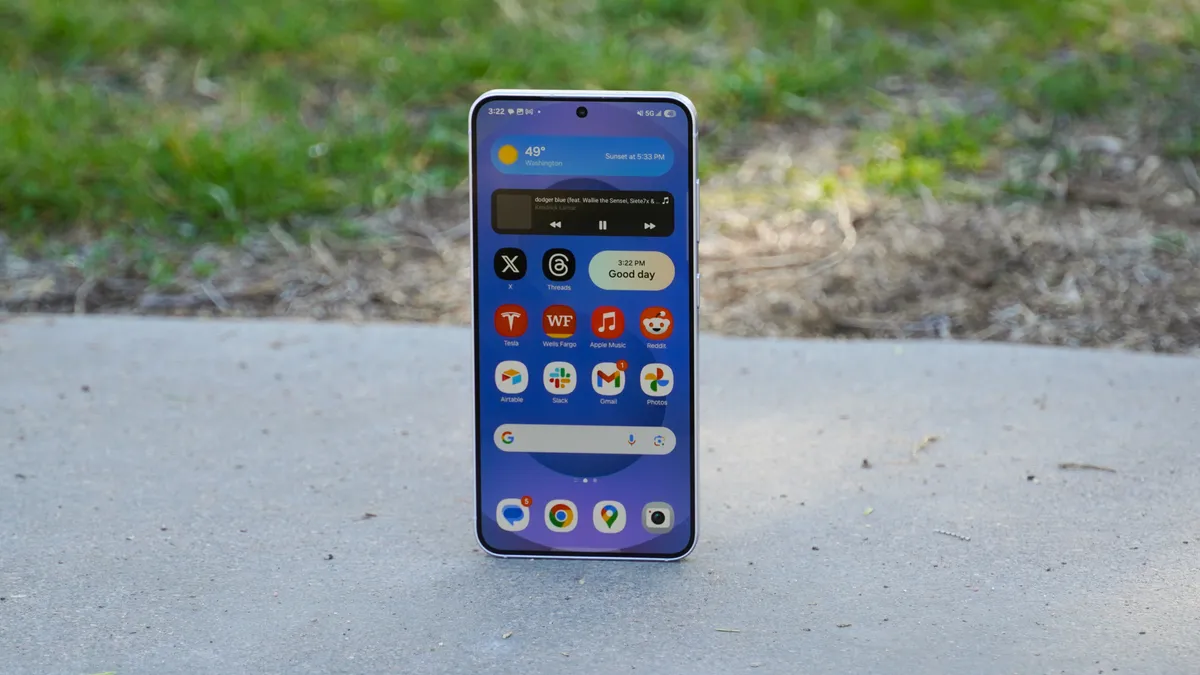
Even though it's no longer the latest and greatest thing in town, the Samsung Galaxy S25 remains a powerhouse of a smartphone that offers everything a user could possibly need. As noted by Android Central's Brady Snyder in his review, the Galaxy S25 is the last compact Android flagship. In fact, if you were to compare it with its successor, you'd see that not a lot has changed. If you don't mind having a previous-gen phone, this is the one you should take a look at.
Now (potentially) available at a more approachable price, the Galaxy S25 features Qualcomm's Snapdragon 8 Elite (for Galaxy) chipset and 12GB of RAM, a combo that's more than capable of handling everything you throw at it. The smartphone performs well when it sustained workloads. This helps keep the temperature low, thus reducing the load on the battery.
Speaking of which, the battery is still 4,000mAh, and the charging speeds aren't anything remarkable, either. The Galaxy S25 packs all of Samsung's fancy AI tools and tricks and will receive seven years of OS and security updates, so it's a phone you can keep on using for a very, very long time. Apart from that, you get a very good triple-lens rear camera system, an IP68 rating, and a whole lot more.
Attribute | Quick look | Score |
|---|---|---|
Display | Bright AMOLED panel with adaptive 120Hz refresh rate | ★★★★☆ |
Design | Slimmer and lighter than the Galaxy S24 | ★★★★★ |
Price | Standard base-level flagship pricing | ★★★★☆ |
Camera | Same decent ones from last year but not impressive enough | ★★★☆☆ |
Performance | Performs like the powerhouse it is | ★★★★★ |
Battery life | Lasts you all day long and then some | ★★★★☆ |
Updates | Seven years is too good of a promise | ★★★★★ |
Best AI features

The Google Pixel 10 might not seem particularly impressive over the Google Pixel 9 at first glance, but the changes to the design, the larger battery, and its new AI features kind of make up for the increase in price. The Pixel 10 comes with similar dimensions to the Pixel 9, so it's compact and sleek, although a tad thicker with a wider camera bar.
Software is once again the highlight of the Pixel 10, thanks to novel and useful AI tools. The Tensor G5 chipset lets the phone run Gemini Nano with Multimodality for understanding text, images, and audio, and process results on device. New GenAI tools allow you to add objects and visual elements to enhance the existing images.
Gemini AI Live is baked right in so this smartphone functions like your own little personal assistant. The Pixel 10 is also guaranteed to get seven years of OS and security updates too, making it future proof. There are handy new features and tools, too, like Daily Hub for providing useful information and recommendations at-a-glance, Pixel Journal, and Magic Cue, which can anticipate what you need across apps and intelligently provide background assistance.
The cameras are surprisingly a slight downgrade from the Pixel 9 but that comes at the expense of a pretty awesome 5x telephoto camera that our reviewer finds works better than the zoom sensors on many other competing phones by other brands.
Personally, I'd splurge on the Pixel 10 Pro over the Pixel 10, which boasts the same size screen but notable upgrades in RAM and cameras with a higher resolution display and glossier, sleeker frame. It'll cost you an extra $200 but you'll get more power in a smartphone that's the same size.
Attribute | Quick look | Score | Header Cell - Column 3 |
|---|---|---|---|
Display | Stunning and bright with crip picture quality | ★★★★☆ | Row 0 - Cell 3 |
Design | Attractive new design with cool colors like the new Indigo | ★★★★★ | Row 1 - Cell 3 |
Price | Similar starting point as Galaxy S25 | ★★★★☆ | Row 2 - Cell 3 |
Camera | State-of-the-art photography and AI features | ★★★★★ | Row 3 - Cell 3 |
Performance | Tensor G5 brings useful AI features | ★★★★☆ | Row 4 - Cell 3 |
Battery life | About a day's worth or a bit less, slow charging | ★★★☆☆ | Row 5 - Cell 3 |
Updates | Stellar seven-year guarantee | ★★★★★ | Row 6 - Cell 3 |
Best value foldable

Sure, the Samsung Galaxy Z Flip 6 is the one we'd name the best foldable phone. But if you're looking for a really affordable small-screened phone but you feel like you might need a big screen now and then, the Motorola Razr 2025 is the answer.
Even though it's fairly large once unfolded with a huge 6.9-inch screen, you can use it folded for basic tasks, which you can handle via the smaller external screen that measures just 3.6 inches in size. This includes items like widgets for calls and messages, calendar events, weather updates, even playable games.
The phone is an upgrade from the previous-gen model, now coming with IP48 rating. Combined with the titanium-reinforced hinge, you can open and close it up to your heart's desire and enjoy both the small-screened and large-screened experiences.
While our reviewer found that performance lags at times with the chipset; given its price, the Motorola Razr 2025 is a solid entry into the foldables space if you just want to test the waters. The battery life is excellent too, he found, which is a huge selling point. It takes pretty decent photos too, and you get access to premium AI features.
The only downside here is that you only get three years of software support and four of security, so it isn't going to last as long as something like the Galaxy Z Flip 6. But if you want an affordable foldable with a usable external screen so you can keep it small when needed, you won't be disappointed.
Attribute | Quick look | Score | Header Cell - Column 3 |
|---|---|---|---|
Display | Two funky displays that you let you do it all | ★★★★☆ | Row 0 - Cell 3 |
Design | Attractive design with many color choices | ★★★★★ | Row 1 - Cell 3 |
Price | Costs less than the previous-gen base Galaxy flagship | ★★★★★ | Row 2 - Cell 3 |
Camera | More than decent cameras for everyday usage | ★★★☆☆ | Row 3 - Cell 3 |
Performance | Dimensity 7400X works well for daily tasks | ★★★☆☆ | Row 4 - Cell 3 |
Battery life | About a day's worth or a bit less, slow charging | ★★★★☆ | Row 5 - Cell 3 |
Updates | Big battery with solid endurance | ★★★★☆ | Row 6 - Cell 3 |
How to choose
These days, it's all about big phones. But those who prefer a compact experience can still choose from a fantastic selection of both new and previous-gen devices. This includes both standard bar-style phones as well as foldables that give you a tiny screen for glanceable information, and a bigger panel when you really need it.
When it comes to overall performance, the Galaxy S26 is an easy choice with the latest Snapdragon 8 Elite Gen 5 (for Galaxy) chipset and top-tier software support from Samsung with seven years of Android updates. Compared to the Samsung Galaxy S25, the Galaxy S26 does have a slightly larger physical footprint, but you do get a bigger display and a larger battery.
The Google Pixel 10a may not be what everyone considers "small" but it still has amazing specs across the board, comes in at a price that's more than reasonable, and can still be considered small by modern phone standards. Sure, it's not a big upgrade over the Pixel 91, but the improvements are welcome, nonetheless. You get faster wired and wireless charging, a brighter display, and a more minimal form factor. The attractive price, of course, is what makes this thing a complete bang for your buck(s). If you want a more premium experience in a similar form factor, the Pixel 10 checks all the boxes while still retaining the same size. And if you have a bit more to spend, go with the Pixel 10 Pro that's still just as compact but adds plenty more power.
If you want a foldable, you can't go wrong with the Samsung Galaxy Z Flip 6. But consider the Galaxy Z Flip 7 if you don't mind something a smidge better, noting that it's also much thinner, too. For something to test out the waters, take a look at the more affordable Motorola Razr 2025.
How we test
☑️ One of the oldest and most trusted Android sites on the web
☑️ Over 15 years of product testing
☑️ Thousands of products reviewed and tested since 2007
☑️ Over 50 phones tested every year by our team
Phones are obviously our bread-and-butter here at Android Central, so we take testing extremely seriously. We start by approaching phones with a consumer's mindset, namely because we are consumers first and foremost, in addition to Android enthusiasts with decades of collective experience under our belts.
In addition to benchmark programs and lab tests, we get hands-on to run phones through regular use-case scenarios, such as night photography and vigorous mobile gaming sessions. We'll run multiple performance-intensive apps at the same time to see at which point a phone will overheat or lose battery life, and we'll drain the battery of a phone to zero to test recharging speeds.
Our methods also include testing connectivity, so we'll go in and monitor Wi-Fi and 5G speeds to see if each device is meeting the manufacturer's claims. We'll also check Bluetooth connectivity speeds and range to ensure that your device will quickly connect to your favorite accessories at a reasonable distance.
Once we've gone through all of our testing protocols, we'll assign the device a score based on an aggregate of our metrics. Needless to say, if a phone has four or more stars, you can rest easy knowing it'll be a great device that should last you for years to come. If you want to learn more, check out our guide to Android Central's testing and review policies.


