Simon Says Something Snarky

BERJAYA
Simon the Sorcerer II: The Lion, the Wizard and the WardrobeThe first game ended with Simon being pulled against his will into the sequel, but that’s not exactly how this one starts, even if the part of his being unwillingly dragged into the game is still there. It starts with a strange kid who talks like Peter Lorre bringing the villain Sordid back into a robot body. The two of them send a magical wardrobe to Simon’s house to transport him back to the fantasy world, with the evil wizard even mentioning that he got the idea from a children’s book. Simon ends up outside Calypso’s shop, and the owner informs him that he’ll need a magical fuel called Mucusade to get back. So our hero has to go through the typical series of puzzles to find some. This time, most of the locations you can visit are pretty small, and Simon accesses them through a map screen. You can go from one to the other at will, and pretty much have to in order to follow the clues, although there are some places you can’t access right away. And in terms of characters becoming meaner in later appearances, as with Roger Wilco and Guybrush Threepwood, Simon, who was already pretty snarky in the first game, here is openly rude to pretty much everybody. I guess being forcibly returned to a place that you didn’t like that much the first time and not even getting any recognition for defeating Sordid will do that to a guy. He seems particularly nasty to Calypso’s granddaughter, who never does anything to him and is in fact quite friendly.
BERJAYA
He does draw the line at actually feeding a cat to a carnivorous plant, although he has to taunt it with the feline in order to get past the goblin guards. There’s the same mix of quasi-medieval fantasy and more modern references, including a loan office that fires a catapult at the homes of delinquent clients, Ladies of the Lake who alternate shifts in wetsuits and guard a sword in the stone that can only be pulled out by someone with a crown tattoo, a pet shop run by a madman who combines animals, the Three Bears having a state-of-the-art security system after the Goldilocks incident, a drunken genie who has to be sobered up with caffeine pills, the Graeae adding several more repetitions of “ae” to their name, and a group of nerds who role-play what would be mundane professions to people from our world.
BERJAYA
If anything, it somewhat emphasizes the modern elements over the plethora of classic fantasy and fairy tale references from the last game. Several familiar characters show up again, most notably the pathetic Swampling, who now runs a fast food restaurant called MucSwampling’s.
BERJAYA
I wonder how it compares to Monolith Burger. Once you finally find the Mucusade, you’re captured by pirates and have to figure out a way to get away from them.
BERJAYA
I’m currently playing the third Monkey Island game, and I know this series was influenced by that one. And yes, there is a lion, who takes Simon to the last area in the game, and has an amusing design and animation.
BERJAYA
Also entertaining is the eldritch abomination in Sordid’s castle who’s basically a bunch of pig heads joined together.
BERJAYA
The whole thing ends on a cliffhanger. I have to say this game feels kind of small compared to its predecessor, but it’s still funny. It probably doesn’t help that Simon himself is irritated and dismissive throughout his adventures, which kind of rubs off on the player. By the way, the character was apparently not consciously named after its designer, Simon Woodroffe, or Simon Magus.
BERJAYA

Posted in Animals, Art, Authors, C.S. Lewis, Chronicles of Narnia, Fairy Tales, Food, Greek Mythology, Humor, lucasarts, Magic, Maps, Monsters, Mythology, Names, Video Games | Tagged , , , , , , , , , , , , , , , , , , , , , | Leave a comment

Lifestyles of the Rich and Clueless

SPOILERS for all four of these movies!

BERJAYA
The Substance – This movie is a combination of body horror and satire, and it’s incredibly blunt in its message. Demi Moore stars as Elisabeth Sparkle, a movie star and exercise show host who’s fallen out of fashion. She learns about some weird experimental treatment that creates a new, younger body, played by Margaret Qualley; but requires that she switch between them every week. As such, she’s able to apply for a job as her own replacement, just calling herself Sue. Since she’s young and pretty, nobody cares whether she has a last name or that she never has anything relevant to say, or for that matter that she can only work every other week. But then, her not having a proper name kind of fits with this universe in general. We never receive any of the bits of world-building that would normally be in a story like this, like what movies Elisabeth had starred in or what network her television show is on. While both her exercise show and the one in which Sue stars do have names, the billboard promoting the latter before it goes on the air just says, “New Show.” And Sue is booked to appear on something called simply “The New Year’s Eve Show.” Perhaps it would be fair to consider the movie an allegory, since pretty much everything about it is symbolic, including the characters. It also largely takes place in enormous and largely empty rooms and corridors. Elisabeth becomes so obsessed with the fame and appreciation she gets as Sue that she tries to game the system by staying in that body way more often than she’s supposed to, which ruins her original body. Beth compared it to Gremlins in that the rules don’t seem to make any sense, but breaking them makes bad things happen. Elisabeth’s breaking of the rules is more intentional, however. I also have to say that this is an effectively gross movie, largely with the various weird stuff going on with Elisabeth’s body, which did make me feel a bit queasy at times, but not limited to that. Her producer is demonstrated to be a creep by showing him not washing his hands in the bathroom, and then chewing with his mouth open. And it can also be funny in its bizarreness, like how the creepy procedure that duplicates human bodies is just presented like any other fairly generic health and beauty product. So I liked it, but at the same time I felt the film just hit the viewers over the head so much with a pretty obvious message, without really letting up at all. At the same time, I doubt the fact that this movie was well-regarded will do anything to mitigate the Hollywood shallowness that it’s spoofing.

BERJAYA
Christmas Eve in Miller’s Point – Beth really liked this one, and thought it was a good watch, but I’m not sure I got that much out of it. It’s about a large Italian family gathering for Christmas Eve at their Long Island home, and it doesn’t focus on any one character, instead switching between them a lot. It comes off as more of a collection of snippets, often humorous, that don’t really drive anything forward. Towards the end, there’s a lot about the younger family members finding other kids and hooking up with them. I have to give it some credit for not functioning like a typical movie, but it does make for a weird viewing experience.

BERJAYA
Glass Onion: A Knives Out Mystery – We watched this with my dad, and I hadn’t seen the original Knives Out, although Beth had. From what I’ve seen, though, it’s mostly a standalone film, the only thing really carrying over is Benoit Blanc, the genius detective with an aw-shucks Southern accent. The plot involves billionaire tech CEO Miles Bron, played by Edward Norton, inviting a group of old friends whom he had supported financially to his private Greek island to play a murder mystery game. The group consists of the Governor of Connecticut, Bron’s head scientist, a misogynistic Twitch streamer and his girlfriend, a fashion designer who regularly uses ethnic slurs due to complete cluelessness and her assistant, and Bron’s former partner. There isn’t initially any evidence of an actual crime, but it turns out that everyone knew more than they were letting on, including that all of the friends had testified in court against the former partner, Cassandra Brand, played by Janelle Monae. Part of the way through the movie, we see a lot of the same scenes again from a different perspective, giving the audience extra information. While I don’t see any reason to give away the twists and revelations, I did find it interesting that Blanc approaches the case expecting a complicated plot, but it turns out to be pretty stupid and obvious, so it takes him a while to solve it. I don’t think it’s at all coincidental that Bron, who copies other people’s ideas, wants to rush out flawed products, and can barely make it through a sentence without making some kind of error, bears some clear similarities to Elon Musk, although I’m sure there are plenty of other filthy rich but not very bright people who also fit this description. The movie takes place during the COVID-19 pandemic, and makes a point of showing Bron’s assistant giving everyone some kind of spray that presumably prevents them from catching or spreading the virus before they travel to the island. Since a significant aspect of the plot is that Bron cares more about public perception than getting things to actually work, I have to wonder if it didn’t really do what it was supposed to, but it doesn’t come up at all after that one scene.

BERJAYA
Burnt Offerings – This is a haunted house movie where the house itself is the malevolent entity. A couple, Ben and Marian, and their son Davey rent a house in the country for a vacation, and find it owned by two eccentric siblings who want to get away. They offer it for a low price, and the only real stipulation is that the renters care for their infirm mother, Mrs. Allerdyce. Karen Black stars as Marian, Bette Davis as Ben’s Aunt Elizabeth, and Burgess Meredith as one of the owners. We started watching this soon after another movie Meredith was in, but put off finishing it for a while. The house seems to have a mysterious and often terrifying effect on its guests, causing the dad to try to kill his son while they’re playing in the pool, and his wife to spend most of her time in Mrs. Allerdyce’s room polishing pictures and listening to a music box. She also becomes obsessed with the old woman, but never lets anyone else see her. As the house hurts and kills people, it starts to repair itself, ending up looking pristine. After we watched this, Beth said she’d seen people online calling it a boring version of The Shining, which is appropriate in some ways, but that movie didn’t have the hotel rejuvenating itself. While the “offerings” part of the title is obviously relevant, I don’t recall any burning in it. I also remember seeing images of the hearse driver who appears in Ben’s nightmares before seeing the movie.
BERJAYA

Posted in Advertising, Celebrities, Christmas, Corporations, Dreams, Families, Games, Holidays, Humor, janelle monae, Medicine, Monsters, Music, New Year's Day, Relationships, Snobbery, VoVat Goes to the Movies | Tagged , , , , , , , , , , , , , , , , | Leave a comment

Regicide Salad

Entirely coincidentally, I’ve finished a few books as of late that involved a king being killed. With two of them, it’s even in the title. So there’s sort of a theme here, although the first few books I talk about in this post don’t fit into it.

BERJAYA
The Story of the Champions of the Round Table, by Howard Pyle – This is one that doesn’t deal with regicide. Arthur was famously killed, but that doesn’t happen in this volume. The follow-up to Pyle’s first book on the subject, which focused on Arthur, this one is mostly the adventures of three particular knights: Lancelot, Tristram, and Perceival. The author continues with his tendency to leave out the more disturbing parts of the legend as it’s often told, in this case dismissing the idea that Lancelot and Guinevere had a sexual relationship.
BERJAYA
His part of the book tells about how he was raised by the Lady of the Lake, and of his many adventures, including his being held captive by Morgan le Fay.
BERJAYA
Tristram’s story begins with his stepmother trying to have him killed, although they make peace after he saves her life. He is knighted by his uncle, King Mark of Cornwall, who then goes on to mess with him out of jealousy, including forcing him to win the hand of his own lover, Lady Belle Isoult of Ireland, for Mark.
BERJAYA
Tristram also forms a close friendship with Sir Lamorack, has his life threatened by another queen, and spends some time going mad in the woods, which apparently happened a lot more often in those days.
BERJAYA
And he’s a skilled harpist.
BERJAYA
Perceival, son of King Pellinore, is raised in isolation and hence is naive about most things, but still a powerful knight with a strong sense of honor.
BERJAYA
His exploits include seeing the Holy Grail and the Spear of Longinus on Christmas Day.
BERJAYA
There’s at least one instance in this book of two knights switching their armor and no one being able to tell which is which.

BERJAYA
Kwakiutl Legends, as told to Pamela Whitaker by Chief James Wallas – I read this one to see if I could find any more information on the Dzunukwa, a being I saw referenced online. The Kwakiutl are a First Nations group native to the Pacific coast in southwestern Canada, including Vancouver Island. While I’m no expert, I’ve noticed that collections of Native American mythology that I’ve read tend to contain what are basically fables. They’re short, animals talk, one animal often stands in for its entire species, and there’s nothing that weird about a human marrying a killer whale. One story involves a mink (called Made-Like-the-Sun) has trouble finding a wife, and tries marrying several different inanimate objects. There are some thunderbird stories, and one denouncing dog fighting. Another is about a man who’s partially made of sunshine. A legend about the discovery of fire has a deer taking it from the only man who has access to it, and that’s why the hair between a deer’s legs smells like smoke. I guess I’ve gotten a little more used to epic tales from European mythology, but even there they’re more the exception and didn’t exist until after centuries of oral storytelling.

BERJAYA
Rosalina’s Storybook, by Yoshiaki Koizumi – Originally appearing in Super Mario Galaxy as a bonus feature that gets unlocked over the course of the game, it’s finally available as a physical book eighteen years later. I have to suspect that this has something to do with Rosalina being a significant character in the upcoming Mario movie. There was also a Switch port of the game released this year, and that apparently has additions to the storybook that aren’t in the printed volume. The art is very much in the style of watercolors, but still recognizably Super Mario. It’s a very melancholy story, with a young Rosalina trying to process the death of her mother, not something that comes up a lot in the franchise.
BERJAYA
After becoming caretaker to the Lumas, she makes a decision to visit her home planet every hundred years, and that becomes the Star Festival in the Mushroom Kingdom.
BERJAYA
It’s not clear how old she is or how she’s managed to live that long, but some form of time dilation might be involved. As I’ve written before, I understand Rosalina was originally intended to be related to Peach, and she might still be, but presumably a very distant relative from a different era of Mushroom royalty. The book also tells us that Star Bits taste like honey, and shows us that Rosalina had a stuffed Star Bunny before going into space.
BERJAYA
Anyway, it’s nice to have a copy of this.

BERJAYA
The Poisoned King, by Katherine Rundell – The sequel to Impossible Creatures sees Christopher Forrester returning to the Archipelago to investigate some mysterious dragon deaths. He joins up with Princess Anya Argen of Dousha, whose grandfather had been poisoned and her father framed for the crime. It turns out that the poison is affecting not only that kingdom, but all of the hidden area and its mythical inhabitants. Anya’s favorite thing to do is to tend her Gaganas, birds from Russian folklore with iron beaks and copper claws, although the royal variety has golden beaks and silver claws. We learn that, while dragons do love gold, the main reason they hoard it is to keep it away from humans, who cannot be trusted with it. And firebirds are known to be able to detect poison, which comes in handy in this story. We also meet a Harpy librarian with a batrachomyomachian mouse assistant, based on the mice from a satirical Greek epic. And a Chimera plays a significant role.

BERJAYA
Anji Kills a King, by Evan Leikam – We don’t have to wait long for the titular action to take place, with a castle laundress cutting the king’s throat and going on the run. She’s pursued by the Menagerie, a group of bounty hunters who wear animal masks. The first one she encounters is the Hawk, whose real name is Kit, a jaded, aging warrior who takes a drug to keep in shape, but it’s slowly turning her into a monster. The two of them have a complicated relationship, starting out irritated by each other but gradually gaining mutual respect and forming a sort of friendship. There’s a lot going on in the story that’s only touched upon in the narrative, including a violent religious cult that’s been gaining power, and the government structure that employs bounty hunters. And there’s a fight against a giant spider. It’s pretty good, if a little slow at times.

BERJAYA
Zeus Is Dead: A Monstrously Inconvenient Adventure, by Michael G. Munz – The king who’s killed in this one is the ruler of the Greek gods, but I’d say it still counts. This book has been on my to-read list for a while. It’s a comedic story about Zeus dying (well, obviously) and the other gods returning to the public eye, with Poseidon taking over as king. Apollo realizes that some of his fellow deities were behind the death, and seeks help from the Muses and some mortals to bring Zeus back. One of them, Tracy, is the daughter of Zeus who’s working as a producer on a popular show about killing the mythical monsters that have become common since the return of the gods. Another, Leif Karlson, is a kind of obnoxious guy who falls in love with Tracy despite not knowing her due to Aphrodite’s machinations. I kind of think there were two many ideas incorporated into this one, with some aspects not really being developed and others just being there for the sake of a quick joke. The author pokes fun at the occasional laziness of the plot, a sort of humor I appreciate and have done myself, but I wonder if he overdoes it a bit. It jumps around from being about the reaction to the gods revealing themselves and the mystery of what happened to Zeus, but there’s also a Christian group that employs ninjas and is trying to get hold of the cans in Swindon into which the Titans had been imprisoned, the eventual fight between the gods and Titans, and a recurring young goth priestess of Hecate who shows up from time to time. That said, there are some delightfully absurd comic characters, including a talking tree and a live sundae who are both temporarily elevated to godhood by Zeus. The classical deities are also entertaining, with exaggerated personalities. Ares is a violent dimwit, Aphrodite a spoiled rich girl, Dionysus a lecherous and hedonistic jerk who spends a lot of time in a Las Vegas casino, and Demeter a childish hippie who’s obsessed with baking cakes and believes that the Titans were sent to a farm where they could run around and play. Overall, I enjoyed it, and I’ve heard a sequel came out recently.

Posted in Animals, Art, Arthurian Legend, Book Reviews, British, Christianity, Christmas, Drugs, Greek Mythology, Health, Holidays, Humor, Magic, Mario, Monsters, Music, Mythology, Native American, Relationships, Religion, Video Games | Tagged , , , , , , , , , , , , , , , , , , , , , , , , , , , , , , , , , , , , , , , , , , , , , , , , , , , , , , , , , , , , | Leave a comment

Courses for Horses

BERJAYA
I’ve had another one of my stories published in the 2025 issue of Oziana, and since I’ve now read my contributor’s copy, I suppose I should say a few things about it. The cover illustration is by Stephen Smith.

“The Royal Joust of Oz,” by Scott B. BlankeThe Yellow Knight has been transformed back into his old Sir Hokus of Pokes form by the son of the Sultan of Samandra, who wanted to marry Marygolden. The only way to break the spell is for Hokus to prove his right to be a knight by winning in a joust, so his friends in the Emerald City arrange one. As Stampedro was caught in the same spell, Ozma brings back Jim the Cab-Horse to serve as the knight’s steed. The Scarecrow, Captain Fyter, the Sawhorse, and the Doubtful Dromedary also participate; and Ku-Klip manufactures some armaments. I remember Chris Dulabone publishing a book by Annie Brozozowski called The Joust of Oz that deals with a similar subject, but I haven’t read it, and I’m pretty sure the author hadn’t read Yellow Knight before writing it. This story is pretty fun, allowing a lot of characters to react to what’s going on. I do find it interesting that Hokus says he killed a giant when on a quest with Dorothy, when the only giant I can recall them encountering together was Bangladore the Candy Giant, whom the knight knocked down but didn’t kill. The illustrations on this one are by Rob. Lauer, and I liked this one of various ladies attending the tournament.
BERJAYA

“The Piglets and the Tin Soldier,” by J.L. Bell – This story is inspired by the Soldier’s distaste for the Swynes in Tin Woodman. Here, he has to transport their children, the Nine Tiny Piglets, to their house to visit them. The Piglets aren’t given names or distinct personalities like in some other stories about them, but as a group they act like kids on a long car ride. The Captain is irritated by them at first, but they later help him out.

“The Low Mare of Oz” – This one is mine, and it continues my trend of mixing and tying together elements from both official and unofficial Oz materials. The main idea behind it is how L. Frank Baum claimed there were no horses in Oz, but they appear fairly often in books by later authors, and even Baum has characters who know what horses are even when they don’t appear. March Laumer actually addressed this in his Farewell, when in an imaginary conversation with Thompson, it comes up that a good name for a story explaining this contradiction would be “The Low Mare of Oz,” after how Laumer pronounced his own name. I made a few other Laumer references as well. I tend to see his works as an alternate continuity, but that doesn’t mean some elements can’t overlap. I also brought in the Worm Wizard who’s mentioned but doesn’t actually appear in Melody Grandy’s Zim Greenleaf. I have to wonder if these references to things not a lot of people have read are distracting to readers, but I personally find them fun. Lauer also drew the pictures for this.

“The Tin Man of Oz in Where’s My Oil Can?”, by Mel Vavaroutsos – This short but charming comic featuring the Tin Woodman and Scarecrow feels like a children’s picture book.

“The Missing Key,” by J.L. Bell – The comic is followed up by another tale of a familiar character losing an integral item, in this case the key to wind up Tik-Tok. Snip from Lost King searches for it, and finds himself dealing with a Winged Monkey, a magpie, and the Queen of the Field-Mice.

“The Bricks,” by Catherine Lombardi – The framing device here is that, as the bricklayer Phil explains, the yellow bricks in the famous road can tell stories. The one here is about a young couple and a bird whisperer thwarting a plot to overthrow Nick Chopper early on in his reign. It has its own style, and features some interesting birds. It does seem a little weird that Winifred’s bird-whispering skills are said to be unusual in a land where animals talk.

“A Catastrophic Celebration in Oz,” by Scott B. BlankeDr. Pipt, who has taken to making candles after losing his magical powers, and his wife Margolotte throw a party attended by several celebrities. The Gump, being tired of simply hanging on the wall, is reassembled into a flying contraption to bring Dorothy and Ozma to Pipt’s house. It’s said that being in the tornado made Dorothy afraid of heights, which isn’t something that comes up in the original books (it’s the Cowardly Lion who’s afraid of flying in the Thompson tales), but makes a certain amount of sense. There’s also a recurring joke about Margolotte making terrible food. The Patchwork Girl finds another cloth doll made by the magician’s wife, all blue instead of in different colors, and an accident involving the doll results in Ozma, the Wizard of Oz, and the Sawhorse being turned to marble with the Liquid of Petrifaction. The other characters have to try to find a way to restore them. Scraps wants the doll to be brought to life so she can have a sister, but it doesn’t happen.
BERJAYA
Probably a good idea in the long run, but I have to wonder what her personality would have been like.

That’s it for the issue, but I have another Oz item to write about.

BERJAYA
L. Frank Baum’s The Patchwork Girl of Oz, Volume 1, adapted and illustrated by Otis Frampton – I had heard about this graphic novel version of the book, not affiliated with the Marvel ones by Eric Shanower and Skottie Young, but still picking up where they left off. I happened to be at Books of Wonder yesterday, and they had some copies of it. Frampton’s style is cartoonish, but not as abstract as Young’s. He does a lot with facial expressions, and Ojo has a fifties hairstyle and a top hat. The dialogue is largely straight from Baum, but with a few extra details. This volume ends with the characters in the house with the disembodied voice.

Posted in Animals, Art, Book Reviews, Characters, Chris Dulabone, Comics, Diane Brzozowski, Food, Humor, L. Frank Baum, Magic, Magic Items, March Laumer, Melody Grandy, Oz, Oz Authors, Places, Ruth Plumly Thompson | Tagged , , , , , , , , , , , , , , , , , , , , , , , , , , , , , , , , , , , , , , , , , , , , , , , , , , , , , , | 2 Comments

What’s Ettin You?

BERJAYA
I was looking at the TV Tropes page about individual beings with multiple heads, and I must say that, while I’ve seen criticisms of the site not being a good way to engage with media, it’s quite useful when you want to see lists of media that use variations on the same idea. I saw a mention of Ettins, which seemed familiar, and I think that’s because they’re monsters in Ultima IV, which I’m slowly playing through. While the in-game sprite makes them look at least to me like they have antennae, they’re actually supposed to be two-headed giants.
BERJAYA
They’re known for talking to themselves and throwing giant boulders. As with a lot of early role-playing video games, the monsters in this series were almost certainly heavily influenced, or sometimes just taken wholesale, from Dungeons & Dragons.
BERJAYA
The Zorn is essentially the same as the D&D Xorn, both being strange-looking creatures with mouths on top of their heads that can burrow through anything.
BERJAYABERJAYA
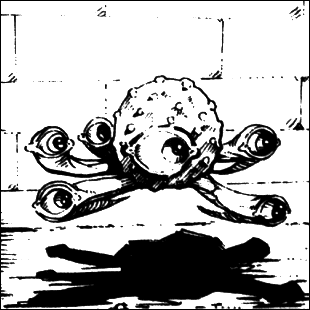
And Gazers are based on Beholders.
BERJAYA
The word “Ettin” is an old English variant on the Norse Jotun. The term is used to refer to Grendel in Beowulf. It doesn’t specifically refer to a giant with more than one head, but such beings are pretty common in folklore. The Scottish fairy tale “The Red Ettin” uses the term for a three-headed giant who kidnapped the daughter of the King of Scotland, and asks everyone who comes to his castle three riddles, one with each head.
BERJAYA
The person who succeeds at killing him gets the correct answer from a fairy woman with whom he shared his bannock, and cuts off the heads with an axe. The story “Jack the Giant Killer” has the titular character defeat, in turn, giants with one, two, and three heads. He tricks the two-headed one into slashing his own belly, and spares the three-headed in exchange for some magical treasures.
BERJAYA
Halvor in “Soria Moria Castle multiplies this idea by having Halvor fight trolls with three, six and nine heads.
BERJAYA
Henrik Ibsen’s Peer Gynt has a line about how trolls with two or three heads are no longer in fashion, and Tolkien has a similar line in The Hobbit about trolls behaving badly, “even those with only one head each.” That said, I don’t think trolls with more than one head appear in any of his works. C.S. Lewis’ Chronicles of Narnia mentioned a giant with two heads, Pire, who was defeated by King Olvin of Archenland and turned into a mountain. I also remember noticing as a kid that both Narnia and Middle-Earth had similarly named areas, Ettinsmoor in the former and the Ettenmoors in the latter. Both are named in reference to giants, specifically trolls in Tolkien, with Aragorn’s grandfather Arador likely having been killed there. Lewis also mentions Ettins in The Lion, the Witch, and the Wardrobe as one of the many types of creatures who fight for the White Witch, but not how many heads they had.
BERJAYA

Posted in Authors, British, C.S. Lewis, Chronicles of Narnia, Etymology, Fairy Tales, Games, J.R.R. Tolkien, Language, Monsters, Mythology, Norse, Plays, Scottish, Ultima, Video Games | Tagged , , , , , , , , , , , , , , , , , , , , , , , , , | Leave a comment

The Dreams That You Dread to Dream

BERJAYA
A Nightmare in Oz, by David M. Keyes – The first book in this author’s New Oz Chronicles, it largely follows up on the original books, but with a rather darker tone. Part of the premise of this one is that people in Oz usually don’t dream. While I can’t recall that many dreams in the series, I do recall Dorothy being described as “in the land of dreams” in Ozma, and Snip in Lost King and Sir Hokus in Yellow Knight both dreaming. Anyway, in this story, it’s considered a big deal that not only are Dorothy and other people who have come to Oz from outside have not only been dreaming, but having terrible nightmares. It’s a little slow at first, but later introduces some interesting ideas, including that the melted Wicked Witch of the West seeped into the soil of Oz and took control of a magical tree called a Morrowood or Dusktree. The same kind of tree is also an ingredient in the Powder of Life. The text goes into the history of these trees. And the stakes are raised when the evil power destroys the Magic Picture and the Tin Castle. It’s up to Dorothy to try understanding her old enemy. The book also includes two short stories. “The Green Delight” takes place on Uncle Henry and Aunt Em’s farm, and involves Billina, Zeb, and Jim the Cab-Horse. There’s a lot of discussion of the nightmares and everyone’s past, and apparently Billina now has children who aren’t named Dorothy or Daniel. And “Seedling” has the WWW and other magic-workers, including Dr. Pipt and Nikidik, meeting in the aftermath of the Wicked Witch of the East’s death to discuss their fate. It also tells how the Witch obtains a Dusktree seed.

BERJAYA
Ultimate Oz Universe, Vol. 1: The Lost Lands, by Cullen Bunn, Larry King, and Mike Deodato, Jr. – I received a free preview of this comic at the last OzCon, and I contributed to the Kickstarter. I’m supposed to receive a physical edition, but I’ve read the digital one already. It’s largely a retelling of Land, but with a lot of extra elements thrown in to highlight how much there is in the original series. An Ork, Mrs. Yoop, and the Fiddlestick Forest make appearances. And there’s a rolling road. The 1902 stage play is also represented, as Pastoria is presented as a former American streetcar driver who has a relationship with Queen Lurline. Mombi‘s crush on Cheeriobed from Giant Horse comes into the story, with their having a consensual but ill-fated love affair. The art is very colorful with a lot of action, and some modern redesigns, particularly on the Tin Woodman.  Jellia Jamb is drawn with green skin. Glinda’s chariot is drawn by a single giant and rather fierce-looking swan. The Special Oz Operations Team is made up of characters from throughout the series, if somewhat changed. For instance, Til Loon just looks human, not like a live balloon. On the other hand, the Wogglebug still looks pretty goofy. The Cowardly Lion and Hungry Tiger are often shown walking on their hind legs.
BERJAYA
The comic has a brief forward by Elton John, who apparently read the Baum books as a child. Since they’re not as well-known in the United Kingdom, that’s cool to know.

BERJAYA
The Story of King Arthur and His Knights, by Howard Pyle – While the book was published in 1909, it uses old-fashioned language, I guess because that’s just what people associate with Arthurian lore. Pyle also illustrated the volume. It includes some stories of Arthur and his court that I hadn’t come across so often before. There’s a tale of Arthur courting Guinevere by dressing as a gardener’s boy at her father’s castle. It’s also interesting that, possibly to make the book more palatable for children, the account of Merlin helping Uther Pendragon to rape Igraine isn’t included, and he’s innocent in the love affair that leads to his being imprisoned, as he’s under an enchantment by Morgan le Fay. A lot of this account involves Morgan’s attempts to undermine her brother.
BERJAYA
She steals Excalibur and makes a useless copy, throwing the scabbard in a lake. There’s an account of Sir Pellias receiving a collar from the Lady of the Lake that makes everyone love him, which causes some trouble when he falls for the Lady Ettard and gives the collar to her, after which she comes to despise him. This also leads to a temporary falling out between Pellias and Gawaine. The Lady of the Lake later takes back the collar and brings him to live in the water with her as a half-fairy. And in a story similar to that of the Green Knight, an enchanter survives being beheaded by King Arthur, and demands that he answer a riddle in a year and a day. An old woman helps him out, and he rewards her by choosing whichever knight she wants as her husband. She chooses Gawaine, and because he’s nice to her despite not really wanting to marry someone so old, she reveals herself to actually be young and beautiful. That’s sort of a mixed message. Pyle also claims that Camelot is the same place as Winchester.

BERJAYA
The Son of Tarzan, by Edgar Rice Burroughs – Ten years after the events of the last book in this series, Tarzan’s son Jack begins showing enthusiasm for his father’s old lifestyle. Jane tries to discourage it, but Jack ends up running away to Africa with an ape who knew his dad. He then starts taking to life in the jungle, and takes care of an abused girl named Meriem. The ape also kills the last of the Russian spies from the last two books, clearing up a lingering plot thread that I’m not sure anyone would have even noticed. A few years later, Meriem is taken in by a couple whose names she doesn’t know, but they turn out to be Tarzan and Jane, because it’s that kind of story. Jack, who’s been going by Korak, then decides to marry Meriem. It’s difficult not to notice the racist aspects of the Tarzan stories in this day and age, and it’s notable that Jack initially is okay with white men but fears Black ones, only to find out white people can be just as bad. And he has no problem with marrying a girl he thinks is an Arab, but it’s revealed at the end that she’s really the daughter of a French friend of his father’s. So it seems like the character Jack might be overcoming racism to some degree, but the author isn’t.

Posted in Animals, Art, Arthurian Legend, Authors, Book Reviews, British, Characters, Comics, Dreams, edgar rice burroughs, L. Frank Baum, Magic, Magic Items, Music, Mythology, Oz, Oz Authors, Plays, Prejudice, Relationships, Ruth Plumly Thompson, tarzan | Tagged , , , , , , , , , , , , , , , , , , , , , , , , , , , , , , , , , , , , , , , , , , , , , , , , , , , , , , , , , , , , , | 3 Comments

Shows of Christmas Past

Beth likes to find holiday specials and episodes for us to watch, often pretty obscure ones. There are also things we try to watch every year, although it’s getting harder to find them. I guess I shouldn’t complain, since we used to have to find out when they were being aired. It’s just that it seemed for a little while like they were just going to make old stuff like that readily available, but more recently it’s been more, “Nah, Tim Cook owns Charlie Brown now.” And he thought Christmas was too commercial back in the sixties. We did see Frosty the Snowman, though, as I happened to see it on Hulu when we were looking for something else.

BERJAYA
The Lawrence Welk Show: A Welk Family Christmas – This 1958 episode features many of the performers’ actual families, including Welk’s own kids. The weirdest part of this one is a trio of children singing “Outer Space Santa.” This was only a year after Sputnik was launched, so I guess they had to bring that in somehow. Kids also sang a song about Santa Claus being too fat to go down the chimney. I remember some of the kids in my elementary school also singing something about Santa’s weight problem, to the tune of “Jingle Bells.” As if children didn’t do enough fat shaming on their own. The show also had the Lennon Sisters singing “O Holy Night,” a dance by wooden soldiers, Betsy Mills playing “Winter Wonderland” on the harp, and the whole family singing “Jingle Bells.”

BERJAYA
Super Dave: Daredevil for Hire – Merry Christmas, Super Dave! – Super Dave Osborne, a character played by Bob Einstein who was basically a stuntman who always messed up his stunts and got comically injured, originally performed for an adult audience. There was, however, an animated version for Fox Kids, and I suppose an animated series is a good showcase for someone who screws up and gets hurt a lot. The episode was about Super Dave trying to save Santa from some kidnappers and experiencing all kinds of pain. There was a running gag about how Dave’s assistant Fuji wanted some machine with an incredibly long name as a Christmas present, and he kept saying that name over and over again. It ended with a live-action bit where Dave unsuccessfully tries to hold back a car with his hands.

BERJAYA
Family Matters: Have Yourself a Very Winslow Christmas – We’d watched this one before, but I don’t think I’ve written about it. From the second season, it’s apparently the first of seven Christmas episodes of the show. Steve Urkel is left home alone for the holidays, originally supposed to be under the care of his uncle before he gets arrested for nude drunken caroling. Urkel’s mostly unseen family is the subject of weird offhand jokes like this, implying that the wacky character might actually be the most normal of the bunch. I’ve seen some looks back at this show pointing out how it normalizes Steve acting predatory towards Laura, which is true. On the other hand, he’s also a small, awkward, probably depressed kid whom adults regularly insult to his face, and whose own parents don’t like him much, so it’s complicated. I suppose that’s often the case with characters who are meant to be humorously pathetic. This episode makes it clear that, aside from his unrequited crush, he’s so obsessed with the Winslows largely because they care about each other. He also still believes in Santa, and considers the fact that Laura invites him to spend Christmas with her family despite having broken her inherited handmade ornament in his usual clumsy way to be proof that he exists. There’s also a plot about Rachel’s son wanting a hard-to-find toy, a Freddy Teddy, which from the description is basically the same as a Teddy Ruxpin. When we see it, though, it just looks like a pretty generic teddy bear. That kind of thing seems to happen a lot, like how the Turboman doll in Jingle All the Way was rather plain. Anyway, Little Richie ends up getting one, and nobody knows where it came from.

BERJAYA
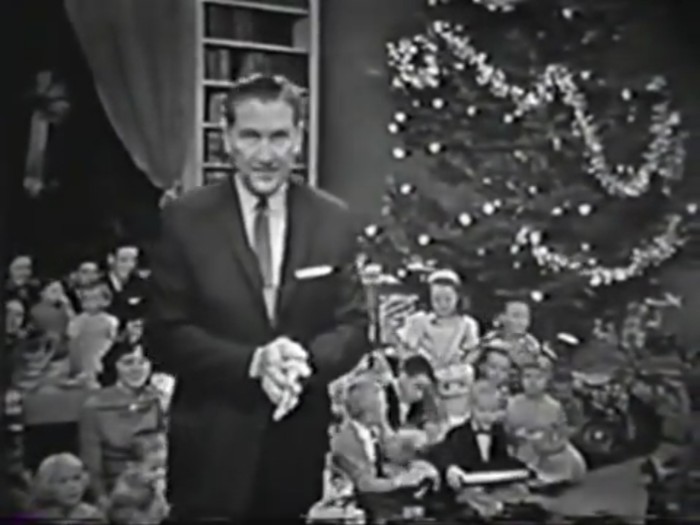
Hullabaloo! – This show from the mid-sixties was a variety show that showcased popular music of the time, with a revolving series of celebrity hosts. This 1965 Christmas episode was hosted by Jerry Lewis, accompanied by a bunch of kids, including his own and relatives of other famous people, like Soupy Sales and Andy Williams. It included a version of “The Twelve Days of Christmas” where the gifts were records, and some children’s songs not specific to the holidays, like “This Old Man” and “Old MacDonald.”

BERJAYA
Hollywood Palace Christmas Show – Hosted by Bing Crosby in 1965, this is a collection of various acts, including songs by Dorothy Collins and Fred Waring and the Pennsylvanians, as well as an appearance by the cast of Hogan’s Heroes in character. At one point, Colonel Klink and Sergeant Schultz sing “Silent Night” in German. Beth commented that some of the Pennsylvanians were wearing seasonally inappropriate Easter dresses. The act on here I remember the best was the one with Bob Williams and his dog Louie, the joke being that Bob tried to get the dog to do all kinds of tricks, but he just hung around and didn’t do anything. From my experience with dogs, however, getting one not to interact with a person must be the real trick.

BERJAYA
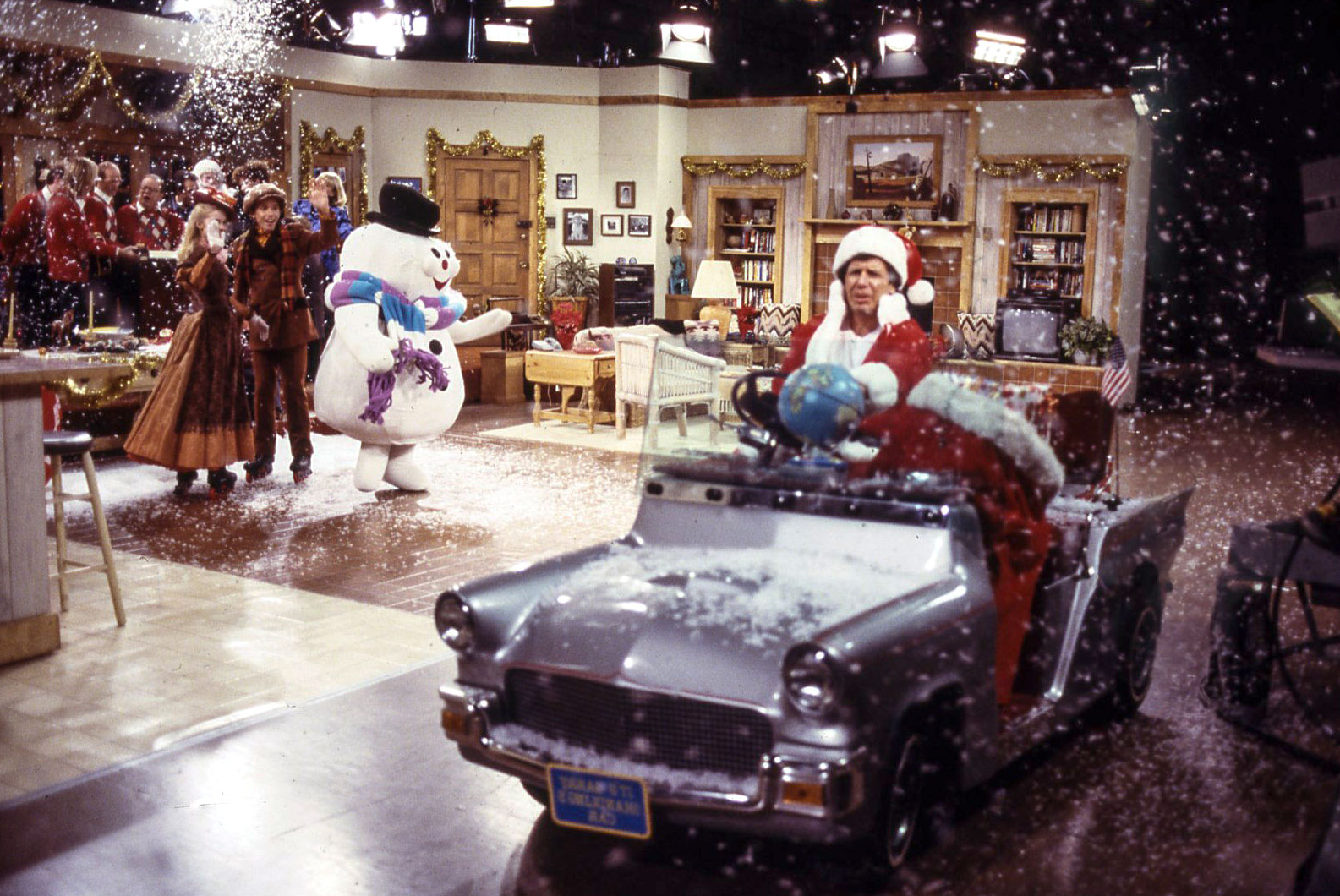
It’s a Garry Shandling Christmas – Beth used to watch this show, but I’d never seen it before. It’s sort of a meta-sitcom, where Garry spends a lot of time talking to the audience about what’s going on. In this 1987 episode, he hosts a Christmas party that everyone leaves early, and tries to figure out what happened to his father’s watch. This includes a scene where he turns his house upside down, then explains that nothing fell because he had all his stuff Velcroed down. There was also a joke about Santa getting injured because Garry had greased his chimney. Tom Petty guest stars as a member of a caroling quartet. There’s an absurdity to this one that I enjoyed.

BERJAYA
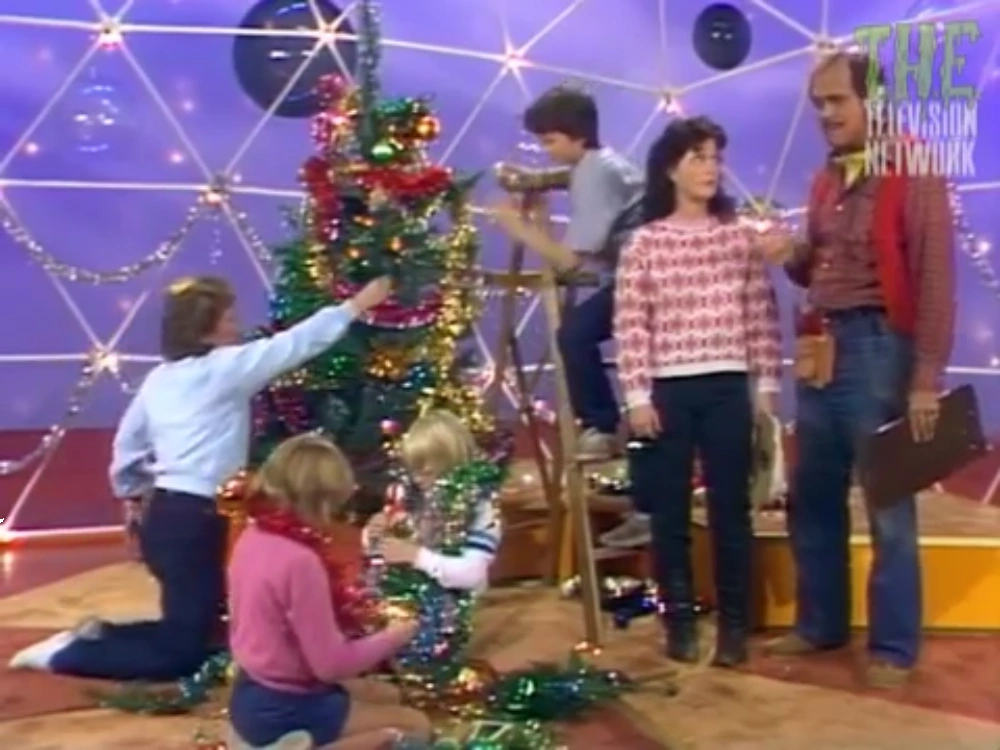
You Can’t Do That on Television: Christmas – This was another show Beth used to watch, as did a lot of people my age, but I didn’t have cable at the time it was on. It was a Canadian sketch show mostly starring kids, airing on Nickelodeon. The sketches were all incredibly short, and a lot of them featured recurring characters. The kids also got hit with slime quite a bit. This one altered between the sketches and a story about the people working on the show, which was probably normal, but again, I’m not that familiar with it.

BERJAYA
Car 54, Where Are You?: Christmas at the 53rd – There isn’t much of a plot to this episode, but it’s fun. The premise is that the cops are putting on a show for the holidays, with songs and a magic act. There are two Gilbert & Sullivan parodies in the mix, and you get to hear a lot of Fred Gwynne singing.

BERJAYA
The Odd Couple Christmas – Felix is directing a performance of A Christmas Carol for a police benefit, with his poker friends starring in it, and he wants Oscar to play Ebenezer Scrooge. Oscar is really grouchy because he had married his ex-wife on Christmas Day, and he refuses to do it. This leads to his having his own Christmas Carol dream with Felix as an allergy-suffering Jacob Marley and Murray the cop repeating Tiny Tim’s famous line ad nauseam. Of course, Oscar finally agrees to take the role. Felix being a neat freak and Oscar a slob is basically the main premise of the show, but it seems a little over the top that Felix actually enjoys cleaning and Oscar prefers the apartment to be a mess. I would at least guess that being clean and messy tend to be more subconscious things in everyday life.

Posted in Animals, Cartoons, Celebrities, Christmas, Corporations, Dreams, Families, Holidays, Humor, Music, Relationships, Television, Toys | Tagged , , , , , , , , , , , , , , , , , , , , , , , , , , , , , , , | Leave a comment

The Slop Around the Corner

BERJAYA
I’ve become increasingly irritated with all the attempts to force so-called artificial intelligence down people’s throats, and I know I’m far from the only one. But at the same time, it seems to have become pretty normalized in society, to the point where people will just use ChatGPT for just about anything, even when it doesn’t save any time or resources. I find there to be something very bleak about it. I’ve never really understood what it’s supposed to do that we couldn’t already do with other technology. In commercials, it seems like the main thing people use it for is to look things up, but isn’t that what search engines are for? Then again, since a lot of search engines have started incorporating AI and hence producing less accurate results, I can’t help but feel that there’s some attempt to eliminate the competition. Fortunately, while I see way too much of it online, I’ve never had people trying to force me to use it. I’ve been fooled before by AI art, but that raises the question as to why anyone is so anxious to fool other people. I suppose it has something to do with wanting engagement, as it’s possible for people to make money that way, although I can’t say I’ve ever looked into it. It feels like the insistence of calling all creative output “content” paved the way for that, as it implies what the content IS doesn’t really matter so much as that it’s there. And there’s always been a lot of useless junk on the Internet, but it really seems to be getting worse. I suspect a lot of it is just robots interacting with each other, but not all of it. And like cryptocurrency, I get the impression that generative AI is mostly used for scams, of one persuasion or another: making junk to get clicks, selling things you didn’t create yourself, cheating on homework, giving the impression that you’ve read something you haven’t, coming up with ways to avoid paying people for work, selling programs that don’t have any practical use. From what I’ve heard, a lot of companies were sold Large Language Models and the like under false pretenses, and since they wasted all that money, they have to trick their employees into using them. I’ve seen a few posts making the point recently about how the same people who insist on art or design work done for them being flawless won’t even bother to fix the problems with AI-generated stuff. Why would anyone want to use your products or services if you don’t use any actual pictures and have simple words misspelled? I swear I recently saw an ad for a Bible or something where the word “Psalms” was spelled incorrectly, in that way that text in AI pictures is often just gibberish. But they don’t have to pay anyone, so I guess that makes it okay. That said, I also don’t understand when people talk about using AI and then fixing the problems afterwards, as that makes me wonder why you’d use the AI at all if you still have to do a lot of work. Just to make it feel included? And there are people who are afraid of AI for the wrong reasons, because they think it will result in the Terminator or something, when of course LLMs aren’t self-aware in the least; they’re just pattern recognition tools, and not even particularly good ones. Some technology executives seem to love the idea of self-aware computers because they can upload their consciousness into them or whatever, and they’ll insist that their programs will say stuff that’s so accurate as to be scary. The acceptance of such crap does give the impression that, if machines ever really DO want to take over the world, they won’t need a revolution, just the right publicity. But I think what the executives really want is technology that’s “smart” enough to be able to perform basic tasks, but not enough to consider larger ramifications, because then the computers might want to get paid. There’s also the environmental impact, because apparently it requires a lot of computing power and computations to produce inaccurate text and generic pictures.

I read this article a while ago, and it explicitly links AI to fascism. It largely focuses on one particular AI video that uses a sense of nostalgia to try to sell a regressive message. The people who write these articles must have stronger constitutions than I do, because they actually have to WATCH the AI crap they mention, most of which just looks gross. Except for the stuff that tricks me into thinking it’s real, but that’s usually not what this kind of video is going for. There’s a reference to how fascism is often linked to a skewed vision of the past when things were better, including Donald Trump’s obnoxious “Make America Great Again” slogan. The country has very much had its ups and downs, but I don’t know that there was any particular time when it was truly great. But it doesn’t matter, because the leaders can convince people there was, and it was often a time period they were rather sheltered during, like when they were kids. I definitely have some nostalgia for my childhood, but I don’t remember ever thinking things were generally awesome. Even without much knowledge of how much Ronald Reagan actively made worse, I was sort of aware that he was leading through fear and threats. The article also covers such topics as media analysis, bigoted reactions to entertainment, gender-based marketing, and The Goonies. I didn’t watch that movie when I was a kid, so I don’t have any particular nostalgia for it. I’m more interested in Gremlins, which I also didn’t watch until adulthood. Both of those movies involve predatory landlords, one being paid off with pirate treasure and the other brutally killed by monsters. They might not be viable solutions, but they definitely acknowledge there’s a problem that’s being exploited by rich people, which probably isn’t the typical conservative position. It also mentions how trolling is a key part of fascism, which very much ties in with how AI tends to be used for tricking people, but it’s something I’m admittedly confused about. I’ve talked before about how the “own the libs” mentality makes it unclear what conservatives actually believe and what they just say to bother other people. I’m not entirely sure they even know the difference. Analysts said that, when Elon Musk did a Nazi salute, it was meant to be ironic but not entirely insincere. But if you believe what the Nazis did, where’s the irony? The salute is bad because it’s associated with white supremacy, not the other way ’round. One thing I’ve definitely noticed is that AI propaganda videos put out by the Trump administration, which I don’t watch on purpose but will see clips of when other people discuss them, have a tendency to not only look hideous but to have a message that violence against people who didn’t really do anything is awesome, like Trump dumping excrement on anyone who dares to vocally disagree with him, or ICE agents being identified with Darth Vader. It’s difficult for me to figure out how anyone could see either of those as a good thing. This essay talks about how AI art promotes unrealistic beauty standards and arbitrary ideas, even if it’s also combined with people having extra limbs, which I don’t think would generally be considered a positive. And it gets into how humor is used to normalize extreme right-wing positions. And I read this article today, about how AI is an extension of how the profit motive in capitalism mostly uses media to influence people and control the narrative, which is easier to do without any pesky humans being involved.

Posted in Advertising, Art, Capitalism, Conspiracy Theories, Corporations, Current Events, Economics, Education, Environmentalism, Humor, Politics, Prejudice, Technology, Video | Tagged , , , , , , , , , , , | Leave a comment

Baffled by Baphomet

BERJAYA
Broken Sword: Shadow of the Templars – Another point-and-click adventure game, this one was developed by Revolution Games and originally released in 1996, although I played the recent Reforged version. It deals with an international conspiracy based on a mysterious society from actual history, the Knights Templar. George Stobbart (pronounced with a long O) is an American tourist who, while visiting Paris, sees an accordion-playing clown bomb a cafe. Trying to figure out what happened has George following clues to Ireland, Scotland, Spain, and Syria. I guess there’s a bit of Carmen Sandiego in its design. He eventually finds out that a group who consider themselves the successors to the original Templars are searching for something called the Sword of Baphomet in order to conquer the world.
BERJAYA
And a guy who considers himself one of the Hashashin is working against them. George also gains a confidant in a photojournalist named Nicole Collard, or Nico for short.
BERJAYA
Much of the game involves choosing various dialogue options regarding people and objects. The game is pretty short if you choose the right options, but there are a lot of extra conversations you can have. It’s pretty interesting, with some historical background and a good amount of exploration of hidden areas.
BERJAYA
For a game about a secret society, it does feel like George is able to track down information quickly, and with only occasional danger. The Neo-Templars won’t hesitate to kidnap or kill anyone they think knows too much, but they don’t notice George spying on one of their secret meetings.
BERJAYA
I guess that kind of makes sense as they’re a small organization, and while they do have connections, their resources are limited.
BERJAYA
And you can actually die in this game, albeit only at a few specific moments. I just kind of expected it to have an atmosphere where you were always in danger and didn’t know whom you could trust, but most of the people you meet are pretty friendly, or at worst just stubborn; and there’s usually no danger in discussing the conspiracy in public.
BERJAYA
But while a greater sense of foreboding might make for a better story, it would also mean a way more stressful game. And I kind of need a break from that kind of thing after all those Space Quests. I also thought many of the character designs and voices were pretty stereotypical. The game was specifically designed not to be as silly as a lot of adventure games of the time, but there are still quite a few jokes, including humorous asides from George himself. There are three more games in the series, and I’m interested in playing them. Apparently there’s supposed to be a Reforged version of the second one in the near future.

BERJAYA
I also feel I should write about Suikoden, which I haven’t finished, but I’ve played enough of it to get a general idea. This game first came out for the PlayStation when I was in college, a time when I was reading a lot about role-playing games online, but didn’t have the chance to play many of them. The main things I knew about it were that it was loosely based on a Chinese novel and that you could recruit a total of 108 characters, that being a holy number in Buddhism. I now have the Switch remaster of the first two games, although I mostly just play it when I’m not at home, so progress has been slow. The main protagonist is the son of Teo McDohl, a general in the Scarlet Moon Empire, and is being encouraged to follow in his footsteps.
BERJAYA
You soon find out, however, that the empire is corrupt (as empires tend to be in video games), so the hero joins the resistance, and eventually comes to lead it. You take control of an old castle that was taken over by monsters, and your recruits come to join you there. It’s similar to other games where you have a base that grows over time, with its own shops and services, and in this case an elevator and a teleportation service.
BERJAYA
Not all of your recruits are playable, and your active party can only have six members at a time, some of whom are determined by the story. That’s still pretty generous, though; I thought it was impressive that Final Fantasy IV let you use five. You can equip runes on your party members to give them magical abilities, and while I haven’t really experimented a whole lot with that so far, I do try to keep someone with the Water Rune on hand as it grants healing powers.
BERJAYABERJAYA
You can buy armor, but not weapons, those instead being upgraded at blacksmith shops. In addition to normal battles, I’ve so far participated in one army battle and a duel. Both of them have a rock-paper-scissors kind of style, where you alternate moves. The former gives your entire team a chance to participate. It’s mostly luck, but you can choose to spy on the enemy’s moves, even if it’s not always correct. I’ve done one of each of these special fights so far. While the game has a largely East Asian style, there’s a weird variety of names, and beings from European folklore and mythology appear. In the now traditional style, the elves and dwarves hate each other, and neither of them are crazy about the kobolds, which in this series are part human and part animal.
BERJAYABERJAYA
One kobold who automatically joins your party is a fox-man named Kuromimi, which made me think of the Sanrio character Kuromi. Apparently the former means “black ears” and the latter “black beauty.” And Kuromimi was introduced about a decade earlier. I was kind of amused by how the dwarf vault, which is supposed to be impenetrable, is navigated by a series of puzzles, when you’d think an ordinary lock would be more secure. But that section of the game is followed by a really disturbing occurrence. A character I’ve at least so far found amusing is the narcissistic Milich Oppenheimer, an Imperial general who’s obsessed with clothes.
BERJAYA

Posted in Art, Buddhism, Catholicism, Christianity, Conspiracy Theories, Crusades, Final Fantasy, France, History, Humor, Language, lucasarts, Magic, Monsters, Mythology, Names, Norse, Prejudice, Religion, Video Games | Tagged , , , , , , , , , , , , , , , , , , , , , , , , , | Leave a comment

I Can’t Wait ‘Til the Future Gets Here

BERJAYA
While the previous Hulu seasons were released one week at a time, this one was dropped all at once. It was also around when there was a push for people to cancel Hulu because of Disney caving to Trump in canceling Jimmy Kimmel. I doubt there was a connection, but it was weird timing. I kind of liked one being released per week, but since we didn’t get around to watching any of them until about a month later, it ended up not making much difference.

Destroy Tall Monsters – This kind of feels like a more fleshed-out rehash of the first Anthology of Interest segment, with Bender becoming gigantic and fighting another huge monster in a Godzilla-style city-crushing montage. The excuse for it this time is that Bender feels he’s too short after falling for a robot who is immediately attracted to the tallest thing in a room. In order to grow, he takes D-Roids, a robot version of steroids, provided by the Robot Devil. There’s a recurring joke about Godzilla rip-offs, all using slightly different names, none of which are actually “Godzilla.”
BERJAYA
The bit with the movie being filmed did kind of bring back a complaint of sorts I’ve had about this show at least since “That’s Lobstertainment!”, which is that there doesn’t appear to be any new technology in the entertainment industry of the thirty-first century, except for robot actors. Granted, there’s somewhat of an excuse in that both The Magnificent Three and the kaiju movie are incredibly low-budget, but still. The fact that the monster is a real space monster in a suit is pretty funny. There’s also a subplot with Fry and Leela arguing about whether they’re the same or different. That’s even used in the resolution, although the show itself acknowledges that the ending doesn’t make a lot of sense.

The World Is Hot Enough – Another reused idea that calls back to its previous use has the crew once again battling global warming. The giant ice cubes being dropped in the ocean come up in the plot, but the Earth being moved farther from the Sun isn’t. I guess that would still have only been a temporary solution, and the Professor eventually acknowledges that it wasn’t really as bad as it had been previously. Anyway, he has to team up with Wernstrom and Dr. Banjo to ignite a volcano, and there’s a good joke with the bombs they use containing baking soda and vinegar. Meanwhile, Fry tries to raise two polar bear cubs he finds in the Arctic and thinks are orphaned. There’s also a parody of celebrity songs to raise awareness. There are references to a “climatastrophe” in the past, and perhaps that was what was canceled out by nuclear winter, as explained in “Xmas Story.” Leela tells Fry in “The Luck of the Fryrish” that “you guys didn’t have a single nuclear war,” without making it clear who “you guys” are. Since they’re in the ruins of old New York at the time, maybe it means the nuclear war happened after the destruction of the city in 2308? I doubt there’s any real attempt at a consistent timeline, however, and the fan-made ones I’ve seen online haven’t been updated since the Hulu episodes started.

Fifty Shades of Green – This one features a temporary threat to Fry and Leela’s relationship, as Fry not only refuses to go with her to visit her parents, but also forgets to water her plant. She breaks up with him, despite the fact that the main reason why he forgot is that he was planning a celebration for the anniversary of when they met on New Year’s. The Professor and Hermes reveal that there are forbidden devices that can actually determine who someone’s soulmate is, technology that was banned because it drastically increased divorce and murder rates. Fry finds out that, while Leela is his soulmate, Leela’s is a botanist with the ridiculously appropriate name of Branch Woodsman, who spends his time fighting off invasive plant life in Central Park. Fry is dismayed that he gets along quite well with the guy, and feels introducing him to Leela would be the right thing to do. It turns out that she only likes him as a friend, and Fry turns out to be her soulmate after all. The portrayal of Branch as an action scientist is done well, and the portrayal of alien plants is entertaining. There’s also a return visit to the space market with the porn-peddling creature, and apparently fireworks are considered way more taboo than porn in the future, although of course he sells those as well. Farnsworth’s hand-waving not knowing how many years Fry and Leela have known each other due to having been caught in so many time loops is a clever joke, although it’s probably only really necessary because nobody wants to draw the characters aging even though we know time is passing. Besides, that probably shouldn’t apply to anyone outside the crew. The walk-in microwave is a joke that had previously been used on The Simpsons, but it makes more sense for the Futurama universe.

The Numberland Gap – I read somewhere that this was inspired by Donald in Mathmagic Land, a bit of which is shown on the screen the ship crashes into during the opening credits, only highlighting more advanced mathematics. There’s a not-so-direct joke on generative AI with Fry creating art with a futuristic technology that turns out to be paint-by-number instead. We also learn that Bender is afraid of numbers, except for zero and one, sort of a callback to early episodes where a two sometimes showed up in a series that was otherwise entirely binary. He freaks out after turning himself to a numbers station on the AM band, which, as Leela said directly to the audience, is a real thing, and it is kind of creepy because their actual use is classified. The best guess is that it’s used to transmit secret information. Amy discovers that a pattern of numbers that keeps showing up is the key to build a device, which turns out to be a means of transport into a world inhabited entirely by numbers.
BERJAYA
Well, except for the mathematician Georg Cantor, who’d been trapped there, and who was the one who sent the transmission explaining how to build the machine. The setting obviously leads to a lot of math jokes, and Cantor demonstrates a proof he devised in real life that the infinity of irrational numbers has to be larger than the infinity of rational numbers. The Professor initially prefers this world to the physical one, but later comes to realize that he prefers math as a tool for other things. Cantor, on the other hand, moves on to an even more hypothetical universe. This was a pretty good one, and a nice mix of simple and more complex humor.

Scared Screenless – This comments on a modern issue, that of screen addiction, but in a fairly general way. Not being aware of any other actions, Kif sends his son Axl, along with Cubert, Dwight, and Bender to a camp on the planet Remotus led by Zapp Brannigan. He sends them on a snipe hunt, only for them to find out that snipes are actually real, and are used as food by members of the infamous Waterfall family who had moved there centuries ago, and were pretty inbred by that time. Meanwhile, the adult men of the crew end up in jail due to Dr. Zoidberg’s terrible driving, and manage to reach Zapp by using an old-fashioned pay phone in their cell to call his subspace phone. There are some jokes about electronic devices requiring the Internet to work when there’s no particular reason for that. It also allows Cubert to return to his old role of pointing out everyone else’s errors, and continues the trend of a Waterfall family member promises to avenge another who’s just died. Hermes makes a mention of suicide booths accepting Venmo now, and I wondered if they were purposely not showing the booths in newer episodes. The episode shows Dwight playing Monkey Fracas Jr., which was interesting as we watched this one the same day as a new Simpsons episode where a few characters were playing Donkey Kong. Both shows are largely stuck in the eighties in terms of video game references, but so am I to some extent.

Wicked Human – I appreciated how absurd this one was, and I often like jokes about religion. The inhabitants of New New York start seemingly randomly floating into the air, and some religious leaders think it might be the Rapture. The Professor prefers to find a scientific explanation, but is unable to do so, and starts acting like a cult leader. I’m generally kind of annoyed at the implication that science can be just another religion, but it does fit with the Professor’s character. It’s eventually revealed that the disappearances are due to alien fishermen with New England accents on a boat in space. Maybe they’re from Space Massachusetts, as mentioned in “Proposition Infinity.” That’s where the title comes in, a play on the Massachusetts-based fishing show Wicked Tuna. It’s amusingly ridiculous enough that I’m willing to overlook that it doesn’t make much sense that nobody noticed the boat or the hooks prior to this, even with all the space traffic to and from Earth. Also, they catch Fry with a Cheez Doodle, but there’s no indication that any of the other people who are caught bit on anything. But then, if you really get down to it, I’m sure the show has a lot of examples of people not thinking of something introduced in another episode that would handily solve the problems in the current one. Hermes makes the fishermen give up their catch by citing obscure fishing regulations, and the aliens pronouncing “guard” like “god” was quite funny in context. The group of faith leaders included Father Changstein El-Gamal, the Space Pope, Reverend Preacherbot, and the Grand Midwife, all introduced earlier; but also the Grand Poobah from The Flintstones.
BERJAYA
There are also reappearances by the Borax Kid and the fortune teller machine.

Murderoni – This episode satirizes the Pizzagate scandal, a really stupid conspiracy that became dangerous when someone took it seriously. When Fishy Joe runs for City Council on the platform of heavily taxing small businesses to favor large corporations, Blazucchi, one of the insect Cygnoid owners of the pizza parlor near Planet Express, decides to run against him. So Joe accuses the restaurant of making their pepperoni out of human babies. Earlier episodes have suggested that killing humans for meat isn’t illegal in the thirty-first century, but I guess they draw the line at babies. It also brings up something I’ve noticed before, that while child murder could technically be considered worse than child molestation, it comes across as much creepier and less appropriate to joke about. Hey, Freddy Krueger was apparently originally supposed to be a child molester, but was later changed to (only?) killing them. For obvious reasons, Fishy Joe is very Trumpish in this one, which never seemed to be part of his characterization before. But then, he’s a rich, immoral (New) New York loudmouth, so it works. He and his supporters, including Bender, who doesn’t actually believe the accusations but loves to be part of an angry mob, refuse to accept that the parlor doesn’t have a basement. And since the plans aren’t online, Hermes takes Dwight, whom he wants to follow in his footsteps, to the Central Bureaucracy to find them in the endless piles of paper records. The labyrinthine nature of the building, including fantastic monsters, is always amusing. Hermes tells the story of Bureaucrates, who had supposedly died in his own files, and no one knowing what filing system he had used. It turns out that he’s still alive, but that he didn’t have a system, and just sort of remembered where he’d put things. He says he’d been lost there for 500 years, with no indication as to how he’s lived that long. It turns out that the restaurant does have a basement, and it’s the ruins of Fry’s old workplace, even though that was excavated somewhere else in “Jurassic Bark.” I sure hope someone got fired for that blunder. Not really, but it was a weird thing to overlook. And while there aren’t any dead babies, the Cygnoids were making pepperoni out of thousand-year-old flies, so Joe (who did like their pizza with live hornets in the crust in “A Leela of Her Own,” but I suppose those were FRESH hornets) and Blazucchi both end up losing the election.

Crab Splatter – When a meteorite from Zoidberg’s homeworld, Decapod 10, hits the apartment below Amy’s, the family living there moves into his Dumpster behind Planet Express. When Leela gets annoyed at his staying with her, Fry, and Bender, she has her parents take him in, and, much to her confusion and irritation, they end up adopting him. Leela is jealous, but Zoidberg later saves his life by donating a blenal gland, something they both turn out to have due to Decapodian genetic material landing on Earth five billion years earlier. There’s also a bit of a subplot with the Professor having a crush on a Decapodian scientist.

The Trouble with Truffles – This episode really focuses on Bender, with the rest of the cast mostly just having small roles. When he tries truffles at an expensive restaurant, he loves them despite not having a sense of taste. He learns that most truffles in the time of the show grow on an asteroid belt, so he goes there to try to get rich, getting into the part with a stereotypical French outfit, a hilariously bad accent, a space scooter, and a talking piglet genetically engineered to sniff out truffles.
BERJAYA
He names the pig Jambone, and as might be expected, he’s initially rude to his companion, but later develops a genuine friendship with him. Unfortunately for his dreams of getting rich, there’s a lot of competition, and even the truffles he’s able to sell require an enormous cut for the Truffle Cartel. It ends with a gross-out gag that’s very similar to the one from the what-if segment where Bender becomes human. Beth commented on how Elzar is kind of an outdated parody at this point, as Emeril Lagasse was very famous at the time the show started, but presumably not so much now. I appreciate that they didn’t write out the character, though.

The White Hole – The last episode of this season is rather high-concept, but also a bit of a cop-out. A white hole appears, inviting up to eight inhabitants of the universe to see the birth of a new one. The only problem is that approaching it causes a time distortion that makes travelers grow old really quickly. So the Planet Express crew has themselves frozen in carbonara (silly pun, but not out of place for the show) for ten million years of ship time, with a hologram of the Professor to direct clones of the crew to each perform one task before they grow old and die. These brief exploits take up most of the episode, and they are pretty entertaining. At one point, a few Zoidberg clones are sent out to eat Fry’s yogurt that had started moving around on its own, and then has to be taken down by other crew members. It ends with the remaining clones deciding to see the white hole themselves instead of unfreezing the originals, and the audience doesn’t get to see what happens.

Until next season, farewell from the world of tomorrow!
BERJAYA

Posted in Animals, Cartoons, Climate, Conspiracy Theories, Donkey Kong, Drugs, Food, Futurama, Genetics, Global Warming, Humor, Mathematics, Monsters, Relationships, Religion, Science, Technology, Television, The Flintstones, The Simpsons, Video Games | Tagged , , , , , , , , , , , , , , , , , , , , , , , , , , , , , , , , , , , , , , , , | Leave a comment