Video of National Constitution Center Conference on "2026 Supreme Court Review: Key Decisions, Executive Power, Civil Discourse"
Three different VC bloggers were among the speakers: Jonathan Adler, Keith Whittington, and myself.


Three different VC bloggers were among the speakers: Jonathan Adler, Keith Whittington, and myself.
The article addresses the interlinked problems of widespread voter ignorance, tyranny of the majority, and illiberal anti-democratic movements coming to power through elections.
I gave the talk earlier this week.
Videos of my presentation and interview on this topic at a major Italian university.
The 2-1 decision concludes Trump's massive new tariffs are illegal because there is no "balance of payments deficit" of the kind needed to authorize them.
Conservative legal commentator Gregg Nunziata outlines reasons why conservatives should reject broad views of executive power.
The outcome is unclear. But the judges seemed skeptical of the Trump Administration's claims that Section 122 grants them sweeping tariff powers.
I was interviewed by Seattle University Law School of Law Dean Tony Varona and Prof. Andrew Siegeil.
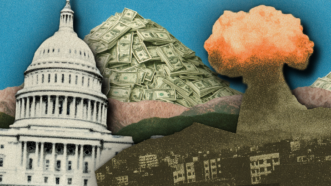
Lawmakers used to offset its emergency spending. They don't anymore.
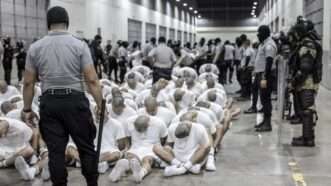
His work further demonstrates that the AEA cannot be used in response to illegal migration or drug smuggling, but only when there is a military attack.
LJC is the group with which I worked on the IEEPA tariff case decided by the Supreme Court.
I was one of the participants, along with Zach Shemtob (SCOTUSblog) and Julie SIlverbrook (NCC).
Gregg Nunziata interviewed me.
The article explains why the new Section 122 tariffs are illegal, and courts should strike them down, when (as is likely) lawsuits are filed against them.
The Court stopped a massive presidential power grab, but did not resolve a crucial issue about judicial review of executive use of emergency powers.
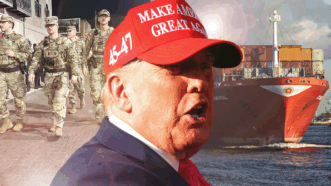
The prominent conservative legal commentator outlines the case against Trump's latest tariff power grab.
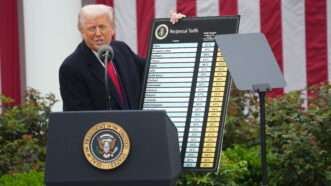
It covers many issues raised by the decision.
In a 6-3 decision, the Court ruled that the International Emergency Economic Powers Act does not authorize tariffs.
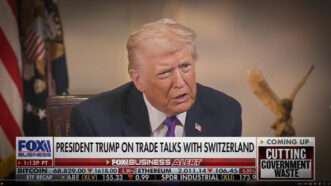
The story is an exercise in pettiness but also a perfect reason why Congress and the Supreme Court should limit the president's power grab.
It is now up on SSRN, and also under submission to law reviews.
Prof. Josh Braver questions the conventional wisdom on this issue.

In a crucial appellate court oral argument, the Trump Administration admits that their position says the answer is "yes." The exchange highlights the dangers of judicial deference on judicial invocation of extraordinary emergency powers.

It is now available on SSRN. The revision adds additional evidence, and takes account of various recent events, including Trump's military intervention in Venezuela.
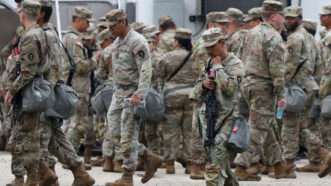
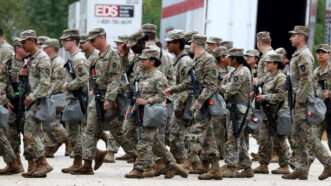
The decision is a preliminary "shadow docket" ruling. But it strongly suggests the majority believes Trump's use of the Guard is illegal.
I coauthored the brief on behalf of the the Cato Institute, the Brennan Center for Justice, legal scholars Geoffrey Corn and John Dehn, and myself.
The Trump administration's claims that illegal migration and drug smuggling qualify as an "invasion" or a "predatory incursion" under the Alien Enemies Act go against the major questions doctrine.
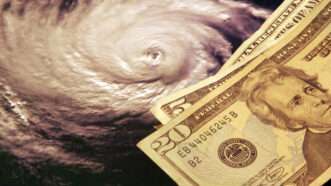
Over the last decade, roughly one in every 10 dollars of budget authority has worn an emergency tag.
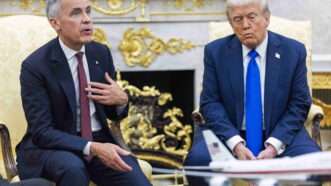
The Supreme Court is set to hear arguments in November on whether Trump's use of tariffs is constitutional.

A guest post by Joshua Braver and John Dehn.
It will review a panel decision holding that Trump could not invoke this sweeping wartime authority by claiming illegal migration and drug smuggling qualify as an "invasion."
The cases will be considered on an accelerated schedule.
We agree the Court should take the case and resolve it as quickly as possible, to minimize the harm caused by the illegal tariffs.
The 2-1 ruling is in line with most previous court decisions on Trump's invocation of the AEA. Judge Oldham wrote an extremely long, but significantly flawed, dissent.
In a 7-4 ruling, the en banc court upheld trial court ruling against all the challenged tariffs. The scope of the injunction against them remains to be determined.
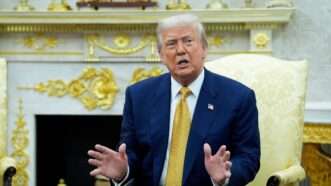
The words national emergency are not a magic spell that presidents can utter to unlock unlimited legislative powers for themselves.
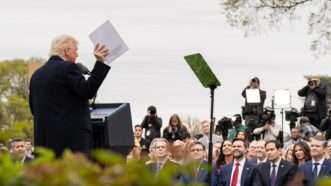
If so, then why postpone any enforcement until October?
Outcomes are hard to predict. But the judges seemed skeptical of the administration's claim that the president has virtually unlimited power to impose tariffs.

It makes the case for strong judicial review of executive invocations of sweeping emergency powers.
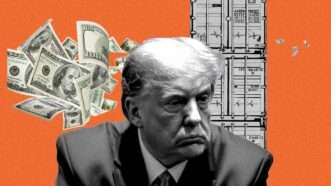
In each case, tariffs remain much higher than they were before the deals.
Graber shows that the act used by Trump to federalize the California National Guard does not allow the president to take this step in response to low-level violence and disorder.
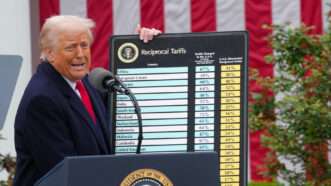
I participated along with Andrew Morris of the New Civil Liberties Alliance.

The case raises many of the same issues as our case against Trump's "Liberation Day" tariffs.
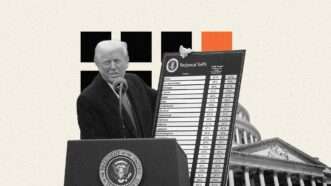
Estreicher and Babbitt are right to conclude that Trump's tariffs violate the nondelegation doctrine, but wrong to reject other arguments against them.

Academics are supposed to discover nonobvious, counterintituitive truths. But, especially in recent years, much of my work involves defending positions that seem obvious to most laypeople, even though many experts deny them.
It's an obvious abuse of emergency powers, a claim to unconstitutional delegation of legislative power, and a threat to the economy and the rule of law.
The diversity and quality of the briefs opposing Trump's "Liberation Day" tariffs speaks for itself.
Katherine Yon Ebright and Leah Tulin of the Brennan Center make the case against judicial deference to Trump's invocation of the Alien Enemies Act of 1798.
Celebrate your independence with a subscription to Reason magazine, your most trusted source of honest, insightful news and analysis.





