Washington Promised Puerto Rico $14 Billion To Fix Its Grid. Most of the Money Is Still Stuck.
A new GAO report attributes the delays to onerous regulations and poor coordination among government agencies.



A new GAO report attributes the delays to onerous regulations and poor coordination among government agencies.

The Reason Sindex tracks the price of vice: smoking, drinking, snacking, traveling, and more.

Plus: World Cup tourists embrace America, the Supreme Court expands gun rights, and Europe's resistance to air conditioning

The continent’s political class needs to get over its aversion to life-saving technology.

Aaron Brown discusses how research gets distorted, why sensational claims spread so quickly, and how to think more critically about the numbers behind the headlines.

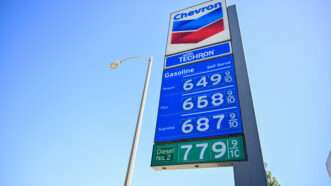
The president is threatening gas companies and retailers over prices his own Iran policy helped create, while demanding that prices drop to a level the market hasn't seen since 2020.

The White House quietly repealed tariffs on Moroccan fertilizer this week.
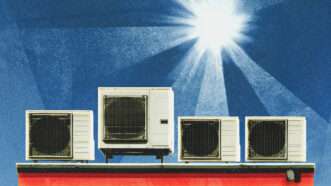
European countries are stubbornly refusing to adapt to warming weather, with deadly results.
The division will be renamed the "Energy and Natural Resources Division."

Gov. Gretchen Whitmer promised "generational" investments in her state, but as she leaves office, there's little to show for it.
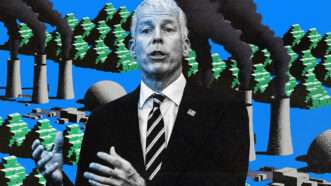
Privately funded nuclear reactors are achieving critical milestones on their own, but the Trump administration wants to prop up a single company.

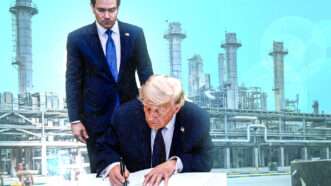
As part of peace negotiations, the U.S. Treasury issued an unprecedented total waiver from Iranian oil sanctions.

There’s a lot of confusion about sanctions relief and the U.S.-Iranian deal on the table. Hawks are exploiting it to sabotage the peace.

The U.S. and Iran have moved to the next stage of the peace process. Hawks on all sides are terrified that it will succeed.

Thomas Piketty's plan is a comprehensive program for global managed decline dressed up in the language of climate justice and equality.

The Iran war and Trump's tariffs are pushing prices higher, and neither will be easy to undo.

A market-friendly ruling party, abundant energy, and ample talent could jumpstart a new tech hub in the Himalayas.

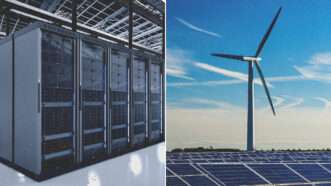
Don't impose a moratorium. Produce more energy.

As data centers dominate public debate, two states reveal their approach. Texas has taken a stance in line with market needs, while North Carolina reacts to fear and bad press.
Constitutional climate litigation seems to know no bounds.

An earlier project already led to a 95 percent drop in biting females of one disease-carrying species in Fresno.

The Department of the Interior embraces its inner statism by banning conservation groups from leasing public land.
Yet another federal court opinion dismissing constitutional climate change claims.
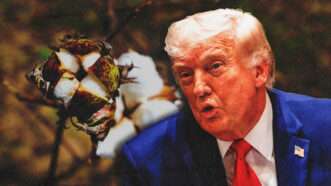
The Great American Cotton Plan will shell out millions in taxpayer funds, continuing the Trump administration’s pattern of paying off industries harmed by the president’s economic policies.
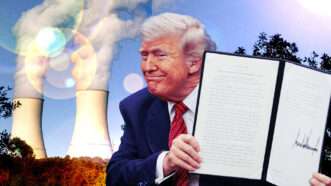
The Trump administration can build on its success in the nuclear industry by getting out of the way.


Unionized state workers say agencies need to study the additional emissions that would be caused by requiring employees to come into the office four days a week.

Though some of their products may have been redirected elsewhere, American farmers are likely eating most of the losses.


Researcher Roger Pielke Jr. was targeted for cautioning that global warming is real but "not the apocalypse."

A streamlined process for environmental review under the National Environmental Policy Act gives the government broader discretion to approve projects.

"There's always a place in not just the market, but a range of situations and mindsets, for things that are cheap, fast, and just barely in control," the Whole Earth Catalog creator tells Reason.

This week, Wes Moore blamed grid operators for high electricity costs, but the problem has worsened because of his own policies
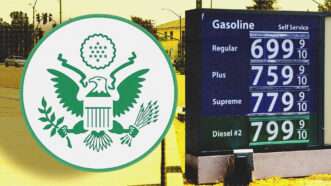
Instead of holding the president accountable, lawmakers are trying novel ways to reduce energy prices caused by Trump’s war in Iran.
Prices are now rising faster than wages, just like during much of the Biden years. The war in Iran is largely to blame.

Direct military costs have exceeded $70 billion by one estimate, and Americans have paid more than $37 billion in higher energy costs since the war began.

Economic grievances and political alienation are fueling a separatist movement in the Canadian province just north of Montana.

So far, electricity prices haven't risen. If and when they do, the solution is more power generation.
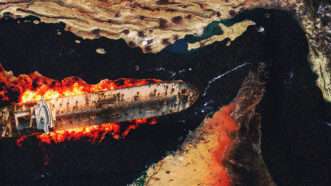
After trying to open the Strait of Hormuz by force, the U.S. is ready to accept an Iranian proposal it had rejected.

Plus: The NFL has no easy response to the Dianna Russini–Mike Vrabel affair, and how ketamine may have helped the Sixers upset the Celtics

Plus: Homeschooling discourse, AI regulation, Christian cell network blocking porn, and more...

How heavy-handed state regulations led to one farmer suing the state for $3 million in damages

Plus: Rudy Giuliani hospitalized, rules relaxed for foreign physicians, cities without children, and more...
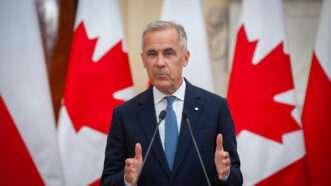
Canadian Prime Minister Mark Carney is marketing his new Canada Strong Fund as a "sovereign wealth fund," but it is one of many ways the government can waste taxpayer money.
Plus: FISA reauthorization passes the House, a very capitalist museum, escalation in the redistricting wars, and more...
Celebrate your independence with a subscription to Reason magazine, your most trusted source of honest, insightful news and analysis.





