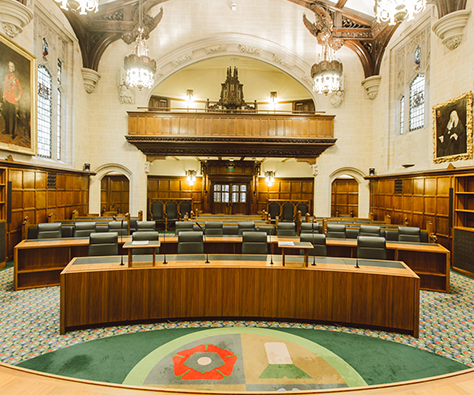
Pakistan, asylum, gay claims and domestic violence 

BERJAYA

On the verge of being a “rogue state”, Pakistan is generally in the news for all the wrong reasons. Support for the Taliban (“dirty work” for the Americans) in the past, blood feuds, stratospheric levels of honour killing, mafia activity, police corruption, and target killings are just some of the ills associated with Pakistan and before the historic Islamabad Talks between Iran and the US, brokered by Field Marshall Asim Munir and Prime Minister Shehbaz Sharif, there was very little positive reporting in the media about Pakistan. On the other hand, the BBC’s sting operation exposing the abuse of the UK’s asylum system by people from Pakistan posing to be gay has led to recommendations that the UK should ban Pakistani students like those from neighbouring Afghanistan. Pakistanis also make up the highest asylum claimants in the UK and 11,048 claimed asylum in 2025. HJ (Iran) & HT (Cameroon) v SSHD [2010] UKSC 31 was a landmark case about asylum and sexual orientation. The case involved the law of Iran (which Lord Hope described as an “ultra-conservative interpretation of Islamic law”) and right-wing evangelical Christian teachings prevalent in Sub-Saharan Africa (which Lord Hope characterised as “rampant homophobic” teachings). In the case of Pakistan, homosexual acts are criminalised under section 377 of the the Pakistan Penal Code 1860, a colonial British law, which provides that voluntarily “carnal intercourse against the order of nature with any man, woman or animal, shall be punished with imprisonment for life, or with imprisonment of either description for a term which shall not be less than two years nor more than ten years, and shall also be liable to fine.” 

Indeed, as the preface to Lord Hope’s judgment had carefully observed, “Persecution for reasons of homosexuality was not perceived as a problem by the High Contracting Parties when the Convention was being drafted…It was the practice for leaders in these countries simply to insist that homosexuality did not exist. This was manifest nonsense, but at least it avoided the evil of persecution.” Claimant HJ had brief relationships with other men while performing his military service in Iran. Later, he had one relationship with a market trader and another, lasting nine months, with his employer. He hid his sexual orientation from all but a small number of likeminded people. His mother and brother had also found out about it. He claimed to have become subject to the adverse interest of the authorities in Iran. In the UK, HJ had a long-standing gay relationship which he conducted openly. HT had two homosexual relationships in Cameroon. The first lasted two months and the second ended after three years when he and the other man were together in his garden, began kissing and were seen by a neighbour. They then went their own ways. Later HT was attacked. Prior to the occasion in the garden, HT had been discreet. He claimed that he would be persecuted on return to Cameroon. Of course, prior to proceedings in the Supreme Court in which the two appellant’s succeeded, the Court of Appeal elected to dismiss their claims. 

Continue reading
Posted in Asylum, Hostile Environment, Islam, Pakistan, Persecution, Refugee Convention, SOGI, Spouse visa, Students, UKSC | Tagged , , , , | Leave a comment

Home Office wins against Turkish wife killer in Court of Appeal 

BERJAYA

KD v Secretary of State for the Home Department [2026] EWCA Civ 349 (23 March 2026)

In these proceedings, the Court of Appeal has allowed the SSHD’s appeal against the Upper Tribunal’s decision to uphold the First-tier Tribunal’s decision to allow an appeal from the refusal of a claim for asylum and humanitarian protection. Peter Jackson LJ held that the appeal had to be allowed on the basis of errors of law by the First-tier Tribunal that went uncorrected by the Upper Tribunal. This was the second set of proceedings in respect of KD, a Turkish national. Earlier, over twenty years ago in 2004, an earlier appeal based on his asserted fear of political persecution was firmly dismissed by a tribunal. However, he remained in the UK unlawfully, and in 2005 he murdered his wife and 14 years later, after being released from prison, he made another asylum claim on the same ground of political persecution, and a new claim that his human rights would be breached if he were to be returned to his home country because of the risk to him from an alleged blood feud caused by the murder. These claims were rejected by the SSHD, but on KD’s appeal to the FTT the claim of political persecution succeeded. The existence of a blood feud was also accepted, but the corresponding human rights claim was left undetermined. The SSHD’s appeal to the UT was therefore dismissed, with the result that KD, a foreign criminal who had resided in the UK unlawfully for 25 years, could not be deported. Aggrieved, the SSHD appealed to this court. The Court of Appeal said that the Turkish national’s asylum and human rights appeals on the basis of imputed political opinion should be dismissed.

In January 2019, the SSHD refused KD’s asylum and human rights claims certifying that he was a danger to the community and that his deportation was conducive to the public good. He was served with notice of a decision to make a deportation order. KD appealed on asylum and human rights grounds. In December 2022, after a hearing at which further evidence, including additional witnesses and an arrest warrant was considered, the FTT allowed the appeal on asylum grounds. The FTT found that KD had rebutted the statutory presumption of dangerousness, that he would be at risk of persecution on account of his political opinions, and that a blood feud would put him at risk in Turkey and the SSHD’s appeal to the UT was dismissed in June 2024. Thus, the SSHD appealed to the Court of Appeal on the grounds of procedural impropriety by the UT, legal flaws in the FTT’s approach to section 72, misdirection by the FTT on the guidelines for handling fresh claims following failed appeals, and flaws in its approach to the arrest warrant. The Court of Appeal unanimously allowed the appeal because there was an unacceptable delay in the delivery of the UT’s decision. The decision then given was short and the FTT’s decision gains no support from it. However, the real question concerned the FTT’s decision. 

Continue reading
Posted in Asylum, Automatic Deportation, Court of Appeal, Deportation, Human Rights, Turkey | Tagged , , , , , | Leave a comment

The label on the tin is obviously important: AI hallucinations and false authorities in the Upper Tribunal

BERJAYA

R (Munir) v SSHD (AI hallucinations; supervision; Hamid) [2026] UKUT 81 (IAC) (17 November 2025)

In this case, the Upper Tribunal (Judges Lindsley, Keith and Blundell) made a series of observations about the use of Artificial Intelligence (“AI”) and gave guidance. They said that legal professionals are obliged to ensure that legal arguments which are presented to the First-tier Tribunal or Upper Tribunal are factually and legally accurate. Those who cite false cases fail to comply with that professional obligation and waste the precious time of the Tribunal. Moreover, a solicitor or other legal professional who delegates their work to another fee-earner is still responsible for the supervision of their work and for ensuring its accuracy and such supervisors must ensure that fee-earners under their supervision are aware of the dangers of using non-specialist AI for legal research and drafting. Failures to do so, or to undertake appropriate checks on the drafting of fee-earners is likely to result in a referral to the Solicitors Regulation Authority (“SRA”) or other professional body. A supervisor who fails to ensure that the work of a more junior fee-earner does not contain false cases or citations is likely to be more culpable than a lawyer who fails to ensure that his own legal work is free from such “hallucinations”. The claim form by which judicial review is sought in the Upper Tribunal has now been amended so as to require a legal representative to confirm by a statement of truth that any authority cited within the form or in any documents appended to it (a) exists, (b) may be located using the citation provided, and (c) supports the proposition of law for which it is cited. 

Other forms and directions are to be similarly amended. A legal representative who signs such a statement in a case in which false authorities are cited should ordinarily expect to be referred to their regulatory body. Judges Lindsley, Keith and Blundell stated that uploading confidential documents into an open-source AI tool, such as ChatGPT, is to place this information on the internet in the public domain, and thus to breach client confidentiality and waive legal privilege, and any such conduct might itself warrant referral to the SRA and should be referred to the Information Commissioner’s Office. In the first case the main issue was whether Mr Tahir Mehmood Mohammed (a level 3 accredited adviser) of TMF Immigration Lawyers should be referred to the Immigration Advice Authority (“IA”), previously the OISC, for investigation. In the second case, Ms Munir, a Pakistani national arrived in the UK with entry clearance as a student, and there was an application for judicial review which was made by City Law Practice Solicitors and Advocates (“CLP”) and signed by one Zubair Rasheed, a self-designated “Senior Solicitor and Immigration specialist”. Judge Blundell, who is an accomplished and fair-minded judge of the Upper Tribunal, refused permission and asked the Compliance Officer for Legal Practice (“COL”) at CLP should provide a signed statement identifying the author of the grounds for judicial review. Under the sub-heading “Inaccuracies in the Grounds”, he explained that the “authorities” mentioned in the grounds were bogus and the identity of the author of the grounds was not clear to him.

Continue reading
Posted in AI, Cases, Evidence, Hamid, Judicial Review, Removals, Skilled Worker, Tribunals | Tagged , , , , , , | Leave a comment

Changes to Immigration Rules: Shabana Style 

BERJAYA

Statement of Changes HC1691 makes myriad changes to the Immigration Rules and among other things introduces the Visa Brake, reduces the duration of refugee and humanitarian protection, makes changes to English language requirements and Appendix Victim of Domestic Abuse. The changes are a part of the wider package of reforms envisaged by “brave” Shabana Mahmood, the Home Secretary who has the dubious distinction of winning the admiration of Kemi Badenoch, the Leader of the Opposition. These new rules have emerged against the background set out in the white paper on immigration policy entitled Restoring Control over the Immigration System, May 2025 and a policy statement on asylum and removal of unauthorised migrants entitled Restoring Order and Control, November 2025. Shabana Mahmood has also proposed unprecedented changes to the rules on qualifying for permanent residence (settlement or indefinite leave to remain/“ILR”). These “earned settlement” changes are designed to stop recent migrants who work in jobs considered lower-skilled – especially adult social care – from gaining access to the welfare system after five years in the UK. Shabana Mahmood pointed out that “absent action, over the next 5 years some 350,000 low-skilled workers and their dependents will qualify for settlement.”

She also made other telling points. For example, since the small boats first arrived, nearly 200,000 people have come the UK across the Channel. Over 100,000 people live in asylum accommodation, paid for by the taxpayer and in 2025 alone £4 billion was spent on asylum accommodation (by contrast this sum is what a developing country such as Pakistan has borrowed from the IMF to keep afloat). All this means that the qualifying period for settlement should move – as a norm – from 5 years to 10 and “the point at which settlement is possible will now vary.” Doctors and nurses will be able to obtain settlement in 5 years but other people will have to wait longer before they can apply for settlement. These dynamics will address the challenge posed by the impending settlement of the hundreds of thousands of low-skilled workers and their dependants who arrived between 2022 and 2024. The Home Secretary said that means applying any rule changes to those who are in the UK today but have not yet received settled status. Absenting that, the UK will see a £10 billion drain on its public finances and further strain on public services – such as housing and healthcare – which are already under enormous pressure.

Continue reading
Posted in Asylum, Deportation, Immigration Rules, Permanent Residence, Settlement | Tagged , , , | Leave a comment

SSHD victorious against Albanian national in Supreme Court  

BERJAYA

Secretary of State for the Home Department v Kolicaj [2025] UKSC 49 (18 December 2025)

This case involved the deprivation of citizenship because of a criminal conviction of conspiracy to remove the proceeds of crime from England. Addressing multiple issues, the Supreme Court unanimously allowed the SSHD’s appeal and dismissed the cross-appeal of Mr Kolicaj, an Albanian national who arrived in the UK in 2005 on a limited visa and was subsequently granted indefinite leave to remain on the basis of his marriage to a British citizen and went on to become a naturalised British citizen in 2009. In 2021, the SSHD served a notice of intention to make a deprivation order on Mr Kolicaj in prison. Shortly afterwards, he was served an order depriving him of his British citizenship. The SSHD deliberately served the notice very shortly after the Order in order to ensure that he would not have an opportunity to renounce his Albanian citizenship before the order was served on him. If that opportunity were available, then according to the statutory regime the SSHD would not have been able to make an order depriving him. At the time of the deprivation decision, the only relevant statement of policy regarding the use of the power under section 40(2) of the British Nationality Act 1981 which was available in the public domain was set out in Chapter 55 of the Home Office’s Nationality Instructions. The said policy explained that conduciveness to the public good “means depriving in the public interest on the grounds of involvement in terrorism, espionage, serious organised crime, war crimes or unacceptable behaviours.” 

However, on 13 May 2020, before the SSHD made her decision, another civil service submission had been made to the SSHD (“the May 2020 submission”) recommending that she should use her power of deprivation under section 40(2) against people who were guilty of the most serious and high-profile cases of serious organised crime. There were five issues. Two issues arose because of the SSHD’s appeal and three issues arose because of Mr Kolicaj’s cross-appeal. The SSHD’s issues were (i) whether procedural fairness required the SSHD, when issuing the Notice and making the Order, to offer to review her decision in a reconsideration of the merits on the basis of Mr Kolicaj’s representations, as the Court of Appeal held she should have done, and (ii) whether the Court of Appeal erred in quashing the Order, when it had no power to do so. The remaining three issues, arising out of Mr Kolicaj’s cross-appeal, were (iii) whether the SSHD was under an obligation to investigate the extent of the risk that Mr Kolicaj might be able to renounce his Albanian citizenship before she took her decision, (iv) whether the SSHD applied an undisclosed policy to his case which rendered her decision unlawful, and (v) whether the SSHD failed to exercise her discretion under section 40(2), as the Upper Tribunal had held.

Continue reading
Posted in Albania, Citizenship and Nationality, Court of Appeal, Deprivation of Citizenship, ECtHR, UKSC | Tagged , , , , | Leave a comment

Court of Appeal: The meaning of paragraph SW2.2 is clear

BERJAYA

Kaur & Ors, R (On the Application Of) v Secretary of State for the Home Department [2025] EWCA Civ 1474 (20 November 2025)

The Court of Appeal dismissed an Indian national’s appeal who applied for leave to remain as a skilled worker while she was on immigration bail. The case partly concerned the construction of an important provision of the Immigration Rules and threw up two issues. First of all, what does paragraph SW2.2 of Appendix Skilled Worker of the Rules mean? Secondly, was it open to the appellant, namely Ms Kaur to rely, in her challenge to the refusal of her Skilled Worker application, on an argument that the decision to put her on immigration bail was unlawful? The Court used the shorthand of “decision 3” in relation to the refusal of the Skilled Worker application and “decision 2” to put her on immigration bail. Overall, Elisabeth Laing LJ dismissed the appeal and said that the meaning of paragraph SW2.2 is clear and the UT rightly so held. The Court said it was far too late for Ms Kaur to challenge decision 2. Even if it were not too late, decision 2 was not unlawful, as the UT also rightly held. Ms Kaur entered the UK as a student with her husband and her child as dependants. She then applied for leave to remain on human rights grounds (“application 1”) which was refused and certified as “clearly unfounded” and a decision was made to put Ms Kaur on bail. She applied for leave to remain as a Tier 2 Skilled Worker with her dependants (“application 2”) which was also refused in decision 3. The key reason for decision 3 was that Ms Kaur did not meet Paragraph SW2.2(b) of Appendix Skilled Worker. 

She then sought an administrative review (“application 3”) of decision 3. The SSHD said that paragraph SW2.2 was clear and it was accepted that application 2 had been submitted within 14 days of the refusal of an in-time application. The decision-maker had made no reference to overstaying as being a reason for the refusal of application 2. The decision-maker had “correctly stated” that application 2 was refused under paragraph 2.2(b) of the Appendix because she was placed on immigration bail on 28 April 2023. Thus, there was no error in decision 3. Ms Kaur applied for judicial review of decisions 3 and 4 on four grounds First of all, decision 3 was inconsistent with the statutory scheme provided under paragraph 39E and therefore unlawful. Secondly, paragraph SW2.2(b) deprived her of the real benefit of paragraph 39E and was unlawful to that extent. Third, the SSHD’s decision to grant immigration bail was invalidated for reasons of procedural unfairness and error in law. Fourth, decision 3 was, in any event, a result of a historic injustice as she had been wrongfully granted immigration bail. The Upper Tribunal refused permission to apply for judicial review on the papers. It said that the grounds were unarguable. Contrary to the grounds, the applicants were given the benefit of paragraph 39E. Overall, there was no misdirection about paragraph SW2.2(b). The SSHD had been unarguably entitled to put Ms Kaur and her husband on immigration bail. At the material time they were overstayers with no leave to remain in the UK and they were liable to removal, detention, and bail. Then, the Tribunal refused permission to apply for judicial review in an oral hearing. 

Continue reading
Posted in Appendix Skilled Worker, Bail, Court of Appeal, Employment, Enforcement, Historic Injustice, Historical injustice, Immigration Rules | Tagged , , , | Leave a comment

‘Automatic’ settlement axed: ILR must be ‘earned’

BERJAYA

A Fairer Pathway to Settlement (November 2025, CP 1448) sets out the government’s pompous plans to overhaul the system and contains the government’s proposals to change the settlement rules to establish an “earned settlement” model. Herself the daughter of Muslim Kashmiris from Pakistan, Shabana Mahmood, the new Home Secretary, who only recently assumed office on 5 September 2025, announced her plans in Parliament wearing a shiny gold necklace with “Allah” inscribed on it beautifully in Arabic. The former barrister stressed that “settlement is a privilege, not a right” and explained that her “earned settlement” system will be constructed on four pillars, namely character, integration, contribution and residence. Applying these rules, the standard qualifying period for Indefinite Leave to Remain (“ILR”) will increase from 5 to 10 years (15 years for lower-skilled workers below RQF level 6). However, there will be reductions in the qualifying period for those who demonstrate integration (English proficiency, volunteering) and higher tax payments. Individuals on high-skilled routes, those with 3 years of continuous residence as a Global Talent worker or Innovator Founder will benefit from a reduction of up to 7 years. Therefore individuals who hold either visa should continue to benefit from an accelerated route to settlement after 3 years. Furthermore, the government is consulting on whether their family members should get a 5-year reduction. Illegal migrants and visa overstayers will be subject to up to a 30-year wait prior to getting ILR. In reality only deportation from the UK is automatic, settlement is not.

As set out in the Restoring Order and Control: A Statement on the government’s asylum and returns policy, the Home Office will introduce a starting point of a 20-year qualifying period of settlement for those recognised as refugees. It says those who move from core protection onto the new core protection-work and study routes will be able to earn reductions. However, the Home Secretary clarified that refugees will never be in a better position than those coming to the UK on recognised migration routes (such as workers), who are subject to the usual standard settlement qualifying period of 10 years. Migrants on benefits for more than one year will have to wait for 20 years. There are further plans to limit access to benefits to citizenship rather than settlement. Moreover, transitional arrangements for existing migrants will be determined via consultation. She said that the government will begin implementing the changes in April 2026. The consultation is open until 12 February 2026 and it is open to anyone who wants to share their views, including individuals, organisations, and stakeholders who may be affected by or have an interest in the proposed changes. Also on the menu are quicker settlement routes for individuals “who have a uniquely strong attachment to this country, including the spouses and dependants of British citizens and British Nationals (Overseas) (BN(O)s) from Hong Kong.” They will not be subject to consultation. Moreover, the consultation targets low-skilled and low-wage migrants who arrived on the Health and Care visa.

Continue reading
Posted in Arrivals, Asylum, Automatic Deportation, ILR, Islam, Settlement, Small Boats | Tagged , , , | Leave a comment

Court of Appeal dismisses challenge to citizenship deprivation by dishonest Albanian who told “a lie on every page”  

BERJAYA

Onuzi v Secretary of State for the Home Department [2025] EWCA Civ 1337 (21 October 2025)

This appeal turned on the question of the circumstances in which a naturalised British citizen may be deprived of his citizenship on the ground that it was fraudulently obtained. The Court of Appeal dismissed Mr Onuzi’s appeal and found no public law error in the conclusion of the SSHD’s decision-maker in 2020 that, had the truth been known in 2007, Mr Onuzi would have been refused British citizenship on the grounds that he was not of good character. On the contrary, Bean LJ did not see how any other conclusion would have been a realistic possibility. The court found that the Upper Tribunal’s decision had been plainly correct, and Bean LJ was unable to see any reason to remit the case to the Upper Tribunal for a further hearing. DUTJ Symes rightly observed, this was a case of “historic and prolonged dishonesty”. There was nothing in the decision-making history to break the causative link between fraudulent behaviour and the grant of citizenship. The appellant entered the UK illegally on 28 November 1999 and claimed asylum. He claimed to be Betim Jonuzi, born on 22 February 1976, from Kosovo. In fact he was Betim Onuzi, born on 23 February 1976, from Albania. He made an asylum application alleging that he had left Kosovo because of the war and that he had been persecuted by Serb police and military groups because of his ethnicity. A “Dear Sir or Madam” letter erroneously sent to social services said that he been granted Exceptional Leave to Remain (ELR)

But it was later said that there was no evidence of a grant of ELR on his file or that he was issued with papers actually granting him ELR. A Special Adjudicator who concluded on 24 May 2001 that following the SSHD’s administrative error,  there was estoppel from denying that the appellant had been granted ELR for four years up to 16 August 2004. It was unclear on what basis the case came before the Adjudicator or why he considered he had jurisdiction to make such a decision in all the circumstances. It appears that no formal decision was made to grant ELR. On 9 July 2004, Mr Onuzi applied for indefinite leave to remain (ILR), also in the false identity. He signed a declaration that the information given in the form was complete and true to the best of his knowledge, and that he would inform the Home Office if there was a material change in circumstances. The form set out in bold type, on the signature page, that it was an offence to make a false representation or to obtain or to seek to obtain leave to remain in the UK by using means which include deception. An official internally recorded in respect of the ILR application that it was not been handled well. The SSHD never recovered from the original error. The official also doubted that the case was even for ELR as the decision was withdrawn on 30 Jan 2004 with an expectation that consideration would be given to granting the balance of exceptional leave. The official said “enough time has been wasted, so we should reach a decision”. The original application was made on 28 November 1999 and he concluded “Looking at this mistake ridden case I agree that we should grant ILR. I cannot see any fairer conclusion.” 

Continue reading
Posted in Albania, Asylum, British Citizenship, Court of Appeal, Deception, Deprivation of Citizenship, Dishonesty, False Statements and Misrepresentations, ILR, Kosovo, UKSC | Tagged , , , , , | Leave a comment

“Earned” settlement and citizenship: What lies ahead? 

BERJAYA

“Earned settlement” and “earned citizenship” were the mottos of this summer’s White Paper Restoring Control over the Immigration System (May 2025, CP 1326). Earned settlement is mentioned on pages 68 and 69 of the White Paper and earned citizenship is mentioned on pages 69 and 70 of the White Paper. The White Paper states that settlement in the UK is not only a prerequisite for becoming a British citizen, it also brings lifelong benefits. The Home Office says it is “an important step in integrating and contributing to local communities and the wider country”. The Home Office states that “earned settlement” and “earned citizenship” are necessary because of a high number of people grants. There were 162,000 grants of settlement in 2024, up 35% from 2023. Moreover, the Home Office also stresses that in 2024, 269,621 people were granted British citizenship, 30% more than 2023. As to settlement, the White Paper stated that the share of people who go on to claim settlement varies considerably by the type of visa people were initially granted to enter the UK, 18% of those coming on work visas between 2010 and 2018 secured settlement by 2023, compared to 75% on the family route. Emphasis is provided to the “long-standing principle that settlement in the UK is a privilege and not a right.” The existing system of settlement is primarily qualified for on the basis of length of residence in the UK accompanied by a knowledge of life test which is used to verify knowledge of British customs, history, traditions, laws and political system.

It is clear from the White Paper that the government believes that these factors alone do not reflect the government’s “strongly held belief that people should contribute to the economy and society before gaining settled status in our country and they fail to promote integration, which limits the wider benefit from long term migration into the UK and increases pressure on public services.” The solution is to reform the current rules around settlement through an expansion of the principle behind the Points-Based System (“PBS”), that individuals should earn their right to privileged immigration status in the UK through the longterm contribution they bring to the UK. This PBS  expansion will increase the standard qualifying period for settlement to 10 years. The Home Office states that “We will continue to offer a shorter pathway to settlement for non-UK dependants of British citizens to five years, provided they have remained compliant with their requirements, and we will retain existing safeguards to protect the vulnerable, including settlement rights for victims of domestic violence and abuse.” Through the expansion of the PBS, individuals will also have the opportunity to reduce the qualifying period based on PBS contributions to the UK economy and society. The Home Office will consult on these changes later this year. As to citizenship, the Home Office repeats the mantra that its is a longstanding principle that citizenship in the UK, indeed like settlement, is a privilege and not a right.

Continue reading
Posted in British Citizenship, ILR, Immigration Rules, PBS, Permanent Residence, Settlement, Skilled Worker | Tagged , , , | Leave a comment

Indian student’s visa cancellation held unlawful  

BERJAYA

Kaur & Anor, R (On the Application Of) v Secretary of State for the Home Department [2025] EWHC 1942 (Admin) (25 July 2025)

In these judicial review proceedings, Matthew Butt KC held that Mrs Kaur’s permission to remain was cancelled by use of a RED.0001 notice other than in accordance with the SSHD’s guidance. Mrs Manpreet Kaur and Mr Manpreet Singh came to the UK in 2023. The claimants arrived in the UK awfully on a student visa (issued to Mrs Kaur) and a dependent visa (issued to Mr Singh) on 25 January 2023. The sponsoring university was the University of Dundee. On 16 May 2023 immigration officers encountered Mr Singh working at a factory in the West Midlands where in due course Mrs Kaur attended upon request. A record of this encounter was provided by the SSHD at the hearing of the claim and the SSHD cancelled the couple’s permission to stay in the UK with immediate effect and notified them that they were liable to be removed from the UK. This was on the basis that Mrs Kaur’s sponsorship had been revoked by her sponsor, University of Dundee. The couple was served with documents including a RED.0001 notice (issued to a person liable to removal from the UK) and an IS.91R notice (reasons for detention). Subsequently, removal directions were set the next day and the RED.0001 notice was further used to notify them that their permission to stay had been cancelled. They sent a pre-action protocol letter and submitted a human rights claim arguing that their removal would breach article 8 of the ECHR. 

The SSHD refused the human rights claim and also certified it as clearly unfounded under section 94 of the Nationality, Immigration and Asylum Act 2022. Matthew Butt KC noted that during the period between the paper refusal and the oral renewal hearing, the SSHD issued notices which purported to cancel the couple’s permission to remain within a 60-day period. The SSHD said that this was done in error and was a nullity. The very late emergence of this material caused the renewal hearing to be adjourned and Matthew Butt KC observed that the Government Legal Department was unaware of this until the lawyers were shown the paperwork at court. Matthew Butt KC exclaimed that “This should have been a wake-up call to the Defendant that all was not right with this case.” Nevertheless, a day before the substantive hearing, the SSHD served a witness statement from Colin Hubbard of the Home Office Student Sponsor Assessment Unit and applied for permission to rely upon this evidence. The statement said that the University of Dundee withdrew its sponsorship of Mrs Kaur on 16 February 2023. This was reported to the Home Office the same day. The reason for withdrawal was that she had “failed to engage and academically progress in line with immigration rules”. Matthew Butt KC lamented that “It was very unfortunate that this evidence was served so late.”

Continue reading
Posted in Article 8, Cancellation, Damages, ECHR, Human Rights, Immigration Rules, India, IS.91R notice, Judicial Review, RED.0001 notice, Students | Tagged , , , , , , | Leave a comment

Private life of children: Settlement under the five-year route 

BERJAYA

There seems to be a slow and steady shift in the Immigration Rules towards the recognition of the rights of children. Prior to 2010, the rules did not directly address the issue of children’s private life and the earlier policy of DP5/96 was withdrawn by the Home Office. Statement of Changes to the Immigration Rules HC194 set out the requirements to be met by an applicant for leave to remain on the grounds of private life 276ADE. Apart from the relevant suitability requirements, the child applicant needed to live continuously in the UK for at least 20 years (discounting any period of imprisonment) or was under the age of 18 years and had lived continuously in the UK for at least 7 years (discounting any period of imprisonment), or was aged 18 years or above and under 25 years and had spent at least half of his life residing continuously in the UK (discounting any period of imprisonment) or was aged 18 years or above, had lived continuously in the UK for less than 20 years (discounting any period of imprisonment) but had no ties (including social, cultural or family) with the country to which he would have to go if required to leave the UK. On this basis, limited leave to remain on the grounds of private life in the UK used to be granted for a 30 months period provided that the decision-maker was satisfied that the requirements in paragraph 276ADE were met.

Such leave used to be granted subject to such conditions as the Home Office considered appropriate. Fast forward fifteen years later, and Appendix Private Life of the Immigration Rules states that “The Private Life route is for a person seeking permission to stay in the UK on the basis they have developed a Private Life in the UK” and “A child born in the UK to a person who has permission on the Private Life route can apply for permission for the same duration as their parent.” Appendix Private Life states “The Private Life route is a route to settlement” and “A child born in the UK who has been continuously resident for 7 years may qualify for immediate settlement on this route.” However, Statement of changes to the Immigration Rules: HC 836 (24 June 2025) makes numerous changes to the myriad Immigration Rules, including changes to Appendix Long ResidenceAppendix Continuous ResidenceAppendix Private Life, asylum and EU Settlement Scheme (EUSS). Changes were made to allow children who have lived in the UK for seven years to qualify for settlement after five years. The Home Office notes that a concession introduced in October 2021 allowed settlement for young adults who had five years’ lawful permission in the UK and who met, or had previously met, the half-life test under the private life rules. The half-life test is where a person is aged between 18 and 25 at the date of application, arrived in the UK before the age of 18, and has spent at least half of their life continuously in the UK.

Continue reading
Posted in Article 8, Children, Human Rights, ILR, Immigration Rules, Settlement | Tagged , , | Leave a comment

High Court orders summary return of child to Pakistan

BERJAYA

C (A Child: Summary Return to Pakistan), Re [2025] EWHC 1427 (Fam) (04 March 2025)

In this case, Nicholas Stonor KC granted the mother’s application for the summary return to Pakistan of a young boy, A, who was aged 17 months. The child was a dual British and Pakistani nationality. The High Court considered whether to order A’s summary return to Pakistan. Although Pakistan has ratified the Hague Convention on the Civil Aspects of International Child Abduction 1980, it does not operate bilaterally between the UK and Pakistan because the UK has not accepted Pakistan’s accession. So this was an inherent jurisdiction case, notwithstanding the 2003 Protocol Child Abduction Cases between the UK and Pakistan—a bilateral agreement between the respective judiciaries of UK and Pakistan designed to address cases of child abduction between the two countries. While not legally binding, the Protocol guides the handling of such cases by courts in both countries. The mother submitted that the child was wrongfully removed by his father from Pakistan following a campaign of deceit perpetrated by the father in collaboration with the paternal grandmother. On the other hand, the father and paternal grandmother argued that the mother had agreed to the removal, and thus opposed the application for return. The Court examined A’s habitual residence, which was contested, and scrutinised the risk of harm on return. Nicholas Stonor KC emphasised that the child’s welfare was paramount and that inherent jurisdiction is not a substitute for Hague Convention system and it must be used sparingly, primarily where serious harm would result from refusing return or where other remedies are unavailable. 

Nicholas Stonor KC clarified that summary return to a non‑Convention country such as Pakistan under inherent jurisdiction is only appropriate in “exceptional circumstances” where delay would significantly harm the child. The Court held that the mother showed herself to be very capable of meeting the child’s physical and emotional needs and that the father’s actions had caused serious emotional harm to him and that for as long as he remained in his father’s care, he was at risk of serious emotional harm. Ultimately, the Court concluded that the welfare threshold for a summary return had been met and the mother’s application was granted. The Court heard oral evidence from the mother, the father, the paternal grandmother. The mother and the father had numerous discussions about the mother’s difficulties in securing a spouse visa. The Court said that the evidence showed that in June and July 2023, the father urged the mother to agree to him taking A to the UK without her. The plan was that the father, who was apparently due to undergo back surgery in the UK, could accordingly represent to the UK immigration authorities that the mother’s spousal visa application should be expedited because he could not care for A on his own. The evidence showed the father repeatedly pressured the mother to agree to this plan and the mother resisted and maintained that she could never leave her children.

Continue reading
Posted in Appendix FM, Child Abduction, Children, Hague Convention, Pakistan, Return Order, Spouse visa, Spouses | Tagged , , , , , | Leave a comment

Upper Tribunal refuses costs because proceedings only existed “in the realm of politics and not in the realm of law”  

BERJAYA

IX, R (On the Application Of) v Secretary of State for the Home Department (Judicial Review; costs) [2025] UKUT 154 (IAC) (23 April 2025)

The Upper Tribunal (Swift J, UTJ Smith) has reiterated that the general rule (Civil procedure Rules 44.2(3)) is that the unsuccessful party will be ordered to pay the costs of the successful party. Costs are said to “follow the event”, with the event being the outcome of the trial. Notably, where proceedings have been issued but have come to an end before trial, the general rule still applies. In this case, instead of determining the merits of the Egyptian national applicant’s claim, the UT considered competing applications for the costs of the proceedings made by the him and by the SSHD. The applicant, “IX”, arrived in the UK on 16 November 2022 after crossing the English Channel by small boat. On 17 November 2022 he made a claim for asylum. That claim was not, at the material time, considered by the SSHD. At that time, the SSHD’s policy provided for the possibility that asylum claims made by migrants who had entered the UK illegally by using small boats, would be declared inadmissible where the conditions set out in section 80B of the Nationality, Immigration and Asylum Act 2002 were satisfied. In such cases, the policy then was to consider the removal of such persons to the Republic of Rwanda which, at the time, the Government considered to be a safe third State under the Rwanda policy for the purposes of the relevant provisions in the 2002 Act. The Rwanda policy relied on the powers available to the SSHD under Part 4A of the 2002 Act to declare asylum claims inadmissible if certain conditions were met. 

The overall effect of the Rwanda policy was that any asylum claim made by a person such as the applicant “IX” would not be determined in the UK but would instead be decided in Rwanda after the person had been removed to Rwanda. IX was one of a group of migrants to which the SSHD wished to apply the Rwanda policy. This group is often referred to as the “MEDP cohort”, a reference to the Migration and Economic Development Partnership arrangement then in force between the UK and Rwanda. After the general election on 4 July 2024 there was a change of government. The Rwanda policy was abandoned, and the Safety of Rwanda (Asylum and Immigration) Act 2024 which had provided that Rwanda was, for the purposes of section 80B of the 2002 Act, a “safe third State” was repealed. But the provisions in the 2002 Act permitting asylum claims to be declared inadmissible remain in force. While the statutory provisions on inadmissibility were a premise for the Rwanda policy they existed (and continue to exist) independent of that policy. Notably on 15 August 2024 the SSHD published a new version of the inadmissibility policy, namely “Inadmissibility: safe third country cases” which anticipated that the SSHD’s power to declare asylum claims inadmissible will continue to be used in appropriate instances.

Continue reading
Posted in Asylum, Costs, Immigration Rules, Judicial Review, MEDP, Refugee Convention, Removals, Rwanda | Tagged , , , , , | Leave a comment

Changes to the Skilled Worker route from 22 July 2025

BERJAYA


Statement of changes to the Immigration Rules: HC 997, 1 July 2025 makes wide-ranging changes relating to the Skilled Worker and other work routes as set out in the Immigration White Paper, “Restoring control over the immigration system”, published on 12 March 2025. The new rules target the Skilled Worker and other work routes as set out in the Immigration White Paper and will be quickly implemented on 22 July 2025 to add to the chaos. The labyrinthine UK rules on immigration have been criticised heavily by the Court of Appeal and the Supreme Court and flabbergasted judges have described them as confusing: “kaleidoscopic” and a “chimaera”. Skills and salary thresholds are on the menu this time. The changes mean the axing of 180 eligible existing occupations and the upcoming amendments increase the threshold for Skilled Workers back to Regulated Qualifications Framework (RQF) level 6. The threshold relates to the skill level of the occupation, rather than any qualifications held by an applicant. The Home Office feels betrayed and says that the threshold was lowered from RQF level 6 in Immigration Rules changes made in 2020 (HC 813) in part to help businesses adapt to the ending of free movement between the UK and EU. But, as stated in the White Paper, growth in visa numbers, and concerns about exploitation of overseas recruits, have been seen in occupations below RQF level 6.

Skilled Worker applicants will continue to be able to be sponsored in the 180 occupations only if they are already in the route (or have been sponsored for an application which is later successful) when the changes come into effect, or where an occupation is on the Immigration Salary List or on the new interim Temporary Shortage list. The minimum threshold will rise from £37,800 to £41,700 and the threshold for New Entrants will be £33,400. These developments are sending shockwaves across migrant communities. Routine updates to salary requirements across the Skilled Worker, Global Business Mobility and Scale-up routes are being made, in accordance with the latest (2024) Annual Survey of Hours and Earnings (ASHE) data, published by the Office for National Statistics. This is standard practice to ensure salary requirements continue to reflect the latest pay situation for UK workers. However, only a minimal update was made in Immigration Rules changes in April 2025 (HC 733), due to the forthcoming Immigration White Paper. These changes make the remainder of the standard update to general salary thresholds and going rates for individual occupations.

Continue reading
Posted in Employment, Immigration Rules, Skilled Worker, UKSC | Tagged , | Leave a comment

New Private Life and Long Residence Rules from 16 July 2025

BERJAYA

Statement of changes to the Immigration Rules: HC 836 (24 June 2025) makes numerous changed to the myriad immigration rules, including changes to Appendix Long Residence, Appendix Continuous Residence, Appendix Private Life, asylum and EU Settlement Scheme (EUSS). Changes are also being made to allow children who have lived in the UK for seven years to qualify for settlement after five years. These changes will be implemented on various dates from 16 July 2025. In relation to changes to Appendix Long Residence, the qualifying period requirements are being changed to clarify that time spent as a British citizen is considered lawful presence, except where that British citizenship has subsequently been deprived. A person who has been deprived of their British citizenship, for example because it was obtained by deception, should not be able to count that time as lawful presence for the purposes of long residence. In relation to changes to Appendix Continuous Residence, the rules are being changed to remove an inconsistency that currently exists for long residence applications. In future, the Home Office will treat time with permission in the Crown Dependencies (the Isle of Man, Jersey and Guernsey), on a route equivalent to those in the UK, as lawful presence in the UK. This change, it is claimed, improves consistency and simplicity in the immigration system.

The Home Office notes that a concession introduced in October 2021 allowed settlement for young adults who had five years’ lawful permission in the UK and who met, or had previously met, the half-life test under the private life rules. The half-life test is where a person is aged between 18 and 25 at the date of application, arrived in the UK before the age of 18, and has spent at least half of their life continuously in the UK. That concession was then incorporated into the Rules in Spring 2022 when Appendix Private Life was introduced. The present changes allow young people granted permission in the UK on the basis of their family or private life before 20 June 2022 to settle under the five-year private life rules if they meet the half-life test at date of application or met it in a previous application. The Home Office says that this aligns with the concession and ensures that applicants who would have benefited from the concession are not disadvantaged. Changes are also being made to allow children who have lived in the UK for seven years to qualify for settlement after five years. This group was not part of the concession, but a seven-year qualifying child who applied as part of a family group would always have been granted under the family rules and cannot currently qualify under the private life rules for settlement after five years. Irrespective of whether granted under the family or private life rules, the rationale for introducing a shorter five-year route to settlement for children applies to this cohort.

Continue reading
Posted in Article 8, Children, Immigration Rules, Refugee Convention | Tagged , , , | Leave a comment

Supreme Court: Approach in Begum as to SIAC’s procedures meets Convention standards

BERJAYA

U3 v Secretary of State for the Home Department [2025] UKSC 19 (12 May 2025)

In an appeal concerning the right approach to be taken by “SIAC”, the Special Immigration Appeals Commission, in disputes about matters which are relevant to the assessment of national security, the Supreme Court unanimously dismissed the appeal of “U3” (a British and Moroccan woman who was deprived of her British citizenship because of travelling to Syria) and held that SIAC approached the issues in the present case on the proper basis. In a judgment given by Lord Reed (President), the Supreme Court held that an appeal to SIAC, whether made under section 2 or section 2B of the Special Immigration Appeals Commission Act 1997, is an appeal in substance as well as in form, and is not equivalent to an application for judicial review. Overall, Lord Hodge (Deputy President) and Lords Lloyd-Jones, Sales and Stephens all agreed with Lord Reed who explained that the appeal raised questions concerning the effect the judgment in R (Begum) v SIAC [2021] UKSC 7 and the earlier decision of the House of Lords in SSHD v Rehman [2001] UKHL 47. U3 has three children who are British citizens. Between 2014 and 2017, she and her children and her then husband lived in Syria under the control of the Islamic State of Iraq and the Levant (“ISIL”). On 18 April 2017 the SSHD gave U3 notice under section 40(5) of the British Nationality Act 1981 (as amended) that she had decided to make an order under section 40(2) of that Act. 

The effect of the order was to deprive U3 of her citizenship on the ground that the SSHD was satisfied that deprivation was conducive to the public good. The notice said that “it is assessed that you are a British/Moroccan dual national who has travelled to Syria and is aligned with ISIL.” The notice said that her return to the UK would present a risk to its national security. In 2018, U3 appealed against the deprivation decision to SIAC under section 2B of the 1997 Act. In 2019, her children were repatriated to the UK. They have subsequently been cared for by members of her family. She remains in Syria with her present husband. On 11 August 2020, U3 applied to the SSHD for an entry clearance granting her leave to enter the UK but her application was refused on 18 December 2020. She appealed to SIAC, on the ground that since the decision stopped her from rejoining her children, it was an unjustified interference with the right to respect for family life under article 8 of the ECHR and was therefore unlawful under section 6 of the Human Rights Act 1998. That appeal was subsequently heard by SIAC together with the appeal against the deprivation decision. SIAC dismissed both appeals on 4 March 2022. The Court of Appeal dismissed U3’s further appeal, endorsing SIAC’s approach of carefully evaluating all the evidence in the case, applying public law principles to her challenge to the SSHD’s assessment of the threat she posed to national security, and refraining from substituting its own national security assessment for that of the SSHD. Aggrieved, she appealed to the Supreme Court.

Continue reading
Posted in Appeals, Article 6, Article 8, British Citizenship, British Nationality Act 1981, ECHR, Human Rights Act, ISIS/ISIL, Islam, SIAC, Syria, UKSC | Tagged , , , , , , , , , | Leave a comment

White Paper: Restoring Control over the Immigration System

BERJAYA

Restoring Control over the Immigration System (May 2025, CP 1326) sets out the case for reducing net migration. But this an ambitious goal which successive governments have failed to achieve. Sir Keir Starmer, the Prime Minister, conveniently accuses the previous government, of making the UK “a one-nation experiment in open borders”. He complains that the explosion of the migration bomb “to over a million people a year ” is “a political choice that was never put before the British people”. The quadrupling of the level of migrants between 2019 to 2023 is something he seriously disapproves of and he emphasises that those who want to start a new life in the UK must contribute, learn the English language and integrate into British society—otherwise stay out. Yvette Cooper, the Home Secretary, stresses “immigration needs to be properly controlled and managed” and advises us that the inherited “chaotic system is unsustainable”. She blames the past government and says that the complexity of the system meant that the system has been evolving on “decisions by the courts on individual cases rather than deliberate principles and rules endorsed by Parliament.” The restoring control White Paper consists of seven chapters dealing with reducing migration, migration, labour market and growth, skilled students, fair controls, respect for rules, fostering integration and cohesion. The problem with this renewed emphasis on reducing net migration is that the latest migration statistics show that net migration declined by 429,000 from 431,000 at the end of December 2024 in comparison with 860,000 a year earlier in December 2023. 

Nevertheless, Starmer spoke in a very racist way and said that soaring immigration was “a squalid chapter for our politics, our economy, and our country” and that there was risk of Britain becoming “an island of strangers” as a result of it. Starmer prefaced the White Paper with inflammatory language out out of the Nigel Farage playbook and declared that without his new rules the UK was at “risk becoming an island of strangers”. He said that his White Paper “will finally honour” the meaning of the “take back control” slogan used by UK politicians who want to win in elections. The Prime Minister’s words echo the language used by Enoch Powell in his infamous 1968 “rivers of blood” speech and are reminiscent of Powell’s racism. The new approach as articulated in the White Paper envisages changes in relation to work, study, settlement, English language requirements, deportation of foreign national offenders and it is expected that salary thresholds will rise, social care visas will be closed, graduate visas will be shortened to a period of 18 months, a new Temporary Shortage List will be established, settlement and citizenship rules will be reformed by expanding the Points-Based System and increasing the standard qualifying period for settlement to ten years. Action will be taken against foreign national offenders before they get the opportunity to lay down roots in the UK. The new approach is that the UK immigration system must be linked to skills and training requirements here in the UK, so that no industry is allowed to rely solely on immigration to fill its skills shortages.

Continue reading
Posted in Article 8, Asylum, British Citizenship, Deportation, Employment, Enforcement, Immigration Rules, Settlement, Shortage Occupation List, Spouses, Students | Tagged , , , , , | Leave a comment

Court of Appeal: No duty on SSHD to conduct assessment of impact of revocation on sponsor 

BERJAYA

R (Prestwick Care Ltd & Ors) v Secretary of State for the Home Department [2025] EWCA Civ 184 (11 March 2025)

Singh, Baker and Jeremy Baker LJJ held in this case that in deciding whether to revoke a Tier 2 sponsorship licence, the SSHD was not under a duty to carry out an assessment of the impact of revocation on the sponsor, its employees, service users and indeed the wider community. The SSHD had a residual discretion to consider the impact of revocation, but it would not be irrational for her not to advert to impact in deciding to revoke a licence, and insofar as she might turn her mind to impact, it would not be irrational for her to give it no weight. Prestwick, the first appellant appealed against the dismissal of its claim for judicial review of the SSHD’s decision to revoke its Tier 2 sponsorship licence. Secondly, the SSHD appealed against an order quashing her decision to revoke the second appellant SCL’s sponsorship licence under Tier 2. The facts of the case were that Prestwick was a group which operated care homes. Notably, SCL was a domiciliary care provider. Both of their sponsor licences had been revoked due to alleged breaches of their sponsor duties as set out in the Workers and Temporary Workers: guidance for sponsors part 3: sponsor duties and compliance and the SSHD found that a mandatory ground for revocation was established in both instances because contrary to paragraph C1.46 and Annex C1(s) of the Workers Guidance. The role undertaken by their worker(s) did not correspond to the job description on the respective allocated certificate(s) of sponsorship.

In Prestwick’s case, the judge (HHJ Kramer) decided that the SSHD was not under a duty when deciding whether to revoke a Tier 2 sponsorship licence to carry out an assessment of the impact of revocation on the sponsor, its employees, its service users and the wider community. In SCL’s case, the judge (HHJ Siddique) held that the SSHD was under such a duty when deciding whether to revoke a sponsorship licence. Dismissing both appeals, the Court of Appeal stated that there was no obligation on the SSHD to engage with the impact of revocation on migrant workers and their families, the sponsor’s service users, its business or the wider industry. Baker LJ held that there was no basis in statute or in the Guidance for imposing such requirements, and their imposition would significantly undermine the regime contained in the Guidance. The issue for the SSHD in each case was the impact of the sponsor’s breach of the Guidance on the integrity of immigration control, not the consequences for the sponsor and others of removing the sponsorship privilege. She was not obliged to exercise her powers under the Immigration Act 1971 in a manner consistent with the objectives of social care legislation. The Court of Appeal considered the case of R (OneSearch Direct Holdings Ltd) v York City Council [2010] PTSR 1481 and held that the cautious terms used by Hickinbottom J in that case did not provide any support for the principle that the SSHD was obliged to exercise her powers under the 1971 Act consistently with the objectives of social care legislation. The same was true of the approach taken by Chamberlain J in the case of R (ECPAT) v Kent County Council [2023] EWHC 1953 (Admin)

Continue reading
Posted in Appeals, Court of Appeal, Employment, Fairness, Judicial Review, Sponsor Guidance, Sponsorship Licence, Working | Tagged , , , , | Leave a comment

Court of Appeal: Ciceri and Chimi should not be followed

BERJAYA

Chaudhry v Secretary of State for the Home Department [2025] EWCA Civ 16 (17 January 2025)

In this case, the Court of Appeal imparted guidance on the approach to be adopted on an appeal to the First-tier Tribunal from a decision of the Home Secretary to deprive a person of British citizenship pursuant to section 40(3) of the British Nationality Act 1981. Underhill, Dingemans and Edis LJJ allowed Mr Amjad Ali Chaudhry’s appeal and set out the proper approach to be taken in relation to appeals on deprivation of citizenship as follows under section 40A of the 1981 Act. First, it was for the FTT to find, in the event of a dispute, as a fact whether there was fraud, false representation or concealment of a material fact for the purposes of section 40(3). Secondly, the SSHD’s decision on whether the registration or naturalisation had been obtained by impermissible means was to be reviewed on appeal by the FTT on public law grounds, in accordance with the principles referred to by Lord Reed in R (Begum) v SIAC [2021] AC 765 at paragraph 71. Thirdly, the exercise of the SSHD’s discretion to make an order depriving a person of citizenship status was to be reviewed on appeal by the FTT on public law grounds in accordance with the principles referred to in paragraph 71 of Begum. Fourth, it was for the FTT to consider whether the SSHD had acted in breach of other relevant legal obligations, including those arising under section 6 of the Human Rights Act 1998. Although due weight would need to be given to the SSHD, evaluations and policies, the decision was for the FTT.

Mr Chaudhry entered the UK in 1990 on a Pakistani passport. He was granted indefinite leave to remain (“ILR”) in 2000 and his subsequent application for naturalisation as a British citizen was successful. On the relevant application form the appellant had ticked “No” to the question “Have you engaged in any other activities which might be relevant to the question of whether you are a person of good character?”. Information came to light, which the SSHD alleged showed that at a time when his immigration status was uncertain, Mr Chaudhry had fraudulently obtained a British passport using the name of a deceased child. The passport had been used to in an attempt to obtain a driving licence. The address given on the driving licence application was Mr Chaudhry’s address. He was interviewed under caution by the passport office and denied any involvement. The SSHD deprived Mr Chaudhry of British citizenship on the basis that his answer of “No” on the citizenship application meant that he obtained citizenship by false representation, because he should have declared that he had obtained a British passport by using the particulars of a deceased child. The FTT allowed his appeal against the SSHD’s decision. It held that the correct approach was to take a public law review on Wednesbury principles as to whether the decision to deprive an individual of British citizenship had been exercised correctly.

Continue reading
Posted in British Citizenship, British Nationality Act 1981, Court of Appeal, Deception, Deprivation of Citizenship, Dishonesty, Human Rights Act, Naturalisation, UKSC | Tagged , , , , | Leave a comment

Procedure for making deprivation of citizenship orders must be operated fairly

BERJAYA

Secretary of State for the Home Department v Kolicaj [2025] EWCA Civ 10 (17 January 2025)

The Court of Appeal held in this case that the Home Office’s procedure for making orders depriving a person of their UK citizenship for the public good pursuant to section 40(3) of the British Nationality Act 1981 was overriding the obligations of fairness. The procedure was depriving the person of the opportunity to advance reasons in opposition of the order, in circumstances where the scope of any appeal had been limited by the Supreme Court’s decision in R (Begum) v SIAC [2021] UKSC 7. The Home Office had appealed against the UT’s decision (Dove J, CMG Ockelton VP) to allow Mr Kolicaj’s appeal against an order depriving him of his UK citizenship. Mr Kolicaj sought to uphold the UT’s decision on grounds that the UT had rejected, namely that the UT had erred in finding that there was justification for depriving him of the opportunity to make representations and that the deprivation order was unlawful because it was made by the application of a policy which was not published and not made available to Mr Kolicaj. He was a dual Albanian-UK national who was naturalised as a British citizen in 2009. He married an Albanian national in 2013 and had four British children. In 2018 he was imprisoned for money laundering offences as a leading figure in an organised crime group. He pleaded guilty in the Crown Court to conspiracy to remove the proceeds of criminal conduct from England and Wales contrary to section 1(1) of the Criminal Law Act 1977

The substantive offence was contrary to section 327(1)(e) of the Proceeds of Crime Act 2002. Large quantities of cash were transported in suitcases on flights from the UK to various European countries for ultimate delivery into Albania and Mr Kolicaj was an organiser of these transports and directed and controlled the couriers who took the suitcases. The judge in the Crown Court imposed a sentence of six years’ imprisonment. Mr Kolicaj was a leading figure in this money laundering exercise which had involved multiple journeys by couriers, in the course of which it was estimated that £8 million or thereabouts was removed from England and Wales and transported onwards to Albania. Mr Kolicaj himself had made journeys to Albania immediately after some cash seizures by law enforcement authorities, and this was said to show his managerial role in the operation. He had used his UK passport in this operation. One of these trips took place after he himself had been arrested in the UK and released. This level of determination to continue offending was later relied upon by the National Crime Agency as indicating that it was likely that he would continue to pose a risk following completion of his sentence. In 2021, the Home Office considered that Mr Kolicaj should be deprived of his British citizenship on the basis that it would be conducive to the public good. 

Continue reading
Posted in British Citizenship, British Nationality Act 1981, Citizenship and Nationality, Court of Appeal, Deprivation of Citizenship, Fairness, s 55 BCIA, Statelessness, Tribunals, UKSC | Tagged , , , , , , | Leave a comment