Introducing the Heap, the software engineering blog for everyone
If you’ve got something you’ve been dying to share with the Stack Overflow community but don’t quite have a place to share it, we've got you.


Community-generated articles submitted for your reading pleasure. If you’re interested in seeing your work here, log in with your Stack Overflow account and click the link below. Articles will be licensed under a CC BY-SA 4.0 grant.
If you’ve got something you’ve been dying to share with the Stack Overflow community but don’t quite have a place to share it, we've got you.
A maturity model for taking agents from an impressive demo to a system people can depend on — with a self-assessment and the map to a deep-dive on each layer.

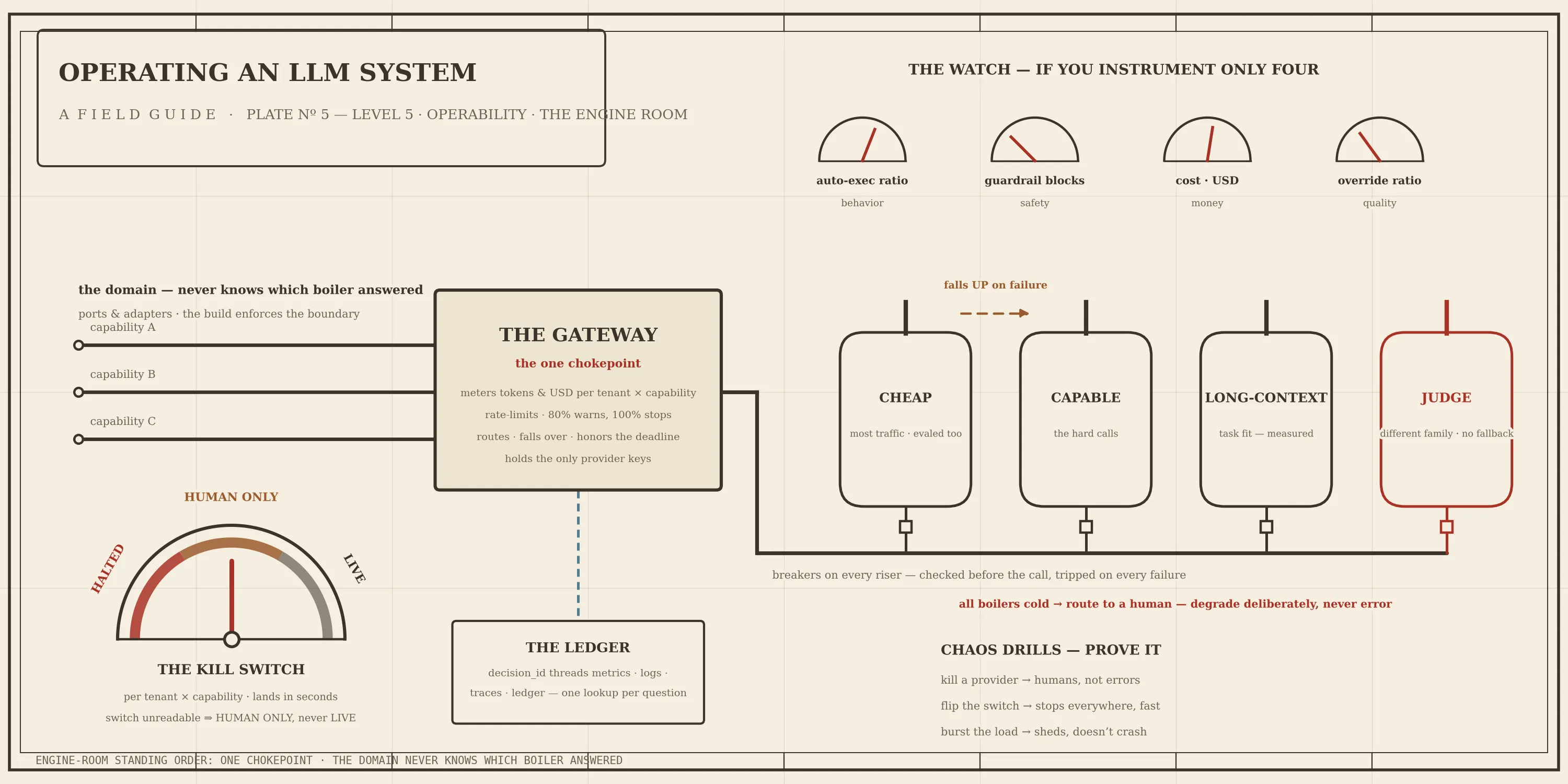
Your service can be 100% up and still quietly approving the wrong things, burning its budget, or failing over into untested quality. Level 5 is the infrastructure that lets you see your decisions, bound your spend, route and fail over between models, kill bad behavior in seconds — and the platform that makes all of it possible.
Coding agents are great for an afternoon and mediocre for a quarter. Here’s the small set of files and rules — with the actual configs — that keeps quality from decaying across months and thousands of edits, whether you run one agent or a fleet of them on the same repo.

An MLOps workflow for evaluating deploying and rolling back AI applications
Let's take a moment to shout out all the articles we’re seen posted so far and encourage folks reading to reach out about your own.
What interviewers are actually looking for is very different from what you'd assume if you're the one sweating in the hotseat.
Why AI-accelerated teams keep breaking production — and what the ones that don't are doing differently
Sharding was one of the first ways databases were distributed to improve performance. Recent innovations have made it one of the best.

When rewriting software in a new language, how do you test that your new and old programs do the same thing?


