


Request Quote
| Product | Product Code | SAFETY DATA | Technical data | |
|---|---|---|---|---|
(5N) 99.999% Zinc Phosphide Ingot |
ZN-P-05-I | SDS > | Data Sheet > | |
(5N) 99.999% Zinc Phosphide Lump |
ZN-P-05-L | SDS > | Data Sheet > | |
(5N) 99.999% Zinc Phosphide Powder |
ZN-P-05-P | SDS > | Data Sheet > | |
(5N) 99.999% Zinc Phosphide Sputtering Target |
ZN-P-05-ST | SDS > | Data Sheet > | |
(5N) 99.999% Zinc Phosphide Wafer |
ZN-P-05-WF | SDS > | Data Sheet > |
 Zinc Phosphide is a crystalline solid used as a semiconductor and in photo optic applications. American Elements produces to many standard grades when applicable, including Mil Spec (military grade); ACS, Reagent and Technical Grade; Food, Agricultural and Pharmaceutical Grade; Optical Grade, USP and EP/BP (European Pharmacopoeia/British Pharmacopoeia) and follows applicable ASTM testing standards. Typical and custom packaging is available. Additional technical, research and safety (MSDS) information is available as is a Reference Calculator for converting relevant units of measurement.
 | Compound Formula | P2Zn3 |
|---|---|
| Molecular Weight | 258.12 |
| Appearance | Gray crystalline powder |
| Melting Point | 1160 °C |
| Boiling Point | N/A |
| Density | 4.55 g/cm3 |
| Solubility in H2O | N/A |
| Exact Mass | 125.876665 |
| Monoisotopic Mass | 125.876671 |
| Charge | N/A |
| Signal Word | Danger |
|---|---|
| Hazard Statements | H260-H300-H410 |
| Hazard Codes | F,T+,N |
| Risk Codes | 15/29-28-32-50/53 |
| Safety Statements | 3/9/14-30-36/37-45-60-61 |
| RTECS Number | ZH4900000 |
| Transport Information | UN 1714 4.3/PG 1 |
| WGK Germany | 3 |
| GHS Pictogram |
Image

Image

|
| Linear Formula | Zn3P2 |
|---|---|
| Pubchem CID | N/A |
| MDL Number | MFCD00049631 |
| EC No. | 215-244-5 |
| IUPAC Name | zinc bis(phosphanidylidenezinc) |
| Beilstein/Reaxys No. | N/A |
| SMILES | [Zn]=P[Zn]P=[Zn] |
| InchI Identifier | InChI=1S/2P.3Zn |
| InchI Key | NQDYSWQRWWTVJU-UHFFFAOYSA-N |
| Chemical Formula | |
| Molecular Weight | |
| Standard InchI | |
| Appearance | |
| Melting Point | |
| Boiling Point | |
| Density |
Customer Reviews
Customers For Zinc Phosphide Have Also Viewed
Related Applications, Forms & Industries for Zinc Phosphide

Each business day American Elements' scientists & engineers post their choice for the most exciting materials science news of the day
See more Zinc products. Zinc (atomic symbol: Zn, atomic number: 30) is a Block D, Group 12, Period 4 element with an atomic weight of 65.38. The number of electrons in each of zinc's shells is 2, 8, 18, 2, and its electron configuration is [Ar] 3d10 4s2. 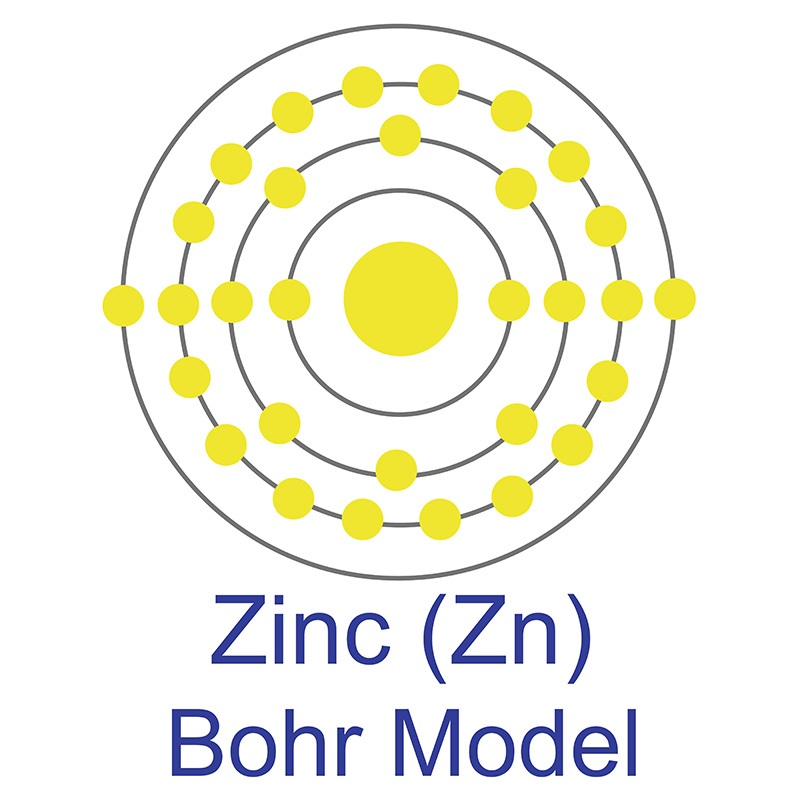 The zinc atom has a radius of 134 pm and a Van der Waals radius of 210 pm. Zinc was discovered by Indian metallurgists prior to 1000 BC and first recognized as a unique element by Rasaratna Samuccaya in 800. Zinc was first isolated by Andreas Marggraf in 1746. In its elemental form, zinc has a silver-gray appearance. It is brittle at ordinary temperatures but malleable at 100 °C to 150 °C.
 It is a fair conductor of electricity, and burns in air at high red producing white clouds of the oxide. Zinc is mined from sulfidic ore deposits. It is the 24th most abundant element in the earth's crust and the fourth most common metal in use (after iron, aluminum, and copper). The name zinc originates from the German word "zin," meaning tin.
 See more Phosphorus products. Phosphorus (atomic symbol: P, atomic number: 15) is a Block P, Group 15, Period 3 element. The number of electrons in each of Phosphorus's shells is 2, 8, 5 and its electronic configuration is [Ne] 3s2 3p3. The phosphorus atom has a radius of 110.5.pm and its Van der Waals radius is 180.pm. Phosphorus is a highly-reactive non-metallic element (sometimes considered a metalloid) with two primary allotropes, white phosphorus and red phosphorus its black flaky appearance is similar to graphitic carbon. Compound forms of phosphorus include phosphates and phosphides. Phosphorous was first recognized as an element by Hennig Brand in 1669 its name (phosphorus mirabilis, or "bearer of light") was inspired from the brilliant glow emitted by its distillation.
